
![Why Is My Gecko Constipated [Safe Solutions]](https://reptileopedia.com/wp-content/uploads/2026/06/Why-Is-My-Gecko-Constipated-Safe-Solutions-1024x512.jpg)
Before You Worry About Your Leopard Gecko
A leopard gecko not pooping can make any owner feel worried, especially if the gecko has not used the bathroom for a few days. In many cases, this is not an emergency. Some leopard geckos do not poop every day, especially adults that eat less often than babies.
However, if your gecko has not passed feces for more than five days, you should start checking its diet, hydration, tank temperature, and habitat conditions. A longer delay may point to constipation, stress, or possible impaction.
Leopard geckos also prefer familiar toilet spots. Just like some pets choose the same bathroom area again and again, your gecko may do the same inside its enclosure. If you recently moved the tank, changed the setup, or cleaned the enclosure deeply, your gecko may need time to feel comfortable again.
Habitat Changes Can Affect Bathroom Habits
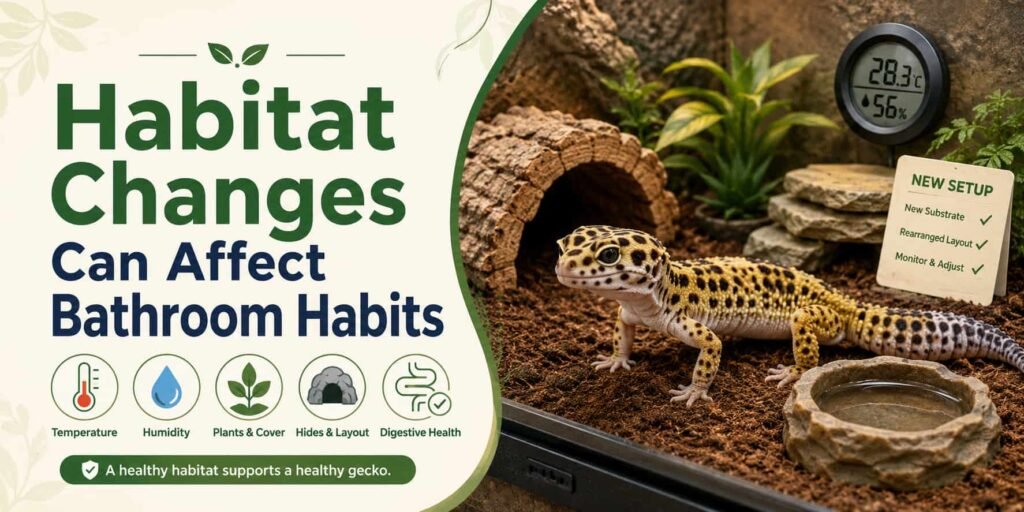
A sudden change in the leopard gecko habitat can disturb your pet’s normal routine. If you recently changed hides, substrate, decorations, or cleaning products, your gecko may feel confused or stressed. This can delay normal bowel movements.
Strong smells from scented soaps, sprays, or chemical cleaners can also bother leopard geckos. Their enclosure should be cleaned with a reptile-safe cleaner or gentle unscented products. Avoid strong fragrances because they may make the tank feel unfamiliar and uncomfortable.
After a deep clean or tank change, give your gecko a few days to adjust. Placing a clean paper towel in the area where it usually poops can help you notice its habits more easily. Once your gecko feels safe again, it may choose a new bathroom spot and return to a normal routine.
Make Sure Your Leopard Gecko Is Eating
If your leopard gecko is not eating, it may also stop pooping. Food must enter the body before waste can come out. A poor appetite may be linked to stress, low temperature, illness, injury, shedding, or an unsuitable enclosure.
Offer a healthy and varied insect diet, such as properly sized crickets, mealworms, dubia roaches, or other safe feeder insects. Make sure the insects are not too large, as oversized prey can cause digestive problems.
Watch your gecko’s behavior closely. If it becomes lethargic, hides more than usual, loses weight, refuses food, or looks weak, contact a reptile vet. Also check whether children, other pets, loud noise, or too much handling may be causing stress.
How Often Should Leopard Geckos Poop?
If your gecko eats daily, it may still go several days without pooping. But if there is no poop for more than five days, and your gecko is also not eating or acting weak, it may be dealing with constipation, indigestion, or impaction.
Why Your Leopard Gecko May Not Be Pooping
A leopard gecko not pooping may be caused by several common issues, including poor hydration, low enclosure temperature, stress, sudden habitat changes, eating large insects, swallowing loose substrate, or illness.
Before assuming the worst, check the enclosure carefully. Sometimes geckos may poop in hidden areas, under hides, behind decorations, or in corners. In rare cases, they may disturb or hide the evidence, making it look like they have not pooped.
Helpful Owner Tip
Always check the full enclosure before worrying. Look under hides, around the warm side, near the cool side, and behind tank decorations. If your gecko is eating well, active, hydrated, and behaving normally, a short delay may not be serious.
However, if your leopard gecko has not pooped for several days and also shows signs of loss of appetite, a swollen belly, weakness, pain, or unusual behavior, visit a reptile veterinarian as soon as possible.
1. Swallowing Loose Substrate
One common reason a leopard gecko is not pooping is impaction. This happens when something blocks the digestive tract and stops waste from passing normally. In leopard geckos, this can happen when they accidentally eat loose substrate such as sand, wood chips, gravel, or small bedding pieces.
Young leopard geckos are more likely to do this because they explore their enclosure by licking surfaces. Sometimes they may swallow substrate while hunting insects or while trying to understand their surroundings. In the wild, some reptiles may lick soil or minerals, but in captivity, loose bedding can be risky.
To reduce the chance of digestive blockage, use safer flooring such as paper towels, reptile carpet, slate tile, or another solid surface. These options are easier to clean and help prevent your gecko from swallowing harmful material.
Your gecko may also lick or eat substrate if it is missing important minerals. To support proper nutrition, keep a small dish of calcium powder in the tank and dust feeder insects with calcium as recommended. This helps support strong bones, healthy digestion, and normal bowel movements.
2. Eating Insects That Are Too Large
Another reason for constipation in leopard geckos is feeding insects that are too big. Large feeder insects can be difficult to digest and may slow down the digestive system. This can lead to discomfort, poor appetite, and trouble passing waste.
A simple rule is to feed insects that are no wider than the space between your gecko’s eyes. Properly sized crickets, mealworms, dubia roaches, and other safe feeder insects are easier for your gecko to chew, swallow, and digest.
Avoid giving too many hard-bodied insects because their tough shells can be harder to break down. A varied insect diet is best, but all feeder insects should be the right size and properly gut-loaded before feeding. Gut-loaded insects provide better vitamins, minerals, and overall nutrition.
Leopard geckos are insectivores, so they should not be fed vegetables as a main part of their diet. Instead, focus on healthy feeder insects, clean water, and the right calcium supplements. A balanced feeding routine supports better digestion and helps your gecko poop normally.
3. Low Tank Temperature
A low tank temperature can also stop a leopard gecko from pooping. Leopard geckos are reptiles, so they depend on outside heat to digest food. If the enclosure is too cold, their body cannot break down food properly. This may cause poor digestion, loss of appetite, constipation, or delayed pooping.
The tank should have a warm side and a cool side so your gecko can control its body temperature. Use a digital thermometer or temperature gun to check the enclosure regularly. Guessing the temperature is not safe because the tank may feel warm to you but still be too cold for your gecko.
The warm hide or basking surface should usually stay around 88–92°F. The cooler side should stay around 73–76°F. At night, the temperature can drop slightly, but it should usually remain around 67–74°F, with 70–74°F being a safer range for many leopard geckos.
Keeping the correct temperature gradient helps your gecko digest food, stay active, and pass waste normally. If your leopard gecko has not pooped and the tank is too cold, fixing the temperature may help improve its digestion.
4. Internal Parasites or Digestive Illness
Internal parasites can be a serious reason why a leopard gecko is not pooping. Parasites may affect the digestive system, reduce appetite, and make your gecko weak or inactive. If your gecko is eating less, it will naturally poop less as well.
Common warning signs include rapid weight loss, runny stool, lethargy, weakness, poor appetite, and unusual behavior. A healthy leopard gecko should stay alert, maintain body weight, and pass normal waste according to its feeding routine.
If you notice these symptoms, do not wait too long. A reptile veterinarian can check a stool sample and provide the correct treatment. Parasites should not be treated at home without professional advice because the wrong medicine can harm your gecko.
5. Poor Hydration
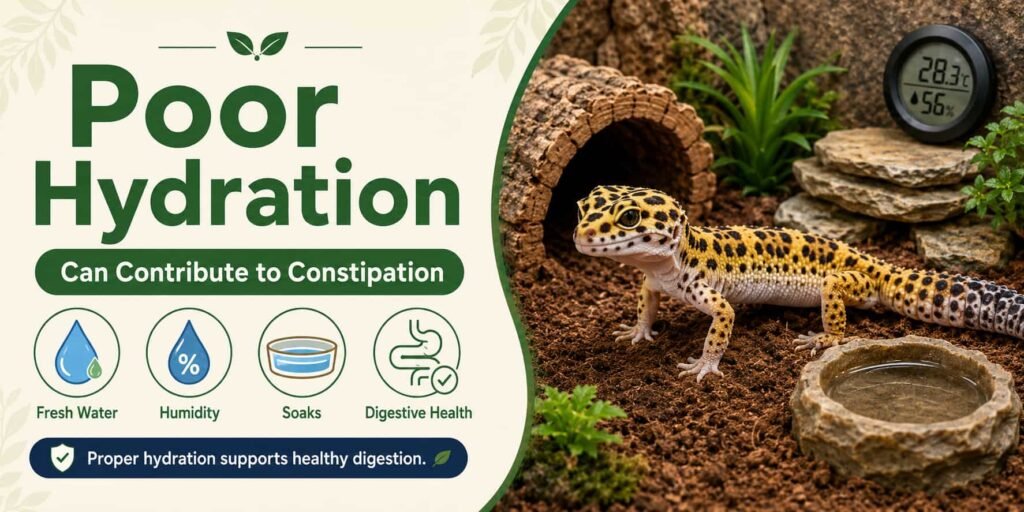
Dehydration is another common cause of constipation in leopard geckos. Water is important for smooth digestion because the body needs moisture to move waste through the intestines. If your gecko is not getting enough water, its stool may become dry and hard to pass.
Signs of dehydration may include sunken eyes, wrinkled skin, low energy, a thin or shrinking tail, dry-looking skin, fewer urates, and no feces for several days. Urates are the white or yellowish solid waste that comes out with poop.
You can gently check hydration by lightly pinching the skin. If the skin stays folded and does not return to normal quickly, your gecko may need more moisture. Always keep a clean bowl of fresh water inside the tank.
Feeder insects should also be properly gut-loaded before feeding. This means giving the insects healthy food so they provide better moisture, vitamins, and minerals to your gecko. A humid hide can also help support hydration, shedding, and normal bowel movements.
6. Constipation
Constipation happens when a leopard gecko has trouble passing stool. You may notice your gecko straining, acting uncomfortable, eating less, or avoiding normal bathroom behavior.
A humid hide can help soften dry stool and make it easier to pass. Make sure the tank has the right temperature gradient, clean water, and safe flooring. Low heat and dehydration are two major causes of constipation in leopard geckos.
Do not force-feed or give medicine without a vet’s advice. If your gecko has not pooped for several days, has a swollen belly, seems weak, or stops eating, contact a reptile vet for proper care.
7. Shedding Problems
A leopard gecko shedding may poop less for a short time. During shedding, some geckos eat less, hide more, or become slightly stressed. This can temporarily slow down digestion.
Sometimes, stuck shed near the vent area can make it harder for waste to pass. Check your gecko gently after shedding, especially around the toes, tail tip, eyes, and vent.
A moist hide can help your gecko shed properly. If shed skin remains stuck, you can let the gecko sit in a shallow, lukewarm soak for a few minutes. Never pull dry shed forcefully, because it can damage the skin. If the shed does not come off safely, ask a reptile vet for help.
Read Also: Can Anything Live With a Leopard Gecko [Answered]
8. Stress and Fear
Stress can also stop a leopard gecko from pooping normally. A scared gecko may hide too much, refuse food, or avoid moving around the enclosure. Since leopard geckos cannot tell you when they are afraid, their behavior is the biggest clue.
Common stress causes include loud noise, too much handling, sudden habitat changes, other pets near the tank, bright lights, poor hiding places, or an unclean enclosure. A stressed gecko may not feel safe enough to eat or pass waste.
To reduce stress, provide proper hides, keep the tank clean, avoid overhandling, and maintain a quiet environment. Leopard geckos are most active in the evening, so this is a good time to observe their normal behavior without disturbing them.
9. Young Age and Growth
A young leopard gecko may have different bathroom habits than an adult. Baby and juvenile geckos usually eat more often and may poop more often, but they are also more sensitive to poor diet, low temperature, dehydration, and impaction.
If a young gecko’s belly looks swollen, hard, or larger than normal, it may have a digestive blockage. This can happen if it eats loose substrate, oversized insects, or food that is hard to digest.
Young geckos should be kept on safe flooring, fed properly sized insects, and given correct heat. If your baby gecko is not pooping, not eating, or looks bloated, visit a reptile veterinarian as soon as possible.
10. Small or Poorly Designed Tank
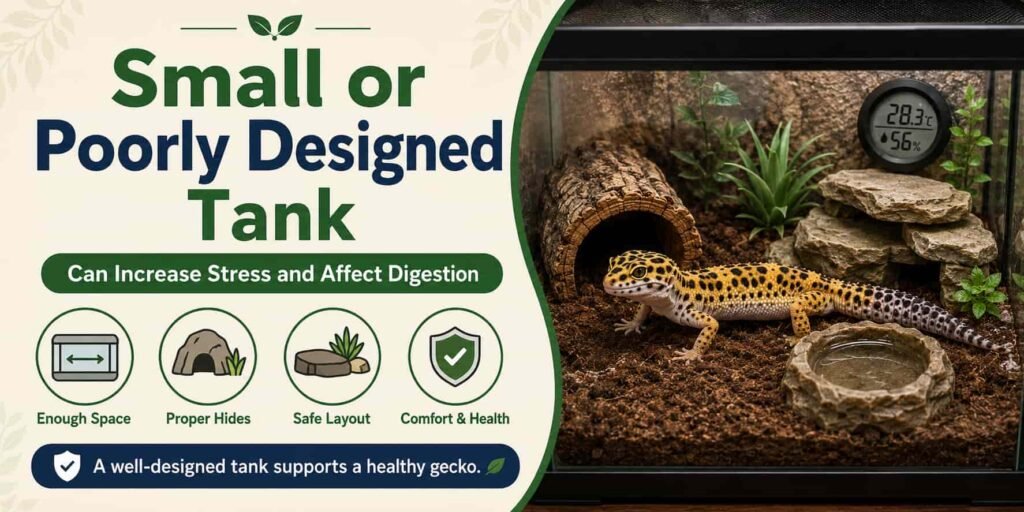
A tank that is too small or poorly arranged can affect your gecko’s movement, comfort, and digestion. Leopard geckos need enough space to walk, explore, hide, and move between warm and cool areas.
If the enclosure is too small, your gecko may not get enough natural movement. This can slow digestion and make constipation more likely. A proper tank setup should include a warm hide, cool hide, moist hide, clean water bowl, safe substrate, and enough floor space.
Many adult leopard geckos do better in a larger enclosure than a very small tank. A comfortable, well-heated, and stress-free habitat supports healthy digestion, normal pooping, and better overall reptile health.
Safe Soaking for a Leopard Gecko
A leopard gecko bath can help with stuck shed, mild dehydration, and sometimes constipation, but it must be done carefully. Leopard geckos are not natural swimmers, so the water should always be shallow and stress-free.
Use a clean plastic container that is larger than your gecko. Place a paper towel or soft cloth on the bottom so your gecko can grip properly and feel secure. Add only a small amount of lukewarm water, about half an inch deep, or just enough to reach the gecko’s knees. The water should feel warm, not hot, and should usually be around 86°F.
Gently place your gecko in the container and allow it to soak for about 5 to 10 minutes. Do not leave your gecko unattended, and do not force it to stay in the water if it becomes very stressed. A short soak is usually enough to support hydration, soften dry skin, and help with normal bowel movement.
Helping With Stuck Shed
Bathing can also help when a leopard gecko is shedding. Stuck shed is most common around the toes, tail tip, eyes, and vent area. If old skin stays on the toes for too long, it can reduce blood flow and may lead to serious problems.
After soaking, you can use a damp cotton swab to gently loosen stuck skin. Never pull dry shed forcefully because this can injure your gecko. Tweezers should only be used with extreme care, and only if the skin is already loose. If the shed does not come off easily, contact a reptile vet.
Why Tank Humidity Matters
Proper tank humidity helps your leopard gecko stay hydrated and shed normally. A dry enclosure can lead to stuck shed, dry skin, and difficulty passing waste.
A good setup should include three hiding areas: a warm hide, a cool hide, and a moist hide. The moist hide is especially helpful during shedding or when your gecko needs extra humidity. You can fill it with damp sphagnum moss or moist paper towel. Keep it damp, but not soaking wet.
When your gecko is about to shed, its skin may look pale, dull, or white. This is a sign that it may need a more humid place to rest. A proper moist hide supports healthy shedding, comfort, and overall reptile health.
Extra Ways to Encourage Pooping
If your leopard gecko is not pooping, first check the main causes: low temperature, dehydration, poor diet, stress, impaction, or illness. Make sure the tank has the correct temperature gradient, clean water, safe flooring, and properly sized feeder insects.
A short lukewarm soak may help soften stool and encourage movement. You can also gently rub the belly with one finger, but use very light pressure and stop if your gecko becomes stressed. Never squeeze the belly, as this can cause injury.
Avoid placing another gecko’s poop inside the tank. This can spread parasites, bacteria, or disease. It is safer to keep the enclosure clean and monitor your gecko’s normal bathroom area.
Leopard geckos are usually more active in the evening and early morning. Keep the environment calm, avoid too much handling, and provide dark hiding spaces. A quiet, secure enclosure can reduce stress and support better digestion.
When to Contact a Vet
If your leopard gecko has not pooped for several days and also shows loss of appetite, bloating, weakness, weight loss, straining, runny stool, or unusual behavior, contact a reptile veterinarian. Home care may help mild constipation, but serious impaction or illness needs professional treatment.
FAQ’s: Why Is My Gecko Constipated
How to help a constipated gecko?
A constipated gecko can be helped with a warm shallow soak in lukewarm water for about 10–15 minutes. The water should be belly-deep, not too high. You can gently massage the abdomen from front to back to support digestion, improve hydration, and encourage a bowel movement. If your gecko still does not poop, looks weak, stops eating, or seems bloated, contact a reptile vet because it may be impaction.
Can I help my gecko poop?
Yes, you can help your gecko poop by giving it a warm shallow soak for about 10–15 minutes. Keep the water lukewarm, around 85°F to 88°F, and make sure it only reaches the gecko’s belly or armpit level. During the soak, gently massage the belly downward to support digestion and encourage a bowel movement. Also, check the enclosure temperature, because low heat can slow digestion. If your gecko does not improve within 48 hours, or shows signs of impaction, swelling, weakness, or loss of appetite, contact a reptile veterinarian.
How do I help my constipated lizard?
If your lizard is constipated, it may have impaction, which means a digestive blockage. Give it a warm water soak for 20–30 minutes and gently massage its belly to support a bowel movement. Keep it properly hydrated and make sure its enclosure has the right temperature. Only use pumpkin puree, olive oil, or other natural laxatives if a reptile vet says it is safe. If your lizard still cannot pass stool, contact an exotic veterinarian quickly.
How can I stimulate a leopard gecko to poop?
To help a constipated leopard gecko, place it in shallow warm water at about 80°F–85°F for 10–15 minutes. The water should only reach its knees. While soaking, gently massage its belly to support a bowel movement. Also check for dehydration, wrong tank temperature, or impaction from eating loose substrate. A tiny drop of olive oil may help, but contact a reptile vet if your gecko still does not poop.