
![Leopard Gecko Eyes Shut [When to Worry]](https://reptileopedia.com/wp-content/uploads/2026/07/Leopard-Gecko-Eyes-Shut-When-to-Worry-1-1024x512.jpg)
Seeing your leopard gecko closing his eyes can look peaceful, almost like he is resting calmly. In many cases, this is normal. A leopard gecko may close its eyes when it feels safe, relaxed, sleepy, or comfortable in its enclosure.
Why Your Leopard Gecko Closes Its Eyes: 11 Possible Reasons
However, if your gecko keeps its eyes closed for a long time, closes only one eye, rubs its face, stops eating, or shows swelling or discharge, it may be a sign of an eye problem. Common causes include bright light, dust, loose substrate, stuck shed, eye infection, injury, or vitamin A deficiency.
If your gecko’s eyes stay closed for more than 24 hours, it is best to contact a reptile vet for proper care.
1. Loose Bedding or Dirt in the Eye
One common reason for closed eyes in leopard geckos is irritation from substrate. Small particles from sand, peat moss, dust, or loose bedding can enter the eye and cause discomfort.
Your gecko may close one or both eyes to protect them. You may also notice face rubbing, blinking, or avoiding light. To prevent this, use safer bedding such as paper towels, reptile carpet, or tile.
2. Eye Injury or Scratches
A leopard gecko eye injury can happen if your gecko bumps into decor, scratches its eye on rough surfaces, or gets hurt during handling. Even a small scratch can make the eye painful.
Signs may include one eye closed, swelling, redness, or watery discharge. Eye injuries should not be ignored because they can become infected if left untreated.
3. Stuck Shed Around the Eyelids
During shedding, small pieces of old skin can get stuck near the eyelids. This is known as stuck shed. It can make it hard for your gecko to open its eyes properly.
A gecko with stuck shed on the eye may blink often, rub its face, or keep the eye closed. Proper humidity, a moist hide, and safe shedding support can help reduce this problem.
4. Bright or Harsh Lighting
Leopard geckos are crepuscular reptiles, meaning they are most active during dawn and dusk. Very bright lights can bother their sensitive eyes.
If your gecko closes its eyes under strong lighting, it may be trying to avoid discomfort. Make sure the enclosure has shaded areas, hides, and a gentle day-night cycle.
5. Eye Infection
An eye infection in leopard geckos can cause closed eyes, swelling, redness, discharge, or crust around the eyelids. Infections may happen because of poor hygiene, stuck shed, injury, or dirty enclosure conditions.
A reptile eye infection needs proper treatment from a vet. Do not use human eye drops unless a reptile vet tells you to.
6. Abscess Near the Eye
An abscess is a swollen pocket of infection. If it forms near the eye, it can make the eyelid look puffy and painful.
Your gecko may keep the eye closed because of pressure or discomfort. Abscesses usually need veterinary treatment because they do not always heal on their own.
7. Dry Eyes
A dry eye problem can make your leopard gecko blink more often or keep its eyes closed. Dryness may happen if the enclosure humidity is too low or if the gecko is dehydrated.
Make sure your gecko has clean water, a proper temperature range, and a humid hide. Good enclosure care helps support healthy reptile eyes.
8. Vitamin A Deficiency
Vitamin A deficiency can lead to serious eye health problems in leopard geckos. It may cause swelling, poor shedding, thick discharge, or trouble opening the eyes.
A balanced diet with properly gut-loaded insects and safe supplementation is important. If you suspect a vitamin problem, ask a reptile veterinarian before giving extra supplements.
9. Parasites or Mites
Parasites or mites can irritate your gecko’s skin and eyes. They may cause itching, stress, poor appetite, and eye closing.
Check your gecko’s body, enclosure, and hiding spots for tiny moving dots or unusual dirt-like specks. Parasite issues should be handled quickly to protect your gecko’s health.
10. Birth-Related Eye Problems
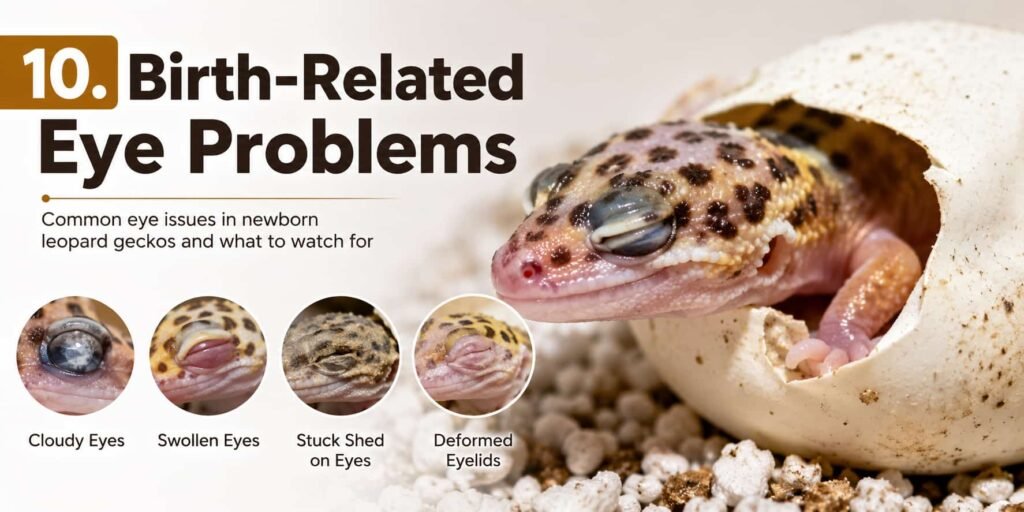
Some leopard geckos are born with congenital eye issues. These may affect eyelid shape, eye size, or normal vision.
If your gecko has always had trouble opening one eye, a vet can check whether it is a long-term condition or something treatable.
11. Tumors or Abnormal Growths
In rare cases, a tumor or abnormal growth near the eye can make it difficult for a leopard gecko to open its eyelids. This may appear as swelling, a lump, or a change in eye shape.
Any unusual growth around the eye should be checked by a reptile vet as soon as possible.
Why Your Leopard Gecko Closes Only One Eye
If your leopard gecko closes one eye, the problem is often local to that eye. It may be caused by dust, stuck shed, injury, infection, or irritation from bedding.
One-eye closing is more concerning than normal resting because it often means something is bothering that specific eye.
Why Leopard Geckos Sleep With One Eye Open
Sometimes, a leopard gecko may appear to sleep with one eye open. This can be normal behavior. In the wild, reptiles must stay alert for danger, so your gecko may partly watch its surroundings even while resting.
If the eye looks clear and your gecko is eating, moving, and behaving normally, this is usually not a major concern.
How to Prevent Eye Problems in Leopard Geckos
To reduce the risk of leopard gecko eye problems, keep the enclosure clean and safe. Avoid dusty or loose bedding, provide a moist hide, keep proper humidity, and remove sharp decor.
Feed healthy insects, use correct supplements, and watch your gecko during shedding. Regular care can prevent many issues linked to eye irritation, stuck shed, and infection.
Why Do Leopard Geckos Close Their Eyes?
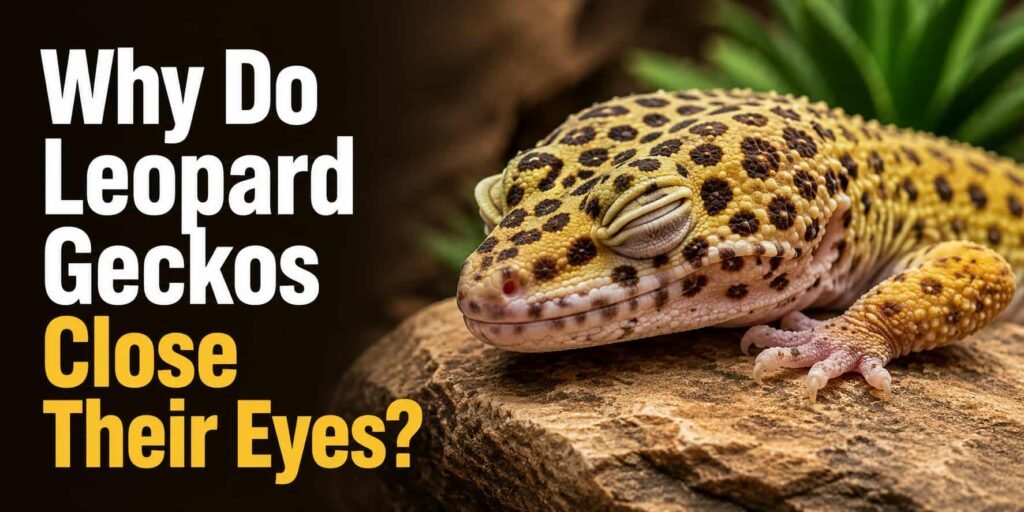
A leopard gecko closing its eyes may be doing something normal, but it can also be a sign of eye irritation, stress, or a health issue. Since leopard geckos spend most of their time close to the ground, their eyes can easily come into contact with dust, substrate, loose bedding, or small particles inside the enclosure.
Sometimes, a gecko closes its eyes to protect them, clean them, or reduce discomfort. However, if your gecko keeps its eyes closed for a long time, has swelling, watery eyes, redness, or refuses food, it may need help from a reptile vet.
1. Loose Substrate or Small Debris
Substrate or debris is one of the most common reasons a leopard gecko keeps its eyes closed. These reptiles are naturally ground-dwelling, so they spend a lot of time walking, resting, and hunting near the floor of their tank.
Small pieces of sand, mulch, dust, bedding, or tiny grains can get into the eye. This can cause eye irritation, watery eyes, blinking, or squinting. To protect itself, the gecko may close its eyes and try to naturally clear out the foreign material.
This is a self-protection behavior. The gecko is trying to keep its delicate eyes safe from rough or dusty parts of the enclosure.
2. Eye Injury or Scratches
Another possible reason is eye trauma. A leopard gecko eye injury can happen when the gecko rubs against rough decor, bumps into something in the tank, or scratches its eye while moving around.
If your gecko has a mild scratch, it may squint or keep one eye closed for a short time. In some cases, the injury may heal on its own. However, if your gecko keeps its eye shut for several days, shows swelling, or seems uncomfortable, it should be checked by a reptile veterinarian.
Even a small eye injury can become serious if it turns into an eye infection.
3. Stuck Shed Around the Eye
A stuck shed can also make a leopard gecko close its eyes. Unlike some other lizards, leopard geckos have movable eyelids. During shedding, small pieces of old skin or scales can get trapped around the eyelids.
When this happens, the gecko may blink often, rub its face, or keep the eye closed. Increasing the tank’s humidity and providing a moist hide can help prevent this problem.
A gentle warm water compress may help soften the stuck skin, but you should never pull shed from the eye area forcefully. If the skin does not come off safely, a reptile vet should remove it.
4. Bright or Harsh Lighting
Bright light can make a leopard gecko close its eyes because these reptiles are naturally more active during low-light hours. Leopard geckos are often described as nocturnal or crepuscular reptiles, meaning they are more comfortable in dim lighting.
Their eyes are very sensitive, and strong lights can cause stress or discomfort. If the light is too bright, your gecko may shut its eyes because it cannot adjust its pupils enough to block the brightness.
To avoid this issue, use a proper heating setup that does not produce harsh light. Also, make sure the enclosure has dark hides and shaded areas where your gecko can rest comfortably.
5. Eye Infection
An eye infection in leopard geckos can be caused by bacteria, fungi, viruses, poor tank hygiene, injury, or stuck shed. Infections can affect the eyelid, cornea, or deeper parts of the eye.
Common signs include red eyes, swollen eyes, watery discharge, crust around the eyelids, and frequent eye closing. Your gecko may also stop eating or become less active.
Eye infections should be treated quickly. A vet may prescribe antibacterial, antifungal, or other proper reptile-safe treatment. Without treatment, an infection can damage the eye and cause long-term problems.
6. Abscess Near the Eye
An abscess is a swollen lump filled with infected material. In leopard geckos, an abscess near the eye may appear as a bump under or around the eyelid.
This can happen because of trauma, injury, or an untreated eye infection. The pressure and pain from the abscess may cause the gecko to keep the eye closed.
An abscess usually needs proper care from a reptile vet. It should not be squeezed or treated at home because this can make the infection worse.
7. Dry Eyes and Low Humidity
Dry eyes can make a leopard gecko close its eyes more often than usual. Leopard geckos naturally produce fluid to keep their eyes moist, clean, and protected from small particles.
However, if the tank has low humidity or your gecko is not getting enough water, the eyes may become dry. This can lead to mucus buildup, sticky eyelids, or trouble opening the eyes.
A simple way to support healthy eyes is to provide a moist hide inside the enclosure. This helps your gecko stay hydrated, shed properly, and reduce the risk of eye irritation.
Read Also: Can Leopard Geckos Be Kept Together? [Truth]8. Lack of Vitamin A
Vitamin A deficiency, also called hypovitaminosis A, can cause serious eye problems in leopard geckos. This condition may look similar to conjunctivitis because both can cause swelling, redness, discharge, and closed eyes.
Since the symptoms can be difficult to tell apart, a reptile vet may need to examine the gecko closely. In some cases, the vet may treat both possible causes at the same time.
To help prevent this issue, feed your gecko healthy, gut-loaded insects such as crickets, dubia roaches, or other safe feeder insects. These insects should be fed nutritious foods before being offered to your gecko. A proper reptile supplement may also help support good eye health.
9. Eye Parasites
Eye parasites are rare in captive leopard geckos, but they can still happen in unusual cases. Parasites are more common in reptiles exposed to poor conditions, wild environments, or infected animals.
In some cases, tiny worm-like parasites may affect the eye and cause discomfort. This can make the gecko close one or both eyes.
If you notice unusual movement in the eye, swelling, discharge, or constant eye closing, contact a reptile veterinarian right away. Parasite problems should not be treated at home without professional guidance.
10. Birth-Related Eye Conditions
Some leopard gecko eye problems are present from birth. These are called congenital issues. They are usually caused by genetic problems during development.
Examples include anophthalmos, where the eye does not form properly, or fused eyelids, where the eyelids do not open normally. These conditions may affect how the gecko sees, blinks, or closes its eyes.
If your gecko has had eye trouble since it was young, a vet can check whether the problem is genetic and whether treatment or surgery is needed.
11. Abnormal Growths Around the Eye
Neoplasia means an abnormal growth caused by uncontrolled cell growth. In leopard geckos, this may appear as a lump, swelling, or unusual mass near the eye.
These growths can be benign or cancerous, but only a vet can properly identify them. Sometimes, a growth may look similar to an abscess, so testing such as a biopsy may be needed.
If a lump affects the eye area, your gecko may keep its eye closed because of pressure, pain, or irritation. Any unusual swelling near the eye should be checked by a reptile vet.
Why Your Leopard Gecko Closes One Eye
If your leopard gecko closes one eye for a long time, it is usually a sign that something is bothering that specific eye. This is not the same as normal blinking or resting.
Possible causes include stuck shed, eye injury, dust, substrate irritation, infection, dryness, or swelling. Since the eye is delicate, you should watch your gecko closely.
If the behavior continues, or if you see redness, discharge, swelling, or loss of appetite, it is best to seek reptile veterinary care.
Why Your Leopard Gecko Sleeps With One Eye Open
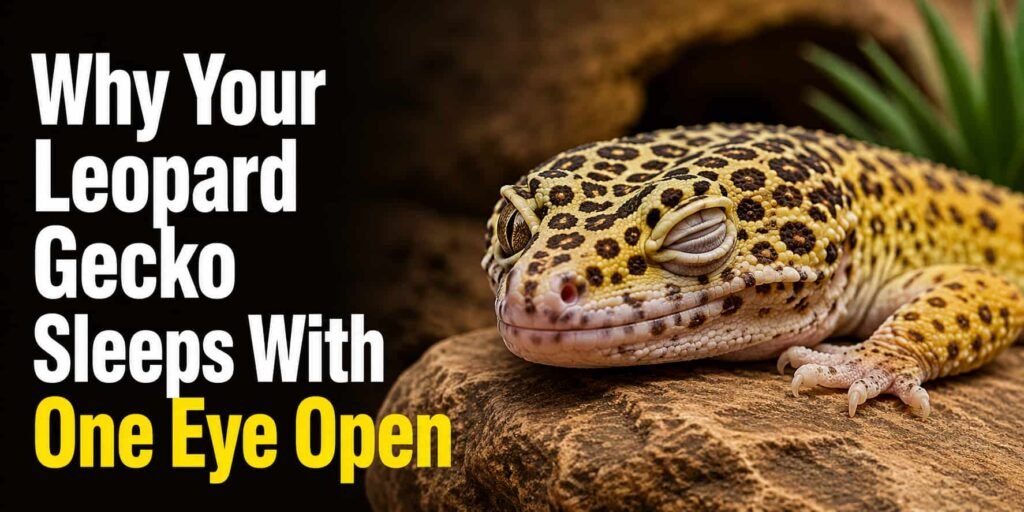
A leopard gecko may sometimes sleep with one eye partly open. This can be normal behavior. Geckos are alert animals, and they may keep watch even while resting.
If your gecko hears a noise or senses movement, it may open one eye to check its surroundings. This helps it feel safe and aware of possible danger.
As long as the eye looks clear and your gecko is eating, moving, and acting normally, this behavior is usually not a concern.
How to Prevent Eye Problems in Leopard Geckos
Good care can reduce the risk of eye problems in leopard geckos. Keep the tank clean and remove sharp, dusty, or rough materials that may hurt the eyes.
Use safe decorations such as smooth rocks, rounded hides, and soft surfaces. Avoid loose, dusty bedding that can get into the eyes. Safer options include paper towels, tile, or other low-dust substrates.
Make sure your gecko has a moist hide, clean water, proper humidity, and a balanced diet. Feed gut-loaded insects and use a quality reptile vitamin supplement when needed.
Lighting is also important. Avoid overly bright lights because strong light can irritate your gecko’s eyes and disturb its sleep cycle.
Short Summary
A leopard gecko closing its eyes can be caused by dry eyes, low humidity, vitamin A deficiency, parasites, congenital eye issues, or abnormal growths. Closing one eye may mean irritation or injury, while sleeping with one eye open is often normal alert behavior.
To protect your gecko’s eye health, keep the enclosure clean, use safe substrate, provide a moist hide, avoid harsh lighting, and offer a balanced diet. If symptoms continue for more than 24 hours or include swelling, discharge, or appetite loss, contact a reptile veterinarian.
Leopard Gecko Eyes Shut? [When to Worry]
FAQ’s
Do leopard geckos sleep with their eyes closed?
Yes, leopard geckos usually sleep with their eyes closed because they have movable eyelids. This makes them different from many other gecko species, which do not have eyelids and often clean their eyes by licking them.
What are signs of stress in leopard geckos?
Common signs of stress in leopard geckos include tail waving, vocalizing, biting, hiding too much, refusing food, or acting restless. These behaviors often show that the gecko feels unsafe or uncomfortable. Improving its environment, temperature, hiding spots, and handling routine can help it feel calm and healthy.
Why is my lizard closing only one eye?
A lizard may close one eye to focus on a nearby object, avoid bright light, or show a calm or submissive response. However, if it keeps happening, it may be a sign of stress, high temperature, stuck shed, a blocked eye cap, or an eye infection. If the problem continues, a reptile vet should check it.
What is toxic to leopard geckos?
Leopard geckos should never eat fireflies, lightning bugs, or any glowing insects. These bugs contain harmful toxins and chemicals that can be deadly for geckos. Always feed them safe feeder insects like crickets, mealworms, or dubia roaches.