
![Can Anything Live With a Leopard Gecko? [Answered]](https://reptileopedia.com/wp-content/uploads/2026/07/Can-Anything-Live-With-a-Leopard-Gecko-Answered-1024x512.jpg)
Safe Leopard Gecko Tank Mates: What Owners Should Know
Choosing safe leopard gecko tank mates needs careful thought. A leopard gecko is a calm reptile, but it does not usually enjoy sharing its enclosure with other animals. Many reptiles, amphibians, and small pets have different needs for temperature, humidity, food, space, and shelter.
For example, frogs need a moist setup with high humidity, while leopard geckos need a warm, dry, desert-style habitat. Keeping them together can cause stress, breathing issues, skin problems, and other health risks.
Turtles are also not good tank companions. They need water, strong filtration, and an aquatic setup. These conditions are not suitable for a leopard gecko enclosure.
The safest choice is usually to keep a leopard gecko alone. A private tank helps prevent fighting, food competition, stress, injuries, and territorial behavior. Instead of adding another animal, you can improve the tank with safe hides, rocks, climbing areas, plants, and other enrichment items.
Better Ways to Improve a Leopard Gecko Tank
You do not need another animal to make the tank interesting. You can create a healthier and more enjoyable reptile habitat by adding:
- Safe hiding places
- Rocks and climbing objects
- Smooth branches or ledges
- Suitable artificial or safe live plants
- Proper heating areas
- A clean water dish
- A secure and peaceful layout
These items support your gecko’s natural behavior without creating stress or danger.
Why Most Tank Mates Are Not Safe
Many animals cannot live safely with a leopard gecko because they may need different living conditions. Some may be too active, too aggressive, too wet, or too risky.
Before choosing any tank mate, you must compare:
- Temperature needs
- Humidity levels
- Tank size
- Food habits
- Hiding space
- Risk of aggression
- Risk of disease or parasites
- Natural predator and prey behavior
Even if two animals seem calm, they may still compete for food, heat, space, or shelter.
Can Two Leopard Geckos Live Together?
Two leopard geckos can sometimes live in the same tank, but it is not always safe. Males should never be kept together because they often fight. Female geckos may also become stressed or territorial.
If someone plans to keep more than one gecko, they need a larger tank, extra hides, separate feeding areas, and close daily observation. Even then, keeping each gecko in its own enclosure is usually the safest option.
Health and Safety Come First
A single-gecko setup makes it easier to watch your pet’s health. You can quickly notice changes in eating, shedding, movement, weight, and behavior. It also reduces the risk of injuries, stress, parasites, and disease.
If a new reptile is brought into the home, it should be kept in quarantine first. This helps protect your leopard gecko from possible infections or parasites
Safe Leopard Gecko Housing: Why Separate Enclosures Are Best
A leopard gecko should usually live alone because sharing an enclosure can create stress, fighting, health problems, and competition. Even if two animals seem calm at first, their needs and behavior may not match. The safest choice is to give each gecko its own clean, comfortable, and well-planned reptile habitat.
Why Habitat Needs Must Match
Every animal needs the right temperature, humidity, lighting, food, water, substrate, and shelter. Two species should never live in the same tank unless their care needs are fully compatible.
Even when two animals seem to need similar conditions, their behavior can still make cohabitation unsafe. One animal may be more active, more territorial, or more aggressive than the other.
Food, Heat, and Space Competition
Animals in the same tank may compete for live insects, warm areas, water, hiding spots, and space. A weaker or shy animal may stop eating, hide too much, or lose weight.
This can lead to:
- Stress
- Poor appetite
- Weight loss
- Illness
- Weakness
- Injury
Because of this, shared housing often makes it harder to know if each animal is eating and behaving normally.
Aggression and Predator Behavior
Some animals may see smaller tank mates as prey. Others may become defensive or territorial. This can lead to chasing, biting, tail damage, wounds, and long-term stress.
A tank may look peaceful, but bullying can happen quietly. One gecko may block another from food, heat, or hides without obvious fighting.
Can Leopard Geckos Live Together?
Keeping multiple leopard geckos in one tank is risky. The safest option is to keep each gecko in a separate enclosure.
Two male leopard geckos should never live together. Males are highly territorial and may fight badly. These fights can cause bites, serious wounds, tail injuries, or even death.
Female leopard geckos may sometimes seem calmer, but they can still compete for food, heat, hiding places, and space. Stress and bullying can still happen.
Why Male and Female Leopard Geckos Should Not Live Together
A male and female leopard gecko should not share a tank permanently. The male may try to mate again and again, which can place the female under constant pressure.
Repeated breeding may cause:
- Weight loss
- Calcium deficiency
- Tiredness
- Egg-laying problems
- Poor health
- Shorter lifespan
For the female’s safety, separate housing is the better choice.
Why Frogs and Turtles Are Not Suitable Tank Mates
Frogs and turtles should not share a leopard gecko tank. Frogs usually need higher humidity and a moist environment. Leopard geckos need a mostly dry, warm, land-based habitat.
Turtles also need very different care. Many turtles require water, strong filtration, basking areas, and an aquatic setup. These conditions do not match a leopard gecko’s natural needs.
Mixing these animals can cause stress, illness, breathing problems, skin issues, and injuries.
Benefits of Keeping a Leopard Gecko Alone
A single-gecko setup is safer and easier to manage. When your leopard gecko lives alone, you can clearly monitor its:
- Eating habits
- Droppings
- Body weight
- Shedding
- Movement
- Energy level
- General behavior
This makes it easier to notice early signs of illness. There is also no confusion about which animal is sick, stressed, or not eating.
Separate housing also prevents:
- Fighting
- Bullying
- Mating stress
- Food competition
- Territorial behavior
- Accidental injuries
Best Way to Improve a Leopard Gecko Enclosure
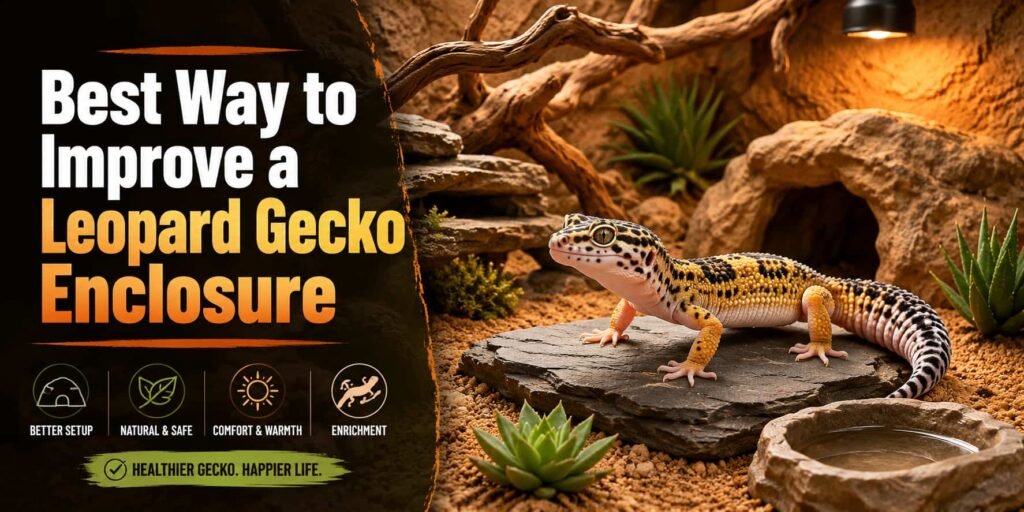
Instead of adding a tank mate, improve the leopard gecko enclosure with safe and useful enrichment.
A good setup should include:
- A warm hide
- A cool hide
- A humid hide
- Safe substrate
- Clean water
- Proper heating
- Climbing objects
- Rocks and hides
- Safe plants or decorations
These items help your gecko feel secure, active, and comfortable without the risks of shared housing.
Can Female Leopard Geckos Safely Share a Tank?
Female leopard geckos can sometimes live together, but it is not always safe. Even though females are usually less aggressive than males, they can still become territorial, stressed, or competitive inside the same enclosure.
A larger or stronger female may bully a smaller one without obvious fighting. She may take more food, control the best warm hide, or block access to heat and shelter. Over time, this can cause stress, weight loss, injuries, and poor health.
For this reason, keeping each leopard gecko in a separate tank is usually the safest choice. A private reptile habitat helps prevent fighting, food competition, and hidden stress.
Signs That Female Leopard Geckos Are Not Getting Along
Watch closely for these warning signs:
- One gecko eating more than the other
- Sudden weight loss
- Frequent hiding
- Bite marks
- Tail injuries
- One gecko blocking the heat source
- One gecko stopping the other from using hides or shelter
- Stress, fear, or unusual behavior
How to Tell If a Leopard Gecko Is Male or Female
Knowing the sex of a leopard gecko is important before making decisions about breeding, cohabitation, or housing arrangements. Male and female leopard geckos can have different behaviors, especially when they reach adulthood.
The easiest way to identify a male leopard gecko is by checking the area near the vent. Adult males usually have clear physical signs, while females have fewer visible markings.
Signs of a Male Leopard Gecko
An adult male leopard gecko usually has:
- Pre-anal pores arranged in a clear V-shape
- Two visible hemipenal bulges behind the vent
- A thicker tail base
- A slightly larger and broader body in some cases
These features are usually easier to see once the gecko is mature. Young geckos can be harder to sex because their body parts are still developing.
Why Sexing a Leopard Gecko Matters
Correctly identifying your gecko’s sex helps prevent unsafe tank sharing, unwanted breeding, stress, and fighting. Two male leopard geckos should never be housed together because they may become territorial and aggressive.
Best Advice
Always handle your leopard gecko gently when checking its sex. Never pull the tail or force the gecko into an uncomfortable position. If you are unsure, ask an experienced reptile keeper or a reptile veterinarian for help.
Can Anything Live With a Leopard Gecko?
Young leopard geckos can be difficult to identify correctly. For an accurate answer, ask a reputable breeder or an experienced reptile veterinarian to examine the gecko.
Read More: How Much Do Alligators Eat Daily?Can Other Reptiles Live With a Leopard Gecko?
Other reptiles and amphibians should not live in the same leopard gecko enclosure. A leopard gecko needs a warm, mostly dry, land-based habitat, while many other species need different levels of temperature, humidity, lighting, food, water, and tank setup.
Even if two animals seem peaceful, mixed-species housing can still be dangerous. Different animals may compete, become stressed, spread illness, or injure each other.
Why Mixed-Species Housing Is Risky
Keeping a leopard gecko with another reptile or amphibian may cause:
- Chronic stress
- Aggression
- Predatory behavior
- Food and space competition
- Competition for heat and hiding places
- Parasite transmission
- Infectious disease
- Wrong temperature or humidity
- Bite wounds, tail injuries, or other serious harm
Are Turtles and Frogs Safe Tank Mates for Leopard Geckos?
Turtles and frogs are not suitable tank mates for leopard geckos. These animals have very different care needs, and keeping them in the same enclosure can cause stress, illness, injuries, and poor living conditions.
A leopard gecko needs a warm, mostly dry, ground-based reptile habitat. Turtles and frogs often need much wetter environments, different lighting, and different tank designs. Because of this, each animal should have its own safe, species-appropriate enclosure.
Why Turtles Should Not Live With Leopard Geckos
Turtles are not safe companions for leopard geckos. Many pet turtles need a large aquatic or semi-aquatic enclosure with deep water, strong filtration, a dry basking area, UVB lighting, and special heating.
These conditions do not match a leopard gecko enclosure. Leopard geckos need a dry land setup with proper heat, hides, and safe substrate.
Turtles are also heavier and stronger than leopard geckos. A turtle could accidentally crush, bite, scare, or injure a gecko. For safety, turtles and leopard geckos should always live in separate habitats.
Can Frogs Live With Leopard Geckos?
Frogs should not share a tank with leopard geckos. Most frogs need high humidity and moist surroundings to protect their sensitive skin. Leopard geckos are adapted to drier conditions, so too much moisture can harm their health.
Keeping both animals together can create serious problems. A frog may become dehydrated if the tank is too dry, while a gecko may develop health issues if the tank is too wet.
There is also a risk of parasites, harmful bacteria, and disease transfer. Some animals can carry infections without looking sick.
Predation and Safety Risks
Size differences can make mixed housing even more dangerous. A leopard gecko may try to eat a small frog. A large frog or toad may attack or swallow a gecko.
Some amphibians also release defensive skin secretions. These substances may irritate or harm a leopard gecko.
Species such as dart frogs, fire-bellied toads, American toads, bullfrogs, and horned frogs all need their own carefully designed habitats. They should not be treated as leopard gecko companions.
What to Check Before Choosing Any Tank Mate
- Temperature requirements
- Humidity needs
- Adult size
- Diet and feeding behavior
- Daily activity schedule
- Territorial behavior
- Risk of aggression
- Risk of predation
- Risk of parasites and diseases
- Need for hiding places
- Need for personal space
Before placing any animal in a shared tank, you must compare its care needs carefully. Important factors include:
What to Check Before Choosing Any Tank Mate
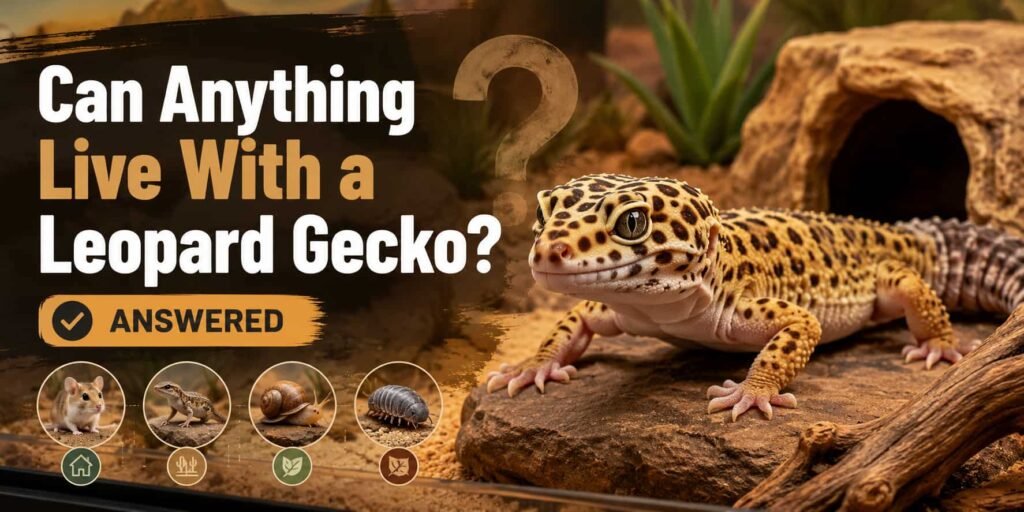
Key Things to Consider Before Choosing a Leopard Gecko Tank Mate
The safest and most responsible choice for a leopard gecko is usually simple: keep each gecko in its own secure, well-equipped enclosure. Separate housing helps prevent stress, fighting, injuries, and competition. It also makes it easier to monitor your gecko’s eating, shedding, waste, weight, and overall health.
Because leopard geckos are naturally solitary reptiles, they do not need another animal to feel happy or healthy. A clean, peaceful, and properly designed reptile habitat is usually much better than shared housing.
Habitat Needs Must Match
Before placing any animal in a leopard gecko enclosure, you must compare its care needs carefully. Every species has different requirements for temperature, humidity, lighting, substrate, water, food, shelter, and space.
Even if two reptiles seem to need similar conditions, that does not always mean they can safely live together. Their behavior, diet, size, and activity patterns may still be very different.
For example, crested geckos need higher humidity and more vertical climbing space. Leopard geckos prefer a warm, mostly dry, ground-level habitat. Other desert reptiles may also have different diets, sleep schedules, and territorial habits.
Trying to create several different microclimates in one tank can harm one or both animals. One pet may get too much moisture, too little heat, or the wrong type of shelter. For this reason, different reptile species should usually live in separate, species-appropriate enclosures.
Competition for Food, Heat, and Space
Animals sharing the same tank may compete for important resources. This can cause stress, weakness, and health problems, especially if one animal is stronger or more confident than the other.
Common sources of competition include:
- Food and water
- Warm basking areas
- Hiding places
- Space and territory
- Cool areas
- Humid hides
- Safe resting spots
A shy or weaker gecko may stop eating, hide too often, lose weight, or become stressed. Sometimes bullying is not easy to see, but it can still affect the animal’s health over time.
Why Separate Housing Is Safer
Individual housing gives each leopard gecko full access to food, water, heat, shelter, and space. It also allows you to notice health problems faster because there is no confusion about which gecko is eating less, shedding poorly, or producing abnormal droppings.
A private leopard gecko habitat also helps prevent:
- Territorial behavior
- Food competition
- Bullying
- Stress
- Aggression
- Bite wounds
- Tail injuries
- Disease or parasite spread
Leopard Gecko Cohabitation Risks: Food, Space, and Safety Concerns
The safest choice for a leopard gecko is to provide its own secure and properly equipped enclosure. Shared housing can lead to hidden stress, food competition, bullying, injuries, and health problems, even when the animals do not appear to fight.
Resource Competition and Hidden Bullying
A stronger or more dominant reptile may eat most of the food or stop a weaker animal from using an important hide, warm area, water source, or resting place. Over time, this can cause serious health issues.
Common problems include:
- Weight loss
- Dehydration
- Stress
- Poor shedding
- Weakness
- Illness
- Reduced activity
Bullying is not always easy to notice. One leopard gecko may stay hidden, stop eating, lose interest in exploring, or become less active without any clear signs of fighting.
A dropped tail can happen because of fear, injury, restraint, or conflict. However, it should not be seen as the only sign of stress. Smaller behavior changes can also show that something is wrong.
Predation, Fighting, and Injury Risks
Before placing any animals together, you must ask whether one could bite, chase, crush, attack, or eat the other. Size alone does not guarantee safety. Even reptiles of similar size may show territorial aggression.
Different species may also misunderstand each other’s movements, body language, or defensive signals. A normal movement from one animal may trigger a hunting response or defensive reaction in another.
The safest way to prevent predation, fighting, and accidental injuries is to keep each animal in its own species-appropriate enclosure.
What Tank Size Is Needed for Multiple Leopard Geckos?
There is no trusted rule that adding five gallons for each extra gecko makes cohabitation safe. A larger tank may provide more space, but it cannot remove the risk of bullying, food competition, breeding pressure, stress, or territorial conflict.
Each adult leopard gecko should ideally have its own properly sized reptile habitat with:
- A correct temperature gradient
- A warm hide
- A cool hide
- A humid shedding hide
- Clean drinking water
- Safe substrate
- Suitable environmental enrichment
- Enough space to rest, explore, and feel secure
Safe Leopard Gecko Housing and New Reptile Care
A larger leopard gecko enclosure can be helpful for one gecko because it gives more room to move, explore, and use different temperature areas. It also makes it easier to create a proper temperature gradient, with a warm side and a cool side.
However, extra space does not guarantee that multiple leopard geckos will live peacefully together. Even in a big tank, geckos may still compete for food, heat, hides, and territory.
Why Separate Tanks Are Best
Owners with more than one leopard gecko should keep each gecko in a separate reptile habitat. Individual housing helps prevent stress, bullying, fighting, food competition, injuries, and health problems.
A spare enclosure is also useful for:
- Quarantine
- Veterinary recovery
- Emergency housing
- Temporary separation
- Monitoring illness or injury
Having an extra tank ready can protect your gecko during unexpected situations.
How to Introduce a New Reptile Safely
A new reptile should never be placed directly into an established leopard gecko tank. Even if the animals will live separately, careful steps are still needed to protect their health.
New reptiles may carry parasites, bacteria, or infectious diseases without showing clear signs of illness. For this reason, a new pet should first be kept in a separate area for quarantine and close observation.
Plan for Long-Term Costs
Keeping another reptile costs more than the purchase price. Before bringing one home, owners should be ready to pay for proper care, equipment, food, and medical needs.
Important costs include:
- A separate enclosure
- Heating and lighting equipment
- Thermostats and thermometers
- Food and supplements
- Safe substrate
- Hides and shelters
- Cleaning supplies
- Exotic veterinary care
Quarantine, Health Checks, and Safe Feeding for Leopard Geckos
Preparing properly before bringing home another reptile helps protect your current leopard gecko and ensures every animal gets the right care throughout its life. A new pet needs its own safe setup, careful health checks, and proper feeding. However, quarantine and good care do not make mixed-species cohabitation safe.
Plan for Proper Long-Term Care
Owning another reptile means taking responsibility for its full life, not just buying the animal. You should be ready to provide the correct enclosure, heating, lighting, food, supplements, cleaning supplies, and exotic veterinary care.
Good financial planning helps each reptile stay healthy, comfortable, and stress-free.
Use a Separate Quarantine Setup
Every new reptile should complete a quarantine period in a separate enclosure before being kept near existing pets. This helps reduce the risk of spreading mites, internal parasites, respiratory infections, bacteria, and other diseases.
During quarantine, use separate:
- Feeding tools
- Cleaning equipment
- Water dishes
- Hides and tank items
Always wash your hands between handling different animals. If the new reptile shows unusual droppings, weight loss, poor appetite, breathing problems, skin changes, or low energy, contact an experienced reptile veterinarian.
Quarantine protects your current leopard gecko, but it does not mean different species can safely live together.
Watch Health and Behavior Closely
Monitor every new reptile’s appetite, activity level, shedding, droppings, body condition, and temperament. Some animals may seem calm at first, but their behavior can change over time.
A peaceful personality does not remove natural territorial behavior, predatory instincts, or feeding aggression. A reptile may become aggressive during feeding, breeding season, stress, or physical maturity.
For this reason, long-term safety should never be based only on a short introduction.
Safe Feeding and Natural Hunting Behavior
The safest way to support a leopard gecko’s natural hunting behavior is to offer proper feeder insects, not another pet in the tank. Live insects allow the gecko to hunt in a safe and controlled way.
Common feeder insects include:
- Crickets
- Mealworms
- Dubia roaches
- Black soldier fly larvae
- Locusts, where legally allowed
Feeders should be the correct size, healthy, and properly gut-loaded. Dusting insects with suitable calcium and vitamin supplements also helps support strong bones and overall health
Leopard Gecko Feeding and Safe Housing Guide
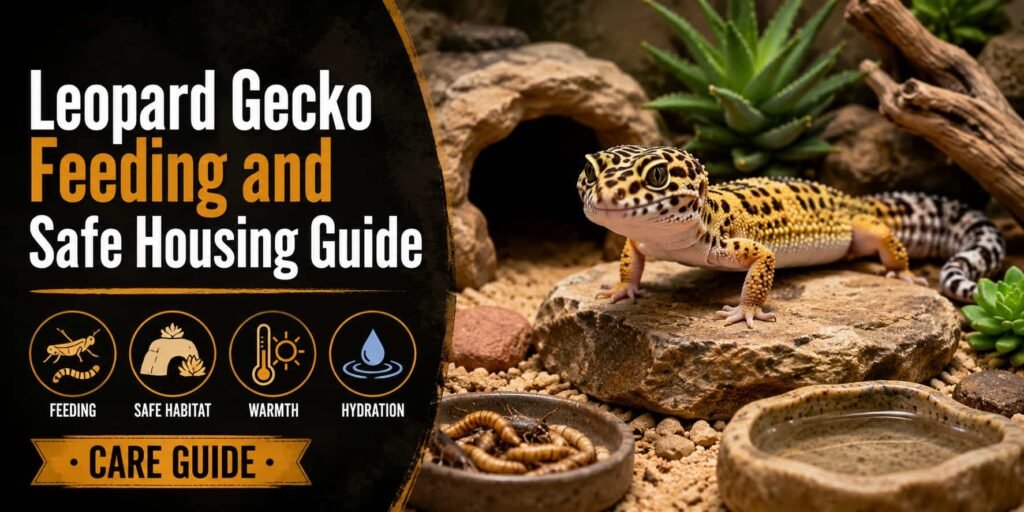
A leopard gecko stays healthiest when it has proper food, safe supplements, and its own private enclosure. These reptiles are mainly solitary, so they do not need another gecko or reptile companion to live well.
Safe Feeding Practices
Feeder insects should be the right size, healthy, and nutritious. They should also be properly gut-loaded, which means feeding the insects healthy food before offering them to your gecko. This helps your leopard gecko get better nutrition.
Common feeder insects include mealworms, crickets, Dubia roaches, and black soldier fly larvae. The insects should not be larger than the space between the gecko’s eyes.
Calcium supplements and vitamin supplements should be used based on the gecko’s age, health, and care needs. Young geckos, breeding females, and adults may need different supplement schedules.
Why Uneaten Insects Should Be Removed
Escape-proof feeding dishes can help keep mealworms and roaches inside one area. This makes feeding cleaner and easier to monitor.
Uneaten insects should not be left in the tank for too long. Crickets are especially important to remove because they may disturb, stress, or bite a resting gecko. Removing leftover insects also helps keep the leopard gecko habitat clean and safe.
Can Leopard Geckos Live With Other Leopard Geckos?
Leopard geckos are mostly solitary reptiles and do not need tank companions. Keeping more than one gecko together can cause stress, competition, injuries, and hidden bullying.
Adult male leopard geckos should never live together. Males are territorial and may fight seriously, causing bites, wounds, tail injuries, or worse.
A male and female should also not live together permanently. Repeated mating can place the female under heavy physical stress and may lead to weight loss, calcium deficiency, fertile eggs, and egg-laying complications.
Female leopard geckos may sometimes seem peaceful together, but they can still compete for food, heat, hides, and territory. Because bullying is not always easy to see, separate housing is the safest choice for both males and females.
Benefits of Keeping a Leopard Gecko Alone
Keeping a leopard gecko alone makes daily care easier and safer. You can clearly monitor its health without confusion.
Individual housing helps you track:
- Food intake
- Body weight
- Droppings
- Shedding
- Activity level
- General behavior
- Signs of stress or illness
A private leopard gecko enclosure also helps prevent food competition, fighting, mating stress, bullying, and accidental injuries.
Safe Leopard Gecko Care: Quarantine, Feeding, and Separate Housing
The safest way to care for a leopard gecko is to keep it in its own clean, secure, and properly equipped enclosure. Before bringing home another reptile, owners should prepare carefully. A new animal needs separate housing, proper quarantine, health checks, safe feeding, and long-term care. However, even good quarantine and proper care do not make mixed-species cohabitation safe.
Prepare for Long-Term Reptile Care
Buying another reptile is only the first cost. Owners must be ready to care for the animal throughout its life. This means providing the right habitat, heating, lighting, food, supplements, cleaning supplies, and exotic veterinary care.
Important costs may include:
- A separate reptile enclosure
- Heating and lighting equipment
- Thermostats and thermometers
- Food and feeder insects
- Calcium and vitamin supplements
- Safe substrate
- Hides and tank decorations
- Cleaning tools
- Veterinary treatment
Good planning helps every reptile stay healthy, safe, and comfortable.
Use a Separate Quarantine Area
Every new reptile should complete a quarantine period before being kept near existing pets. Quarantine helps reduce the risk of spreading mites, internal parasites, bacteria, respiratory infections, and other diseases.
During quarantine, keep the new reptile in a separate tank and use separate:
- Feeding tools
- Cleaning equipment
- Water dishes
- Hides
- Tank accessories
Always wash your hands after handling each animal. If the new reptile shows unusual droppings, weight loss, poor appetite, breathing problems, skin changes, or low energy, contact a qualified reptile veterinarian.
Quarantine helps protect your current leopard gecko, but it does not mean different species can safely share one tank.
Monitor Health and Behavior Carefully
Watch every new reptile closely. Check its appetite, activity level, shedding, droppings, body condition, and temperament. Some reptiles may seem calm at first, but their behavior can change with age, stress, feeding time, or breeding season.
A peaceful personality does not remove natural territorial behavior, predatory instincts, or feeding aggression. Long-term safety should never be based only on a short introduction.
Feed Leopard Geckos Safely
The safest way to support a leopard gecko’s natural hunting behavior is to offer suitable feeder insects, not another pet inside the tank. Live insects allow the gecko to hunt in a controlled and safe way.
Common feeder insects include:
- Crickets
- Mealworms
- Dubia roaches
- Black soldier fly larvae
- Locusts, where legally allowed
Feeders should be the correct size, healthy, nutritious, and properly gut-loaded. Calcium and vitamin supplements should also be used according to the gecko’s age, health, and care needs.
Why One Gecko Per Tank Is Safer
When several reptiles live in one tank, it can be hard to know which animal has stopped eating, lost weight, shed poorly, or produced abnormal waste. Keeping one leopard gecko per enclosure makes health problems easier to notice early.
Separate housing helps owners track:
- Food intake
- Body weight
- Droppings
- Shedding
- Activity level
- General behavior
- Signs of stress or illness
This makes daily care safer, clearer, and more accurate.
No Fighting, Bullying, or Resource Competition
A solitary leopard gecko cannot be chased, bitten, bullied, or blocked from reaching food, heat, water, or hiding places by another tank mate. This greatly lowers the risk of stress, bite wounds, tail injuries, poor feeding, and emergency veterinary visits.
Shared housing can create hidden problems. One animal may control the best hide, eat more food, or stop another animal from using the warm side of the tank. These issues may not look serious at first, but they can harm the weaker reptile over time.
Better Environmental Control
With one gecko in the tank, the entire habitat can be designed around its needs. Owners can provide the correct temperature gradient, humidity level, warm hide, cool hide, humid hide, lighting, substrate, and feeding routine.
This is much safer than trying to meet the needs of another reptile, amphibian, or pet in the same enclosure.
A Calm and Comfortable Habitat
Leopard geckos do not need social companionship like humans or many mammals. A gecko living alone is not automatically lonely. With proper care, gentle handling, safe hides, clean water, and environmental enrichment, it can stay active, secure, and healthy.
A peaceful setup is better than a crowded tank with competition, stress, or injury risks.
Best Housing Choice for Leopard Geckos
Choosing a tank mate for a leopard gecko is not just about matching temperature needs. Owners must also think about disease transmission, parasites, food competition, territorial behavior, breeding risks, predation, injuries, and long-term stress.
In most cases, the best tank mate for a leopard gecko is no tank mate at all. Separate housing gives each reptile the right food, space, temperature, humidity, shelter, and health monitoring.
The most responsible choice is simple: keep every leopard gecko in its own species-appropriate enclosure. This protects its health, comfort, safety, and overall well-being.
FAQ’s: Can Anything Live With a Leopard Gecko? [Answered]
Can Any Animal Live With a Leopard Gecko?
No. Leopard geckos are solitary and territorial reptiles that should live alone. Keeping them with other animals, including another leopard gecko, may cause stress, food competition, bullying, serious injuries, or cannibalism. A separate enclosure is always the safest option.
What Can Live With a Leopard Gecko?
A leopard gecko should usually live alone because it is a solitary and territorial reptile. Housing it with other geckos or animals may cause stress, competition, fighting, serious injuries, or cannibalism. In a properly maintained bioactive enclosure, small cleanup insects such as springtails and isopods may be added safely.
What Causes Stress in Geckos?
Geckos may become stressed by an overcrowded enclosure, sudden temperature changes, loud noises, excessive handling, poor hiding spaces, or unfamiliar pets. Warning signs, such as tail waving, may indicate fear or discomfort. Check the habitat conditions and remove anything that could make your gecko feel unsafe.
How Old Is a 7-Inch Leopard Gecko?
A 7-inch leopard gecko is usually a sub-adult or adult, often between 7 and 18 months old. However, body length alone cannot confirm its exact age, because growth depends on genetics, sex, diet, health, and living conditions.
What Is the Friendliest Gecko?
The leopard gecko is widely considered one of the friendliest geckos because it is usually calm, gentle, slow-moving, and easy to handle. Crested geckos and African fat-tailed geckos are also known for their docile temperament and rarely bite when handled properly.