
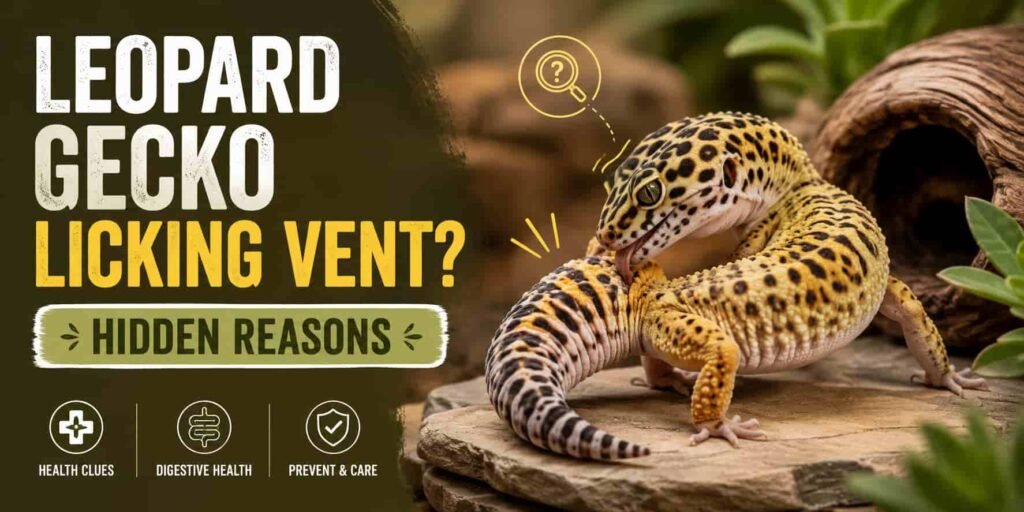
What Causes A Leopard Gecko To Lick Its Vent?
If your leopard gecko is licking its bum and it’s driving you crazy, consider the context: is it just walking around its tank, eating, or perhaps doing it at night just after it wakes up from a nap? This behaviour is a normal part of their grooming routine.
Ever seen your leopard gecko licking its vent and felt a mix of curiosity and concern? This is a normal behaviour in the world of reptile care, so there’s no need for a reptile owner to recoil in disgust or rush to the nearest reptile vet. Most causes of this behaviour are benign, like the need to clean themselves after shedding or defecating.
Why Is My Leopard Gecko Licking His Bum?
Leopard geckos may lick their bum or vent area as part of normal grooming, hygiene, and self-cleaning behavior. Unlike humans, geckos cannot clean this area with hands, so they often use their tongue to keep themselves clean. This may look strange or unpleasant to owners, but in many cases, it is a natural part of leopard gecko care.
Why Leopard Geckos Lick Their Vent Area
A leopard gecko may lick its vent for several reasons, including cleaning after pooping, shedding, constipation, impaction, egg laying, territory marking, or general body hygiene. Both male and female geckos may show this behavior, but the reason can depend on their age, health, sex, and recent activity.
Female leopard geckos may lick the area after laying eggs because of mild discomfort or natural body secretions. Male geckos may also lick their vent when they are marking territory or releasing a wax-like scent to show breeding readiness. In most cases, this is normal reptile behavior.
Licking After Pooping
One common reason for vent licking is cleaning after a bowel movement. Leopard geckos are naturally clean reptiles, and many of them use the same corner of their enclosure as a bathroom. After pooping, they may lick their vent area to remove waste and keep themselves clean.
Although this may look dirty to humans, it is part of their normal self-care routine. However, owners should always wash their hands after handling a leopard gecko or cleaning its tank. Reptiles can carry Salmonella bacteria, even when they look healthy. Good hand hygiene, regular tank cleaning, and safe handling are important, especially around children, elderly people, or anyone with a weak immune system.
Licking During Shedding
Another common cause is shedding. Leopard geckos shed their old skin as they grow, and this process can sometimes feel uncomfortable. Skin may come off in small pieces around the head, legs, tail, toes, and vent area.
If old skin sticks near the vent, your gecko may lick or gently pull at it to loosen it. This helps reduce itchiness, skin irritation, and discomfort. You may also notice your gecko rubbing against surfaces inside the enclosure.
If stuck shed remains around the toes, tail, or vent, a shallow warm soak can help. The water should be lukewarm, not hot, and the gecko should be watched closely. If the stuck skin does not come off easily, avoid pulling it forcefully and contact a reptile vet.
Licking Due to Constipation or Impaction
Sometimes, a leopard gecko may lick its vent because it is having trouble pooping. Constipation or impaction can make the gecko uncomfortable, and licking may be a way to soothe the area or encourage movement.
Signs of possible impaction include no poop for several days, loss of appetite, bloating, low energy, straining, or a hard belly. A warm shallow bath may help support digestion and hydration. However, avoid giving oils or home treatments unless a reptile veterinarian recommends them.
When This Behavior Is Normal
Occasional bum licking or vent licking is usually normal if your leopard gecko is eating well, pooping normally, staying active, and showing no swelling, redness, blood, discharge, or pain. In these cases, your gecko is likely just cleaning itself.
When You Should Be Concerned
You should pay closer attention if the licking becomes excessive or is followed by other symptoms. Warning signs include swollen vent, redness, bleeding, bad smell, discharge, stuck shed, loss of appetite, weight loss, lethargy, or no bowel movement for several days.
These signs may point to infection, parasites, impaction, or another health problem. A reptile vet can check the gecko properly and give safe treatment.
Cleaning After Egg Laying in Female Leopard Geckos
A female leopard gecko may lick her vent area after laying eggs. This is a normal part of post-egg laying care and helps her clean away fluid, residue, or natural discharge from the area. Egg laying can be tiring and uncomfortable, especially for a gravid leopard gecko, so licking may also help reduce mild irritation and support comfort.
This behavior can happen whether the eggs are fertile or infertile. A female does not always need to mate to produce eggs, so even a gecko kept alone may show this behavior after laying infertile eggs. In most cases, light vent licking after egg laying is not a serious problem.
However, owners should watch her closely after she lays eggs. If she looks weak, stops eating, keeps straining, has swelling near the vent, or seems unable to pass all eggs, she may need help from a reptile veterinarian. These signs can point to egg binding, stress, or another health issue.
Internal Parasites and Excessive Vent Licking
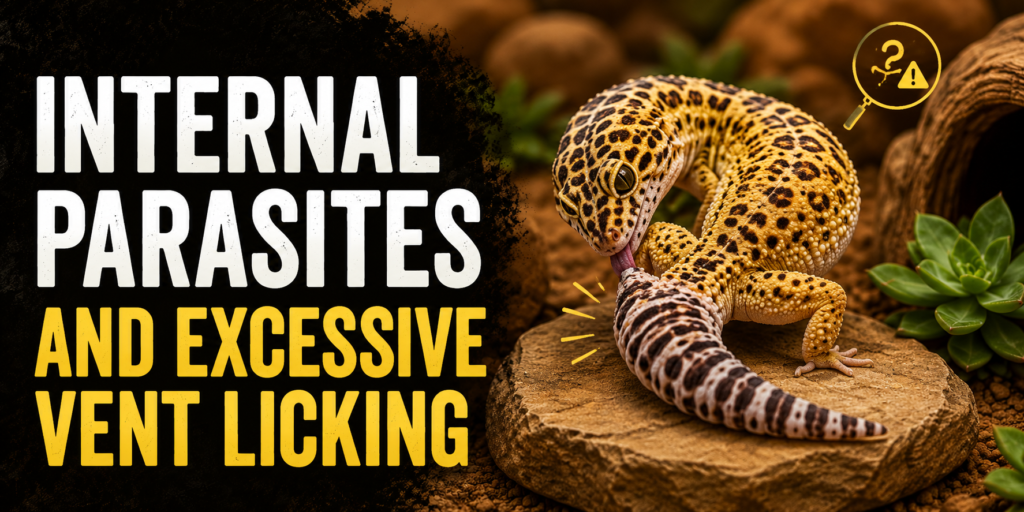
In rare cases, a leopard gecko may lick its vent because of discomfort caused by internal parasites. Parasites such as pinworms, coccidia, or cryptosporidium can affect the digestive system and make a gecko feel unwell.
If the licking becomes frequent or unusual, owners should look for other symptoms. A gecko with parasites may show rapid weight loss, loss of appetite, diarrhea, loose stool, vomiting or regurgitation, low energy, or a shrinking fat tail. Since the tail stores important body fat, a thin tail can be a warning sign of poor health.
Parasites cannot be safely treated at home without proper testing. A vet may need to check a fresh stool sample to confirm the cause and provide the correct treatment. If your leopard gecko is losing weight, refusing food, or passing abnormal stool, it is best to contact a reptile vet as soon as possible
When a Reptile Vet Should Check Your Gecko
If your leopard gecko is licking its vent area more than usual, it may be a sign of discomfort. In some cases, this can happen because of internal parasites, digestive problems, impaction, or irritation around the vent. A reptile veterinarian can check your gecko properly and may ask for a fresh stool sample to test for parasites.
If parasites are found, the vet can give the correct reptile-safe medication. This helps remove the parasites from the digestive system and protects your gecko from further health problems. Avoid treating parasites at home without vet advice because the wrong medicine or dose can be dangerous.
Licking After Territory Marking
Leopard geckos are territorial reptiles, which means they like to claim their own space. They may mark their area inside the tank, vivarium, or enclosure by releasing a waxy substance from pores near the vent area. This scent marking can tell other geckos that the space belongs to them.
Both male and female leopard geckos may show this behavior. Males may do it to show dominance or attract a mate, while females may mark when they are ready to breed. After marking, your gecko may lick the vent area to clean away extra wax, scent, or dried secretions.
This is usually normal. However, if the waxy material builds up, becomes hard, or causes swelling, do not pull it forcefully. You can use a warm, damp cotton swab very gently if the buildup is small and loose. If it does not come off easily, contact a reptile vet.
It is also safer to keep leopard geckos alone. Housing two geckos together can lead to stress, fighting, injury, unwanted breeding, or serious territorial aggression. A single gecko in a properly set up enclosure is usually healthier and safer.
Natural Cleaning Behavior
Leopard geckos are naturally clean animals. They often choose one area of the enclosure as their bathroom spot, which makes cleaning easier for both the gecko and the owner. After pooping, shedding, or marking territory, they may lick their vent to keep the area clean.
This behavior may look strange, but it is part of normal reptile grooming, self-cleaning, and body hygiene. Since geckos cannot clean themselves with hands like humans, they use their tongue to remove dirt, waste, loose shed, or dried secretions.
Should You Be Worried About Vent Licking?
In most cases, occasional vent licking is normal and not a reason to panic. If your leopard gecko is eating well, pooping normally, staying active, and has no swelling or discharge, the licking is likely just part of its cleaning routine.
However, frequent or aggressive licking may mean something is wrong. Watch for warning signs such as sudden weight loss, difficulty pooping, loss of appetite, loose stool, diarrhea, swollen vent, redness, bleeding, bad smell, or a shrinking fat tail.
If these symptoms appear, your gecko may have parasites, constipation, impaction, infection, or another health issue. In that case, a reptile vet should examine your gecko and provide safe treatment.
When to Contact a Reptile Vet
If your leopard gecko shows unusual signs that do not improve within a few days, it is best to speak with a reptile veterinarian. A vet can check your gecko, find the real cause, give a proper diagnosis, and suggest a safe treatment plan.
You should not ignore symptoms such as excessive vent licking, loss of appetite, weight loss, diarrhea, swelling, redness, stuck shed, or trouble pooping. These signs may point to mites, parasites, impaction, infection, or another health problem.
Read Also: Why Is My Gecko Constipated? [Safe Solutions]Do Leopard Geckos Groom Themselves?
Yes, leopard geckos do groom themselves in their own way. Vent licking is one part of their natural grooming behavior. Since they cannot clean themselves with hands, they use their tongue to remove dirt, loose skin, waste, or dried secretions from the body.
Grooming is especially common during shedding. Leopard geckos shed the outer layer of their skin as they grow. Baby geckos shed more often because they grow faster, while juvenile and adult geckos usually shed less often. During this time, they may lick their skin to loosen old shed and keep themselves clean.
Why Leopard Geckos Lick the Air
Leopard geckos may also lick the air. This is normal reptile behavior and helps them understand their surroundings. By licking the air, they collect scent particles and learn more about their environment, possible food, nearby objects, and other animals.
This behavior is not always about cleaning. Sometimes, your gecko is simply exploring its tank, checking smells, or trying to understand what is around it.
Could Excessive Licking Mean Mites?
If your leopard gecko is licking its body or vent area too much, mites may be one possible reason. Mites are tiny pests that can irritate your gecko’s skin and cause stress. They may come from dirty bedding, contaminated supplies, new reptiles, or unclean enclosure items.
Check the tank, substrate, hides, water dish, food bowl, and decorations carefully. Look for tiny moving dots, black specks, skin irritation, or unusual rubbing behavior. If you suspect mites, clean the enclosure properly and contact a reptile vet for safe treatment.
Wash bowls, hides, and other safe items with hot water and reptile-safe cleaning products. Rinse everything well before placing it back in the enclosure. If bedding, decorations, or porous items look dirty, moldy, or contaminated, throw them away and replace them.
Keeping the Habitat Clean
A clean enclosure helps prevent mites, bacteria, mold, and other health problems. Remove poop, leftover insects, and dirty bedding regularly. Keep the water dish clean, check for damp spots, and make sure the tank has proper heat and ventilation.
Good habitat hygiene supports your gecko’s immune system and lowers the risk of skin irritation, parasites, and digestive issues.
Summary
Leopard geckos groom themselves by licking their skin, vent area, and sometimes the air. This is usually normal and helps them stay clean and explore their surroundings. However, if licking becomes excessive or comes with weight loss, poor appetite, diarrhea, swelling, or skin irritation, your gecko may need a reptile vet. A clean tank, safe bedding, fresh water, and regular observation are important for healthy leopard gecko care..
FAQ’s: Leopard Gecko Licking Vent? [Hidden Reasons]
Why is my leopard gecko licking his vent?
A leopard gecko may lick his vent as part of normal grooming and self-cleaning behavior. They often clean this area after pooping, shedding, or marking territory. Male leopard geckos may also lick the pores near the vent to remove waxy secretions. This is usually normal, but if you notice swelling, redness, bleeding, discharge, weight loss, or trouble pooping, contact a reptile vet.
Why is my leopard gecko licking his face?
A leopard gecko may lick his face or lips during shedding because he is trying to loosen old skin around his mouth, eyes, and nose. This is usually normal grooming behavior. However, frequent face licking can sometimes point to a health issue, such as mouth rot, skin irritation, stuck shed, or metabolic bone disease. Check for swelling, redness, discharge, loss of appetite, or trouble eating. If you notice these signs, contact a reptil
What are signs of stress in leopard geckos?
Common signs of stress in leopard geckos include tail waving, hiding more than usual, loss of appetite, fast breathing, glass surfing, vocalizing, biting, or trying to escape. Your gecko may also become less active or avoid handling. These behaviors usually mean your leopard gecko feels unsafe, uncomfortable, or disturbed. To reduce reptile stress, keep the enclosure quiet, provide proper temperature, add secure hides, avoid loud noise, and handle your gecko gently. If stress signs continue, contact a reptile vet.
How can you tell if a leopard gecko has vitamin A deficiency?
A leopard gecko with vitamin A deficiency may show eye problems, swollen eyelids, difficulty shedding, dry skin, mouth issues, poor appetite, or low energy. This condition is also called hypovitaminosis A and can affect the gecko’s vision, skin health, and body tissues. If it is not treated, it may lead to eye infections, blindness, or serious discomfort. A reptile vet should check your gecko if these signs appear, because vitamin problems need safe diagnosis and proper treatment.