
![Why Is My Leopard Gecko Climbing [Top Reasons]](https://reptileopedia.com/wp-content/uploads/2026/06/Why-Is-My-Leopard-Gecko-Climbing-Top-Reasons-2-1024x512.jpg)
Do Leopard Geckos Climb?
Yes, leopard geckos can climb, but their climbing ability is limited. Unlike crested geckos and other tree-dwelling species, leopard geckos are terrestrial reptiles that spend most of their time on the ground.
In the wild, they live in dry, rocky areas where they may climb over stones, small ledges, and uneven surfaces. Their bodies and feet are designed for moving across rocky terrain, not for climbing tall trees, glass walls, or smooth vertical surfaces.
Providing safe climbing opportunities inside a leopard gecko’s enclosure can support physical activity, natural exploration, and mental stimulation. Low rocks, stable branches, textured hides, and reptile-safe platforms can make the habitat more interesting. However, all climbing structures should be secure and kept close to the ground to reduce the risk of falls and injuries.
Unlike many other gecko species, leopard geckos do not have sticky toe pads. Their toes have small claws that help them grip rough surfaces, but they cannot easily hold onto smooth glass or climb vertical walls. This is why their enclosure should focus on ground-level enrichment rather than tall climbing decorations.
Understanding the leopard gecko’s natural behaviour makes it easier to create a safe and comfortable habitat. They may enjoy climbing occasionally, but they are much better at exploring rocks, caves, hides, and low surfaces than reaching high places.
How Leopard Gecko Feet Support Climbing
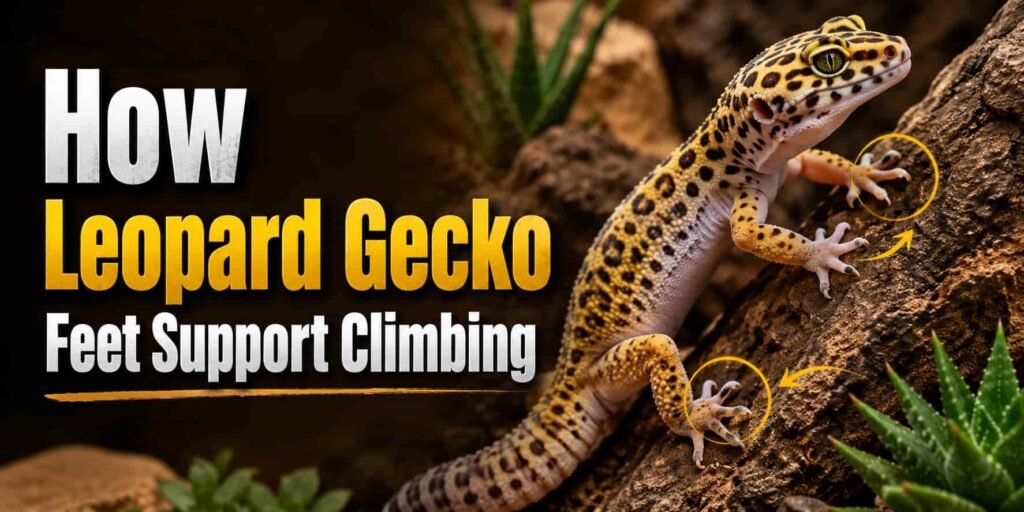
The feet of a leopard gecko are specially adapted for walking and climbing over rough ground. Unlike crested geckos and other arboreal species, leopard geckos do not have sticky toe pads that help them grip glass, walls, or other smooth vertical surfaces.
Instead, they have small toes with claws that provide traction on rocks, hard soil, clay, and textured surfaces. These claws help them hold onto uneven ground and climb over low obstacles without slipping.
This difference is linked to their natural environment. Leopard geckos come from dry, rocky regions where they spend most of their time on the ground. Sticky toe pads would be less useful in dusty habitats because dirt could interfere with their gripping ability. Their claws are therefore better suited to their desert habitat and ground-dwelling lifestyle.
Their climbing style focuses on balance, grip, and stability rather than high vertical movement. This shows how different gecko species have developed physical features that match their specific environments.
Providing Safe Climbing Opportunities
Leopard geckos should be given safe opportunities to climb, but all structures must remain low and secure. Suitable options include stable rocks, cork bark, textured hides, reptile-safe branches, and low platforms.
Every climbing object should be firmly positioned so that it cannot fall, roll, or trap the gecko. Avoid tall decorations, steep surfaces, and unstable structures because leopard geckos are not skilled vertical climbers and may be injured if they fall.
A well-designed leopard gecko enclosure should combine low climbing areas with hides, tunnels, open ground, and different textures. This provides healthy physical exercise, environmental enrichment, and mental stimulation while supporting the gecko’s natural behaviour.
How Gecko Feet Grip Smooth Surfaces
Many gecko species can walk across walls and ceilings because their toes contain millions of microscopic hair-like structures called setae. Each seta divides into even smaller tips known as spatulae, which create extremely close contact with the climbing surface.
This contact produces weak molecular attractions called van der Waals forces. Although each force is very small, millions of them working together create enough grip to support the gecko’s body weight.
Geckos can attach and release their feet within moments. As they move, they place their toes at a specific angle and then peel them away from the surface. This rapid attachment and release allow them to run quickly across glass, walls, branches, and ceilings.
However, not every gecko has the same type of feet. Leopard geckos do not have the advanced adhesive toe pads found in crested geckos, house geckos, and other climbing species. Their toes have small claws that are better suited to gripping rocks, hard soil, and uneven ground.
For this reason, leopard geckos can climb rough, low surfaces but cannot easily stick to glass or move across smooth vertical walls.
The Science Behind Gecko Adhesion
The gripping ability of gecko feet depends on the structure, flexibility, and movement of the toe hairs. The setae must make close contact with a surface at the correct angle to create strong adhesion.
When a gecko presses and slightly slides its toes, more spatulae touch the surface. This increases the total contact area and strengthens the molecular attraction. To release its foot, the gecko changes the angle of its toes and peels them away.
The flexibility of the setae also helps climbing geckos absorb movement, change direction quickly, and maintain balance. This allows them to escape predators and move confidently across different surfaces.
Water, dirt, and debris may temporarily affect the performance of some gecko toe pads. However, adhesive geckos can often clean their feet naturally as they continue walking.
Leopard geckos rely on a different movement system. Since they lack adhesive toe pads, they use their claws, legs, balance, and body strength to travel across rocky terrain and low obstacles.
Adding Safe Climbing Features to the Enclosure
Leopard geckos benefit from opportunities to climb, crawl, hide, and explore, provided that the enclosure is arranged safely. Low rocks, cork bark, stable logs, textured hides, tunnels, and small platforms can make the habitat more stimulating.
Because leopard geckos are terrestrial lizards, their enclosure should offer more floor space than height. A long and wide habitat allows them to walk, hunt, explore, and move between warm, cool, and humid areas.
All climbing decorations should be:
- Low enough to prevent dangerous falls
- Firmly secured so they cannot move or collapse
- Free from sharp edges and small gaps
- Strong enough to support the gecko’s weight
- Easy to clean and disinfect
Avoid unstable rock piles and tall branches. Leopard geckos may climb confidently but can still slip because their feet are not designed to grip smooth or steep surfaces.
A suitable enclosure should combine ground-level enrichment, several hiding places, open walking areas, and a few safe climbing features. This creates a habitat that supports natural behaviour without placing the gecko at unnecessary risk.
Why Leopard Geckos Are Ground-Dwelling Reptiles
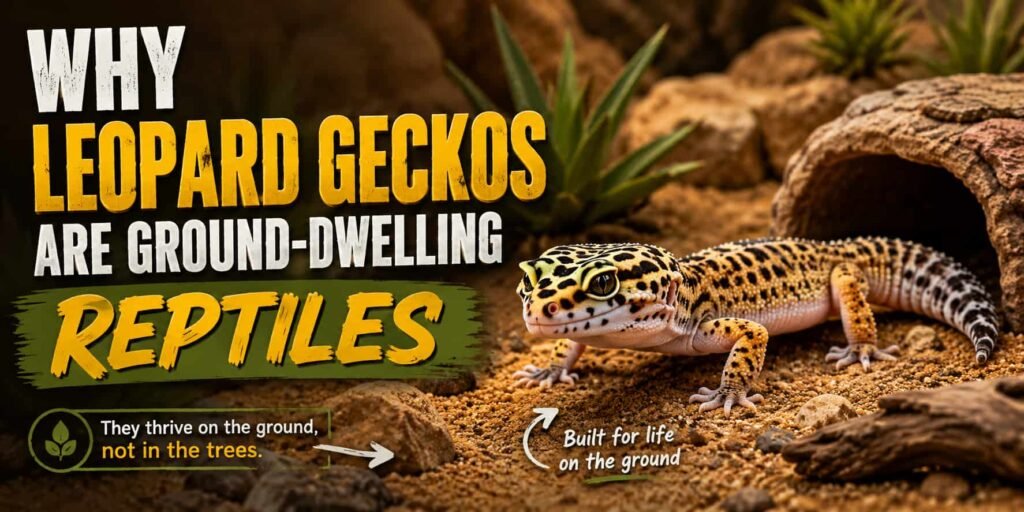
Leopard geckos evolved in dry, rocky environments where moving across the ground is more important than climbing trees or walls. Their body shape, toes, and claws are adapted for navigating stones, cracks, caves, and uneven terrain.
Unlike many arboreal geckos, leopard geckos do not need sticky toe pads to survive. Instead, their claws provide traction on rough ground and help them climb over small rocks and low ledges.
Their enclosure should therefore be wide and well organised rather than narrow and extremely tall. Glass or front-opening reptile enclosures can work well when they provide enough floor space, ventilation, heating, and security.
Wire mesh cages are generally unsuitable because a leopard gecko’s toes may become trapped, heat can escape easily, and maintaining the correct environmental conditions may be difficult.
A secure lid is also important, especially in homes with children, cats, dogs, or other pets. The lid should prevent escape while still allowing suitable airflow. Whether a screen or partially covered top is appropriate depends on the enclosure type and the temperature and humidity requirements inside it.
Occasional climbing is normal, but constant attempts to escape may suggest stress, incorrect temperatures, limited space, unsuitable lighting, or insufficient hiding places. By creating a secure, spacious, and naturalistic habitat, owners can support their leopard gecko’s comfort, activity, and overall well-being.
Safe Climbing Items for a Leopard Gecko Tank
You can make your leopard gecko’s enclosure more interesting by adding low, stable objects that encourage safe climbing and exploration. Suitable choices include:
- Smooth, firmly secured rocks
- Cork bark
- Short branches or small logs
- Textured reptile hides
- Low platforms and ledges
- Reptile-safe artificial decorations
These items provide opportunities for climbing, basking, hiding, and exploring, which can support both physical activity and mental stimulation. However, all decorations should remain close to the ground because leopard geckos are not skilled high climbers.
Make sure every object is stable and cannot roll, collapse, or trap your gecko. Avoid sharp rocks, narrow gaps, splintered wood, and decorations with small removable pieces.
Read Also: Leopard Gecko Eyes Shut? [When to Worry]Cleaning Tank Decorations Safely
All new enclosure items should be properly cleaned before being placed inside the tank. Store-bought reptile decorations can usually be washed with warm water and treated with a reptile-safe disinfectant according to the product instructions.
Rinse each item thoroughly and allow it to dry completely before returning it to the enclosure. Any leftover soap, bleach, disinfectant, or chemical fumes could irritate or harm your gecko.
Outdoor rocks, branches, and bark may carry parasites, bacteria, fungi, pesticides, or other contaminants. For this reason, commercially prepared reptile products are often the safer choice. Do not heat plastic, resin, painted, glued, or chemically treated decorations in an oven, as they may melt or release harmful fumes.
Regular cleaning helps maintain good enclosure hygiene and reduces the risk of illness.
Why Is My Leopard Gecko Climbing the Glass?
Occasional climbing and exploration can be normal, especially when a leopard gecko is adjusting to a new habitat. However, repeated attempts to climb the glass or escape may suggest that something in the enclosure is causing discomfort.
Common causes may include:
- Incorrect temperature
- Insufficient hiding places
- Limited floor space
- Excessively bright lighting
- Hunger or restlessness
- Stress from frequent handling
- An uncomfortable or exposed enclosure layout
- Disturbance from another leopard gecko
Check the warm side, cool side, and surface temperatures with reliable digital thermometers. The enclosure should also contain a warm hide, a cool hide, and a humid hide to help the gecko feel secure and support healthy shedding.
Leopard geckos are generally best housed alone. Keeping two together can lead to competition, bullying, mating pressure, injury, or chronic stress—even when no obvious fighting is visible. A gecko that feels threatened may repeatedly climb the walls while trying to escape.
How to Reduce Excessive Climbing
Begin by reviewing the complete enclosure setup. Make sure your leopard gecko has enough floor space, suitable temperatures, multiple secure hides, fresh water, and low-level enrichment.
If more than one gecko shares the enclosure, separating them into individual habitats is usually the safest solution. A temporary divider may not provide complete protection because the animals may still see, smell, or disturb one another.
Because leopard geckos are most active around dusk and during the night, avoid overly bright or continuous lighting. They should always have shaded hiding areas where they can rest without being disturbed. Do not fully cover the enclosure in a way that blocks necessary ventilation.
If the climbing continues despite suitable care—or appears alongside poor appetite, weight loss, weakness, abnormal droppings, or unusual behaviour—consult a qualified reptile veterinarian.
Safe Climbing During Handling
Supervised handling can also provide gentle exercise. Allow your leopard gecko to walk onto your hands rather than grabbing it from above. Keep your hands low over the floor, bed, or another soft surface so the gecko cannot fall from a dangerous height.
You can slowly move one hand in front of the other, creating a safe path for the gecko to explore. Always support its body, avoid holding or pulling the tail, and stop the session if it becomes restless or tries to escape.
Short, calm handling sessions can promote trust, bonding, physical exercise, and environmental enrichment. However, your leopard gecko should never be placed on your shoulder or allowed to climb high without support, as a sudden jump or fall could cause injury.
FAQ’s: Why Is My Leopard Gecko Climbing? [Top Reasons]
Why Is My Leopard Gecko Trying to Climb?
Your leopard gecko may be climbing because it feels bored or wants to explore. An empty enclosure without enough hiding spots, rocks, climbing structures, or digging areas can lead to glass surfing. Adding safe enrichment and occasionally changing the tank setup can keep your gecko active and entertained.
What Are the Signs of Stress in Leopard Geckos?
Common signs of stress in a leopard gecko include tail waving, hissing, vocalizing, biting, hiding excessively, refusing food, and repeatedly scratching or climbing the glass. These behaviors may indicate that your gecko feels frightened, uncomfortable, or unsafe.
Checking the enclosure temperature, humidity, hiding spots, lighting, and handling routine can help reduce stress and create a calmer, healthier environment.
Rewrite it most professionally. There should be no plagiarism and no AI detection. Do not miss any NLP-related, semantically, and contextually related keywords. Summarize it if possible. Start with the most reasonable words. Use simple English. So that a 16-year-old person can also understand. Also
What Are the Signs of Stress in Leopard Geckos?
Common signs of stress in a leopard gecko include tail waving, hissing, vocalizing, biting, hiding excessively, refusing food, and repeatedly scratching or climbing the glass. These behaviors may indicate that your gecko feels frightened, uncomfortable, or unsafe.
Checking the enclosure temperature, humidity, hiding spots, lighting, and handling routine can help reduce stress and create a calmer, healthier environment.
What Are the Signs of a Sick Leopard Gecko?
A sick leopard gecko may show changes in its appearance, appetite, or behaviour. Common warning signs include a thin or shrinking tail, sunken eyes, unusual tiredness, loss of appetite, diarrhea, abnormal droppings, weight loss, and difficulty shedding.
Breathing problems, swollen joints, weakness, or trouble walking may also indicate illness. Contact an experienced reptile veterinarian promptly if these symptoms appear, especially if they continue or become worse.
How Can You Tell If a Leopard Gecko Is Low on Calcium?
A calcium deficiency can cause metabolic bone disease (MBD) in leopard geckos. Common signs include a soft or rubbery jaw, shaking, muscle tremors, weakness, bent legs, a crooked spine, and a zigzag-shaped tail. The gecko may also struggle to walk or lift its body off the ground.
These symptoms require prompt attention from an experienced reptile veterinarian, as early treatment may prevent the condition from becoming more severe.