
![How to Travel Safely With a Leopard Gecko [13 Tips]](https://reptileopedia.com/wp-content/uploads/2026/06/How-to-Travel-Safely-With-a-Leopard-Gecko-13-Tips-1024x512.jpg)
Travel Safely with a leopard gecko requires careful preparation. You must provide a secure reptile travel carrier, maintain a safe temperature, reduce stress, and pack all essential supplies. The following steps will help keep your gecko safe and comfortable throughout the journey.
Preparing a Leopard Gecko for Travel
Before travelling, check that your leopard gecko appears healthy, active, and properly hydrated. Avoid unnecessary journeys when your gecko is sick, injured, shedding badly, or showing signs of stress.
Plan the route in advance and consider the journey time, weather conditions, temperature changes, and availability of suitable accommodation.
1. Select a Secure Reptile Carrier
Choose a small, sturdy, and well-ventilated travel carrier. It should provide enough room for your gecko to turn around but should not be so large that the animal slides around during movement.
A plastic critter keeper, ventilated reptile box, or securely closed container may be suitable. Check that the lid cannot open accidentally and that all ventilation holes are too small for your gecko to escape through.
2. Help Your Gecko Adjust to the Carrier
Place your gecko inside the empty carrier for short periods before the journey. This allows the animal to become familiar with its smell, shape, and surroundings.
Keep these practice sessions calm and brief. Never force your gecko to remain inside if it becomes highly distressed.
3. Add a Safe and Comfortable Lining
Line the bottom of the carrier with clean paper towels or another non-slip, reptile-safe material. The lining should provide grip and absorb any waste produced during the journey.
Avoid sand, wood chips, soil, and other loose substrates because they can move around, cause irritation, or be accidentally swallowed.
4. Maintain a Safe Temperature
Leopard geckos depend on external warmth to control their body temperature. Monitor the carrier with a reliable digital thermometer and protect it from extreme heat or cold.
Never place the carrier directly beside an air-conditioning vent, heater, sunny window, or hot vehicle surface. A wrapped heat pack may be used in cold conditions, but it must never touch the gecko or overheat the carrier.
5. Pack the Essential Supplies
Prepare a small reptile travel kit containing:
- Paper towels
- Drinking water
- A digital thermometer
- A secure temporary hide
- Spare carrier lining
- Food for longer journeys
- Cleaning supplies
- Any necessary medication
- Emergency contact details for a reptile veterinarian
A healthy adult gecko may not need food during a short journey, but fresh water and correct temperature control remain important.
6. Secure the Carrier Properly
Place the carrier on a stable surface where it cannot fall, slide, or tip over. Secure it with a seat belt or position it inside a larger padded box.
Do not place the carrier loosely on a seat, dashboard, or vehicle floor. Sudden braking or sharp turns could cause serious injury.
7. Reduce Loud Sounds and Vibrations
Leopard geckos can detect sounds and vibrations. Loud music, shouting, road noise, and repeated handling may increase travel stress.
Keep the vehicle calm and quiet. Speak softly and avoid placing speakers or vibrating equipment close to the carrier.
8. Keep Stops to a Minimum
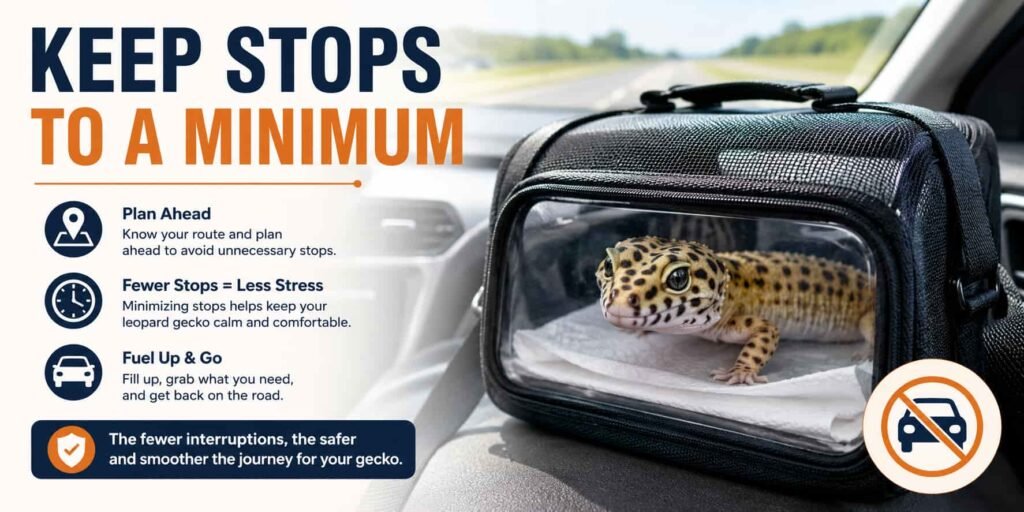
Plan fuel, food, and rest stops before leaving. Fewer stops can reduce changes in temperature, noise, light, and movement.
Never leave your gecko alone inside a parked vehicle. Car temperatures can become dangerous within a short period, even when the outside weather feels mild.
9. Choose a Smooth and Direct Route
Select the safest and most direct road whenever possible. Avoid rough roads, unnecessary detours, and areas with heavy traffic.
Drive gently and avoid sudden acceleration, hard braking, and sharp turns. Smooth driving helps prevent the carrier from moving and reduces stress on your gecko.
10. Check Your Gecko During the Journey
Observe your gecko occasionally without repeatedly opening the carrier. Check the temperature, carrier position, ventilation, and your gecko’s breathing and behaviour.
Warning signs may include:
- Open-mouth breathing
- Extreme weakness
- Unusual trembling
- Constant escape attempts
- Loss of balance
- Severe colour changes
Stop safely and correct the environment if you notice signs of overheating, chilling, or serious distress.
11. Limit Stressful Sights and Movement
Cover part of the carrier with a light, breathable cloth to reduce bright light and visual stimulation. Always leave the ventilation areas uncovered.
Avoid unnecessary handling, unfamiliar animals, crowded places, and excessive attention from other people.
12. Introduce the New Environment Gradually
When you arrive, place the carrier in a quiet room with a stable temperature. Allow your gecko a few minutes to settle before transferring it.
Keep dogs, cats, children, and loud activity away from the area. A calm introduction can help reduce relocation stress.
13. Return the Gecko to Its Habitat Promptly
Move your gecko into a properly prepared enclosure as soon as possible. The habitat should have safe heating, clean water, hides, suitable flooring, and the correct temperature gradient.
Allow the gecko to rest after travelling. It may hide or refuse food temporarily because of stress, but prolonged appetite loss or unusual behaviour should be discussed with a reptile veterinarian.
Can a Leopard Gecko Travel by Plane?

Some airlines may allow reptiles, while others prohibit them from travelling in the cabin or cargo hold. Rules can vary by airline, destination, and country.
Contact the airline before booking and ask about:
- Reptile transport rules
- Approved carrier dimensions
- Health certificates
- Import or export permits
- Temperature restrictions
- Cabin and cargo policies
Air travel can expose reptiles to delays, noise, handling, and temperature changes. Consider specialist animal transport for long-distance or international journeys.
Can a Leopard Gecko Travel by Train?
Check the operator’s current rules before travelling. During the journey, keep the carrier secure, ventilated, quiet, and away from direct sunlight or cold air.
Safely Transporting Pet Lizards by Car
A car is often the easiest way to transport a leopard gecko because you can control the temperature, noise, route, and carrier position.
Use a secure carrier, monitor the temperature, drive smoothly, and never leave the lizard unattended inside the vehicle. These precautions also apply to many other small pet lizards, although temperature and care requirements may vary by species.
How to Travel With a Leopard Gecko Safely
Travelling with a leopard gecko can be manageable when you prepare carefully. However, geckos usually feel safest in their familiar enclosure, so leaving them at home with a trusted pet sitter is often the better choice.
The sitter should provide fresh water, remove waste, check the enclosure temperature, and follow the gecko’s normal feeding routine. For longer trips, give the caregiver clear written instructions and the contact details of a reptile veterinarian.
Although healthy adult leopard geckos may tolerate short periods without food, they should always have access to fresh water and proper care. Young, sick, underweight, or recovering geckos require closer supervision. If taking your pet is unavoidable, keep the journey short and take steps to reduce travel stress.
Preparing to Transport a Leopard Gecko
Leopard geckos can become stressed by sudden changes in temperature, movement, noise, and surroundings. Whether you are travelling by car, train, or plane, careful planning is essential.
Before leaving, consider:
- The length of the journey
- Expected weather and temperature
- The type of reptile travel carrier
- Feeding and hydration needs
- Airline or train pet policies
- A safe temporary enclosure at your destination
A well-planned trip will make the experience safer and less stressful for both you and your gecko.
1. Select a Secure Travel Carrier
Choose a strong, escape-proof carrier with enough ventilation. It should allow your leopard gecko to turn around and stretch comfortably, but it should not be so large that the animal is thrown around during sudden stops or sharp turns.
A small plastic critter keeper or secure container with air holes can work well. Make sure the holes are large enough for airflow but too small for the gecko to escape.
Remove loose substrate, stones, branches, and heavy decorations. These items may slide, fall, or injure your gecko during the journey. A lightweight and securely positioned hide may be added to help the gecko feel protected.
2. Introduce the Carrier Before Travelling
Allow your gecko to become familiar with the carrier several days before the trip. Place the animal inside for a few minutes at first, then gradually increase the time to around 20 or 30 minutes.
These short practice sessions can help your gecko adjust to the carrier’s smell, surface, and limited space. Keep the surroundings quiet and avoid forcing the gecko to stay inside if it shows severe signs of distress.
3. Add a Non-Slip Carrier Lining
Cover the bottom of the carrier with clean paper towels or a non-toxic, non-adhesive shelf liner. A textured surface gives your gecko better grip and prevents slipping while the vehicle is moving.
Paper towels are especially useful because they are:
- Soft and absorbent
- Easy to replace
- Simple to clean
- Safe for short journeys
Avoid sand, soil, wood chips, and other loose substrates, as they may move around, irritate the gecko, or be accidentally swallowed.
4. Maintain A Safe Temperature
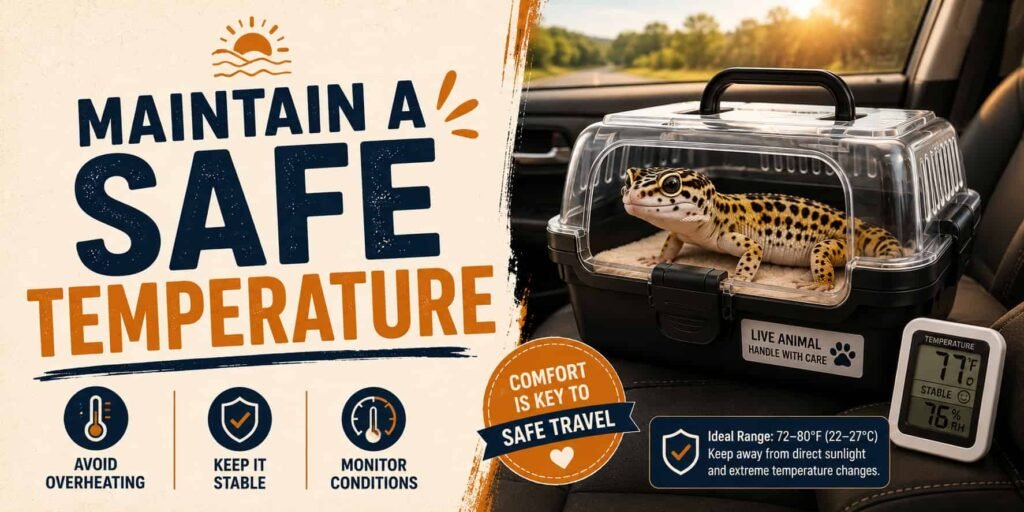
Proper temperature control is one of the most important parts of transporting a leopard gecko. Use a reliable digital thermometer to monitor the carrier throughout the journey.
During warm weather, use the vehicle’s air conditioning to prevent overheating, but never place the carrier directly in front of a cold air vent. Keep it away from direct sunlight, as a small container can heat up quickly.
During cold weather, warm the vehicle before placing your gecko inside. A heat pack may be placed outside the carrier when necessary, but it must be wrapped securely and should never touch the animal directly.
After reaching your destination, place the gecko in a properly heated and prepared reptile enclosure as soon as possible. Give it time to rest, hide, and adjust to its new surroundings.
5. Pack the Essential Travel Supplies
Before travelling with your leopard gecko, prepare a complete reptile travel kit. Having the right supplies will help you manage temperature changes, feeding needs, cleaning, and unexpected emergencies.
Pack the following essentials:
- Your gecko’s usual live food
- Calcium and vitamin supplements
- A small food dish
- Fresh drinking water
- A shallow water bowl
- Clean paper towels
- A digital thermometer
- Spare carrier lining
- A secure hide
- Towels or a light blanket
- Cleaning supplies
- Any prescribed medication
- Contact details for a reptile veterinarian
For cold conditions, you may carry a reptile-safe heat pack. However, it should remain outside the carrier, be wrapped securely, and never touch your gecko directly. Hand warmers can become dangerously hot, so use them only with extreme care and continuous temperature monitoring.
For an overnight stay, prepare a suitable temporary reptile enclosure with the correct heat source, hides, water, and normal lighting. Bring your gecko’s usual UVB lamp if it is part of its regular care routine. Never connect heating equipment inside a moving vehicle unless it is designed for safe travel use.
Packing carefully helps maintain your gecko’s health, hydration, comfort, and body temperature throughout the journey.
6. Secure the Travel Carrier
Place the travel carrier in a stable position where it cannot slide, fall, or turn over. Secure it with a seat belt or place it inside a larger padded container that fits firmly on the vehicle floor.
The rear passenger footwell is often safer than placing the carrier loosely on a seat. However, make sure it is not directly exposed to hot or cold air from the vehicle’s vents.
Check the carrier whenever the vehicle is safely parked. Never attempt to open, adjust, or handle it while driving.
A properly secured carrier protects your gecko during sudden braking, sharp turns, and uneven road conditions.
7. Protect Your Gecko From Loud Sounds
Leopard geckos can detect sounds and vibrations, so loud music, open windows, shouting, and heavy road noise may cause stress.
Keep the vehicle calm by:
- Playing music at a low volume
- Keeping the windows closed
- Avoiding sudden noises
- Speaking quietly
- Driving smoothly
You may cover part of the carrier with a lightweight towel to reduce flashing lights and outside movement. Always keep the ventilation holes uncovered to maintain proper airflow.
A quiet and stable environment can significantly reduce travel anxiety and make the journey more comfortable for your gecko.
Read Also: Why Is My Leopard Gecko Climbing? [Top Reasons]8. Reduce Unnecessary Stops
Plan your journey carefully and keep unnecessary stops to a minimum. Repeated changes in light, noise, movement, and temperature can increase your gecko’s stress.
Arrange fuel, food, and rest stops before leaving. Choose the most direct and comfortable route available.
Never leave your leopard gecko unattended inside a parked car. Vehicle temperatures can rise or fall rapidly, even when the weather outside appears comfortable.
Reaching the destination efficiently allows your gecko to return to a safe, properly heated enclosure sooner.
9. Keep the Journey Short and Smooth
Whenever possible, complete the journey within one day. Long trips expose your gecko to more movement, environmental changes, and temperature fluctuations.
Avoid feeding a large meal immediately before travelling because movement may cause discomfort or regurgitation. However, do not withhold food for several days without a valid reason, especially from a baby, juvenile, underweight, sick, or recovering gecko.
Provide access to fresh water during longer journeys and overnight stops. Do not spray your gecko directly unless advised by a reptile veterinarian. Instead, offer water in a shallow dish or allow the gecko to drink safely during a scheduled stop.
If the trip lasts several days, arrange a proper overnight enclosure and follow the gecko’s normal feeding routine as closely as possible.
10: Check Your Leopard Gecko Regularly
Observe your gecko throughout the journey whenever the vehicle is safely stopped. Check the carrier temperature, ventilation, position, and overall condition.
Watch for possible signs of travel stress, including:
- Open-mouth breathing
- Unusual weakness
- Constant escape attempts
- Loss of balance
- Rapid or difficult breathing
- Severe colour changes
- Unresponsiveness
Avoid opening the carrier repeatedly, as unnecessary handling may increase stress or allow the gecko to escape.
If your gecko appears too hot, too cold, injured, or seriously unwell, stop in a safe place and correct the problem immediately. Contact a reptile veterinarian when concerning symptoms continue.
Regular but calm monitoring helps ensure your leopard gecko remains safe, comfortable, and stable throughout the trip.
11. Reduce Noise, Light, and Other Stress Triggers
During leopard gecko travel, limit anything that may cause fear or discomfort. Bright lights, loud sounds, constant movement, unfamiliar people, and rapidly changing surroundings can increase reptile stress.
Clear carriers may expose your gecko to too much visual activity. Cover part of the travel container with a lightweight, breathable towel to create a darker and calmer space. Always leave the ventilation holes uncovered.
For overnight journeys, prepare a safe temporary enclosure rather than repeatedly moving your gecko between unsuitable containers. It should include proper heating, clean water, a secure hide, and safe flooring.
Keep handling to a minimum and maintain a quiet environment throughout the trip. Reducing unnecessary stimulation can help your gecko feel more secure and comfortable.
12. Allow a Calm Adjustment Period
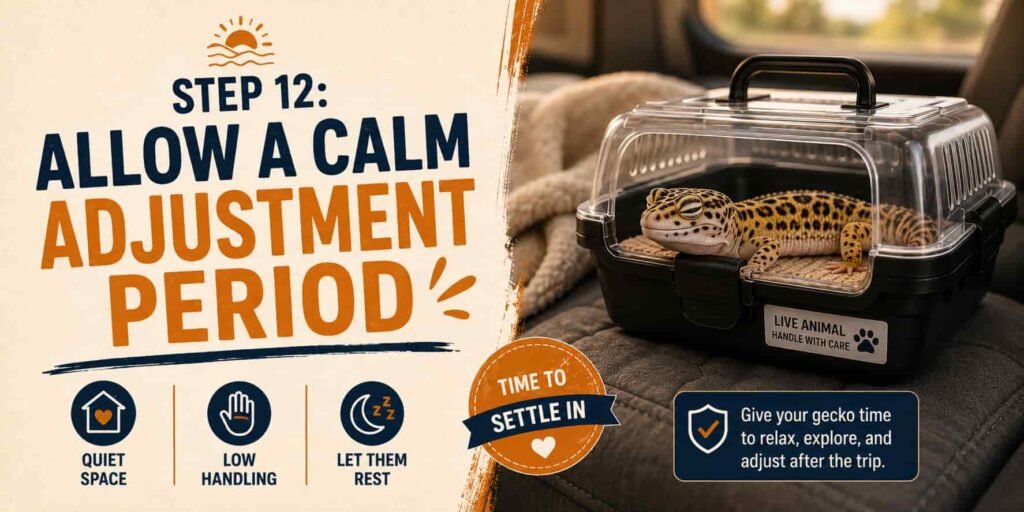
After reaching your destination, place the carrier in a quiet room with a stable temperature. Keep it away from children, pets, loud conversations, and direct sunlight.
Do not immediately release your gecko into an open or unfamiliar room. Instead, transfer it carefully into a fully prepared temporary habitat or its normal enclosure.
Allow your gecko to explore at its own pace. Avoid forcing it out of the carrier or handling it repeatedly. A slow and gentle introduction can reduce relocation stress and help the animal adjust more easily.
13. Settle Your Gecko Into a Proper Habitat
Move your leopard gecko into a safe, heated enclosure as soon as possible after arrival. The habitat should already have:
- A suitable temperature gradient
- Warm, cool, and moist hides
- Clean drinking water
- Safe flooring or substrate
- Proper lighting
- Familiar enclosure accessories
Once your gecko is settled, give it enough time to rest. Temporary hiding, reduced activity, or a brief loss of appetite may occur after travelling.
Monitor your gecko closely during the following days. Look for unusual changes in:
- Appetite
- Activity level
- Body colour
- Breathing
- Walking or balance
- Urates and faeces
- Overall appearance
Contact a qualified reptile veterinarian if your gecko remains weak, refuses food for an unusual length of time, has abnormal waste, struggles to breathe, or shows other concerning symptoms.
Can Leopard Geckos Travel by Plane?
Travelling with a leopard gecko by air can be difficult because many airlines do not allow reptiles inside the passenger cabin. Some may accept nonvenomous reptiles through an approved live-animal cargo service, but policies vary between airlines, aircraft, routes, and destinations.
Before booking a flight, contact the airline directly and confirm:
- Whether reptiles are accepted
- Whether the gecko can travel in the cabin or cargo area
- Approved carrier dimensions
- Temperature and weather restrictions
- Health-certificate requirements
- Import, export, or wildlife permits
- Feeding and hydration instructions
- Live-animal check-in procedures
International journeys may also require customs documents and permission from animal-health or wildlife authorities.
Air cargo can expose reptiles to delays, noise, handling, and temperature changes. Therefore, consider specialist reptile transportation services when travelling long distances. Never assume an airline will accept your pet without written confirmation.
Can Leopard Geckos Travel by Train?
Train operators follow different pet travel policies. Some allow small animals in secure carriers, while others permit only cats, dogs, or registered assistance animals.
Contact the train company before purchasing a ticket. Ask whether reptiles are allowed and whether there are requirements for the carrier, travel area, documentation, or additional fees.
When train travel is permitted, keep the carrier secure, quiet, and properly ventilated. Protect it from direct sunlight, cold air, loud passengers, and excessive movement.
How to Transport a Pet Lizard Safely by Car
Car travel is often the most practical way to transport a pet lizard because you can control the temperature, route, carrier position, and noise level.
Use a strong, escape-proof reptile carrier with proper ventilation and a non-slip lining. Secure it so it cannot slide, fall, or tip over during sudden braking or sharp turns.
Maintain a safe temperature with a digital thermometer and keep the carrier away from direct sunlight, heaters, and air-conditioning vents. Drive smoothly, reduce unnecessary stops, and check your lizard whenever the vehicle is safely parked.
Whether you are visiting a veterinarian, moving home, or taking a longer journey, careful preparation will help your leopard gecko arrive safe, calm, and healthy.
FAQ’s: How to Travel Safely With a Leopard Gecko [13 Tips]
How can you safely transport a leopard gecko?
Place your leopard gecko in a secure, well-ventilated travel carrier lined with soft paper towels for grip and comfort. Maintain a safe temperature, and use a wrapped reptile heat pack outside the carrier during cold weather if necessary. Avoid overheating, secure the container properly, and keep the journey short to reduce travel stress.
What is the best way to travel with a leopard gecko?
The safest option is a small, secure, well-ventilated reptile travel carrier lined with paper towels for grip. Keep the carrier stable, monitor the temperature with a thermometer, and protect it from direct sunlight or air-conditioning vents. A loosely placed towel can reduce light and travel stress, but it must not block airflow. Avoid transporting your gecko in a large glass tank, as it can slide, break, or contain decorations that may cause injury.
What is the best way to travel with a leopard gecko?
The safest option is a small, secure, well-ventilated reptile travel carrier lined with paper towels for grip. Keep the carrier stable, monitor the temperature with a thermometer, and protect it from direct sunlight or air-conditioning vents. A loosely placed towel can reduce light and travel stress, but it must not block airflow. Avoid transporting your gecko in a large glass tank, as it can slide, break, or contain decorations that may cause injury.
Are leopard gecko bites painful?
A leopard gecko bite usually feels like a light pinch and is rarely painful. Most bites do not break the skin, although a larger or frightened adult may occasionally cause a small cut or drop of blood. In most cases, the surprise is worse than the actual bite pain.
Can I simply pick up my gecko?
You should not suddenly grab a gecko, as this may frighten or injure it. Approach slowly, place your hand nearby, and allow the gecko to climb onto your palm. This gentle, choice-based handling method helps build trust and reduces stress. Always support its body and never hold or pull its tail.