
![Leopard Gecko Digging In Tank [Should You Worry]](https://reptileopedia.com/wp-content/uploads/2026/06/Leopard-Gecko-Digging-In-Tank-Should-You-Worry-1024x512.jpg)
Why Is My Leopard Gecko Digging?
Leopard geckos dig for many natural and health-related reasons. Sometimes, this behavior is completely normal. Other times, it may show stress, poor tank conditions, egg-laying behavior, or a need for a better reptile enclosure setup.
Leopard geckos are often calm and still, which is why many owners call them “living statues.” So, when a leopard gecko starts digging, scratching, or pushing the substrate around, it can look confusing. However, this behavior usually has a clear reason.
In the wild, leopard geckos dig to stay safe, control their body temperature, hide from predators, search for food, or prepare a place to lay eggs. In captivity, digging may also happen when the tank temperature, humidity, substrate, or hides are not suitable.
As a responsible owner, you should observe your gecko’s behavior carefully. A comfortable habitat with the right warm side, cool side, moist hide, dry hides, and safe substrate can reduce stress and support healthy, natural behavior.
Common Reasons Your Leopard Gecko Is Digging
1. Building a Safe Hiding Spot
Your leopard gecko may dig to create a small den or secure resting area. This is a natural burrowing instinct that helps them feel protected.
2. Trying to Cool Down
If the enclosure is too warm, your gecko may dig to reach a cooler area. This can be a sign that the temperature gradient in the tank needs checking.
3. Preparing for Shedding
Before shedding, leopard geckos often look for moisture. If the moist hide is missing or too dry, they may dig while searching for a better humid spot.
4. Searching for Food
A hungry gecko may dig or scratch around the enclosure while looking for insects. This can happen if they smell leftover feeders or expect feeding time.
5. Getting Ready to Lay Eggs
Female leopard geckos may dig when they are ready to lay eggs, even if the eggs are infertile. This is normal egg-laying behavior and should be supported with a safe lay box.
6. Feeling Stressed or Scared
Digging can also be linked to stress, loud noise, too much handling, bright lighting, or an unsafe environment. A stressed gecko may hide more, refuse food, or act restless.
7. Trying to Hide from Threats
In nature, leopard geckos hide from predators. In a tank, they may dig if they feel exposed. Make sure the enclosure has enough secure hides and covered areas.
8. Not Having Enough Space
A small or overcrowded enclosure can make your gecko restless. Digging may show that the habitat needs more room, better layout, or more enrichment.
9. Natural Instinct or Boredom
Sometimes, digging is simply part of normal leopard gecko behavior. They may dig for activity, exploration, or environmental stimulation.
How to Keep the Tank Comfortable
To reduce unnecessary digging, check the full tank setup. Your leopard gecko should have a proper heat source, safe substrate, clean water, a warm hide, a cool hide, and a moist hide. The enclosure should also feel secure, not empty or stressful.
Should You Be Worried?

You do not always need to worry if your leopard gecko is digging. Occasional digging is normal. However, if your gecko is constantly digging, losing weight, refusing food, breathing heavily, acting weak, or showing signs of stress, you should review the husbandry conditions and contact a reptile vet if needed.
Why Do Leopard Geckos Dig?
Leopard geckos dig for several reasons, including comfort, temperature control, shedding support, stress relief, and natural instinct. For many owners, this behavior can look worrying at first, especially because leopard geckos are usually calm reptiles that spend a lot of time sitting still.
However, digging behavior is not always a sign of illness or danger. In many cases, it is a normal part of their natural reptile behavior. A gecko may dig because it wants to hide, cool down, feel secure, or prepare its body for shedding. At the same time, frequent or aggressive digging can sometimes point to stress, poor tank conditions, incorrect temperature, or a lack of proper hides.
As a responsible owner, the best step is to observe your gecko closely and check the full reptile enclosure setup. Small changes, such as adding more hiding spots, improving the temperature gradient, or providing a proper moist hide, can make your gecko feel safer and healthier.
Creating a Safe Den
One common reason for leopard gecko digging is the desire to create a safe and private resting place. In the wild, leopard geckos come from dry, rocky areas of Asia and the Middle East, where they often hide under stones, inside cracks, or in small underground spaces.
This burrowing instinct helps them stay protected from predators and harsh weather. In captivity, your gecko may dig because it is trying to make a comfortable den or clear a small area where it can rest peacefully.
To support this natural behavior, provide enough secure hides in the enclosure. A good setup should include a hide on the warm side, one on the cool side, and a moist hide for shedding. If your gecko keeps digging in one area, it may be showing you where it feels most comfortable.
Digging is not usually a problem by itself. However, if your gecko seems scared, restless, or constantly tries to hide, it may need a more covered and secure space. Adding enclosed hides, soft safe substrate, and quiet surroundings can help reduce stress and make your gecko feel protected.
Trying to Stay Cool
Leopard geckos may also dig when they feel too warm. Like many reptiles, they depend on their environment to control their body temperature. In the wild, they may move into cooler ground, shaded cracks, or underground spaces when the surface becomes too hot.
In a home enclosure, digging can be a sign that the tank temperature is too high or that the gecko cannot find a comfortable cool area. This is why a proper temperature gradient is very important. The tank should have a warm side for basking and digestion, and a cool side where your gecko can relax.
Avoid placing the tank in direct sunlight, as this can quickly overheat the habitat. Also, avoid hard or unsuitable flooring that does not allow natural movement. A safe, diggable reptile substrate can help your gecko act naturally while staying comfortable.
If your leopard gecko is digging often, check the heat source, room temperature, and tank placement. Proper husbandry can prevent overheating and support your gecko’s overall well-being.
Preparing for Shedding
Another reason your leopard gecko may dig is that it is getting ready to shed. During shedding, their skin may look dull, pale, greyish, or whitish. This process can make them feel uncomfortable, and they may dig or rub against objects to help loosen old skin.
If the enclosure is too dry or the moist hide is missing, shedding can become difficult. Poor shedding may cause stuck skin around the toes, eyes, or tail, which can lead to discomfort and health problems if not managed properly.
To help your gecko shed safely, provide a proper humid hide or shedding box. You can use damp paper towels, sphagnum moss, or another reptile-safe material inside the hide. The hide should be moist but not soaking wet.
Place the moist hide in a comfortable area of the tank, usually between the warm and cool zones. This allows your gecko to choose the right level of warmth and humidity when needed.
Although leopard geckos are desert reptiles, they still need access to moisture during shedding. A clean and well-maintained moist hide can reduce stress, support healthy shedding, and prevent sk
Searching for Food
I removed the duplicated heading, promotional text, and unrelated category terms. The revised section keeps the focus on how to travel with a leopard gecko safely.I removed the duplicated heading, promotional text, and unrelated category terms. The revised section keeps the focus on how to travel with a leopard gecko safely.
Leopard geckos are mainly insect-eating reptiles, so they may dig when they smell food, see feeder insects, or expect feeding time. This behavior is usually normal and can even be a form of mental enrichment because it allows them to use their natural searching skills.
However, owners should be careful with the substrate. If live insects hide inside loose substrate, your gecko may accidentally swallow some of it while eating. This can increase the risk of substrate ingestion and impaction, especially if the bedding is unsafe.
To prevent this, offer food in a feeding dish, use feeding tongs, or place insects in a clear feeding area. This helps your gecko enjoy its natural foraging behavior without linking every diggable spot with food.
Preparing to Lay Eggs
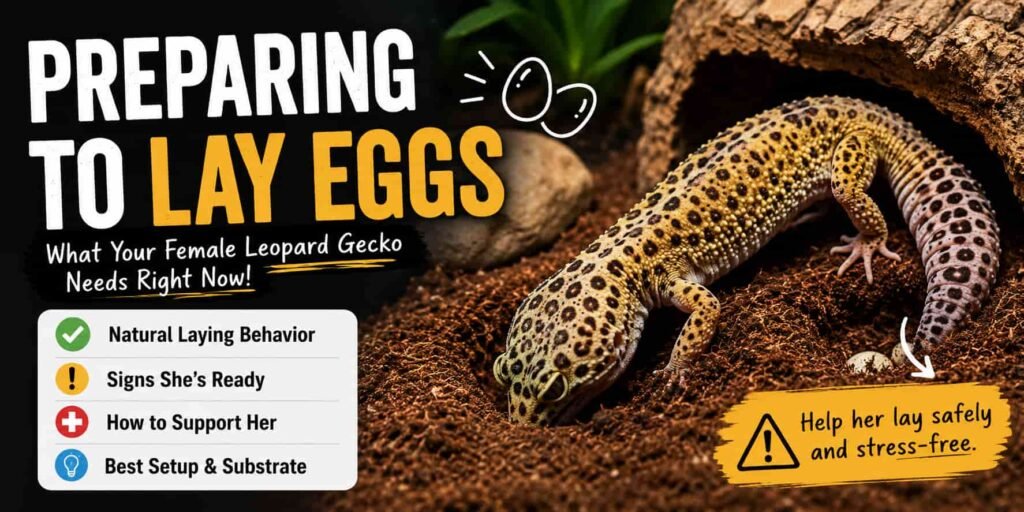
Frequent or frantic digging in a female leopard gecko can mean she is gravid, which means she is carrying eggs and getting ready to lay them. This can happen even if she has never been with a male, because female leopard geckos can sometimes lay infertile eggs.
Female leopard geckos usually become sexually mature at around 18 to 24 months, depending on their size, health, and weight. During the breeding season, which often happens in warmer months, they may dig more often because they are looking for a safe nesting place.
A female that is ready to lay eggs may show a slightly swollen belly, restlessness, reduced appetite, or a pinkish area on the lower abdomen where the eggs are developing. If she keeps digging for several days, check the enclosure carefully for eggs.
To support safe egg-laying behavior, provide a proper lay box or moist hide. This area should be humid, secure, and easy for the gecko to enter. Safe materials like sphagnum moss, coconut fiber, or vermiculite can help keep the lay area moist, but not soaking wet.
A suitable nesting spot reduces stress and lowers the risk of problems like egg binding, which can be dangerous. If your female gecko looks weak, swollen, or unable to lay eggs, a reptile vet should be contacted.
Stress or Fear
Stress is another common reason why leopard geckos dig. When they feel unsafe, they may try to dig, hide, or escape from whatever is bothering them. In the wild, this behavior helps them avoid predators. In captivity, the threat may not be a real predator, but your gecko may still feel exposed or scared.
Common causes of leopard gecko stress include loud noises, too much handling, bright lights, sudden changes in the tank, other pets near the enclosure, poor temperature, or an uncomfortable substrate. Sharing an enclosure with another reptile can also cause stress, especially because leopard geckos are usually better kept alone.
Signs of stress may include hiding all the time, refusing food, tail waving, glass surfing, sudden aggression, or excessive digging. If you notice these signs, check the full tank setup and remove possible stressors.
Hiding From Perceived Danger
A leopard gecko may dig when it feels exposed and wants to hide. This is a natural defensive behavior. Even if your home is safe, your gecko may still react to movement, noise, pets, children, or hands entering the enclosure too quickly.
In their natural habitat, leopard geckos survive by staying hidden from predators. So, when they feel threatened, they may dig under objects, push into corners, or try to make their own hiding space.
To help your gecko feel secure, place the tank in a calm area and avoid sudden handling. Teach children and visitors not to tap the glass, grab the gecko, or disturb it while it is resting. Larger pets, such as cats and dogs, should also be kept away from the enclosure.
If your gecko is digging more than usual, observe what happens around the tank. The cause may be a loud room, a new pet, frequent handling, or a lack of proper hiding places.
Make Sure Your Gecko Has Enough Hides
A leopard gecko needs secure hiding spots to feel safe. A good enclosure should have at least three important hides: a warm hide, a cool hide, and a moist hide. Each one serves a different purpose.
The warm hide helps with digestion and comfort. The cool hide allows your gecko to regulate its body temperature. The moist hide supports healthy shedding and can also help females during egg-laying.
If your leopard gecko does not have enough hides, it may dig because it feels too exposed. Adding more covered areas, caves, cork bark, plants, or safe decorations can reduce stress-related digging and make the habitat feel more natural.
Natural Instinct, Boredom, and Enrichment
Sometimes, leopard geckos dig simply because it is part of their natural instinct. Their ancestors used digging, hiding, hunting, and exploring to survive. In captivity, they may dig when they are bored or when the enclosure does not offer enough stimulation.
A plain tank with little to explore can lead to understimulation. Your gecko may start digging because it has nothing else to do. Adding safe climbing areas, textured surfaces, hides, tunnels, and supervised hunting opportunities can improve environmental enrichment.
So How Can I Provide Optimum Temperature

Maintaining the right temperature is critical for the well-being of your Leopard Gecko, and this often involves using the right equipment. Ensuring your equipment is up to date, including light bulbs and thermometers, is key. A heating pad is essential to provide a consistently warm area for these little guys, especially since they do not require bright light at night. Positioning their habitat in a room where there is natural daylight but not direct bright light during the day and a more subdued setting at night time is a good idea.
If your family has placed the gecko habitat in the corner of a family room, make sure it is away from cold drafts and windows, but still in a spot where it can get warm, indirect light. It’s crucial to have both hides and a heating pad in the tank to provide a warm resting place. A reptile light bulb, preferably a low-watt incandescent bulb, can provide the heat with your gecko desires. These bulbs, being White, are excellent for replicating daytime conditions.
Note: At night, a night bulb is essential; a ceramic heat bulb is perfect as it can produce heat without light, ensuring your gecko has no worries about bright light at night. Supplemental heat sources can be used in cold areas of the tank to keep your leos comfortable. Be mindful that ceramic bulbs can get hot, and in small habitats, there’s a risk of becoming overly hot. For habitats, 20 gallons or larger, supplemental heat might be best achieved with an infrared bulb, which provides warmth without the intense heat of ceramic bulbs.
Check Your Tank
The first thing to do when you see your gecko digging is to make sure everything in the tank is in order. Check if the temps are good, and ensure there are enough hides as they are needed to provide a stress-free environment. Confirm that your gecko is eating and drinking well, and if it has enough playtime each day. If these elements are not corrected, you might find it necessary to keep a schedule for a vet visit right away. Always watch your gecko and notice immediately any changes in its behaviour; this proactive approach can help identify and solve issues before they escalate.
Should You Worry?
Digging is something leopard geckos do naturally, and it’s not always a sign of lacking husbandry or a reason to worry.
Most of the time, it’s not a huge concern; however, if you see a lot of digging compared to their usual behaviour, or if it starts suddenly, it’s wise to double-check the basics. Signs of stress, such as not having enough hiding spots or the right locations for both the warm side and cold side of their enclosure, can contribute to this behaviour.
Ensure the overall temperature is correct, using a thermometer to keep these basics under control. If your gecko likes to dig and it’s not accompanied by changes in their behaviour, like lack of appetite, excessive weight loss, or glass swimming, then it’s generally not a concern. However, taking a close look and considering consulting a veterinarian if you’re unsure is always a good idea. Talking to a professional can provide peace of mind and ensure the health and happiness of your pet.
Leopard Gecko Digging In Tank [Should You Worry?]
FAQ’s
What does it mean when leopard geckos dig?
A leopard gecko digging usually means it is trying to regulate body temperature, find a cooler or warmer spot, prepare for shedding, or follow its natural burrowing instinct. In female geckos, digging may also be a sign of egg-laying behavior. Most of the time, this is normal and healthy, but constant digging can sometimes indicate stress, an incorrect temperature gradient, or an unsuitable enclosure setup.
Do leopard geckos enjoy digging?
Yes, leopard geckos often enjoy digging because it is a natural burrowing behavior. It gives them mental enrichment and helps them feel active and secure. They may dig to control body temperature, find a cooler or warmer area, prepare for shedding, or lay eggs if they are female. In most cases, digging is normal, but constant digging may mean the enclosure temperature, substrate, or tank setup needs checking.
How can you tell if a leopard gecko is stressed?
A leopard gecko may be stressed if it starts hiding all the time, refuses food, moves suddenly, or repeatedly scratches and paces along the glass, also called glass surfing. Other common stress signs include tail waving, hissing, puffing up, screaming, or acting defensive when handled. These behaviors can happen because of an improper tank setup, wrong temperature, too much handling, loud surroundings, or a lack of secure hiding spots.
What are the signs of a happy leopard gecko?
A happy leopard gecko usually looks healthy, calm, and comfortable in its enclosure. Common signs include a plump tail, clear and bright eyes, regular eating, normal sleeping, and relaxed movement. A content gecko may also show active curiosity, calmly explore its tank, dig, or come out in the evening. These behaviors often mean your gecko feels safe, secure, and well cared for.
What stresses out a leopard gecko?
A leopard gecko can become stressed when its enclosure feels unsafe, crowded, too bright, or poorly maintained. Common causes include sudden changes in temperature, wrong humidity levels, too much handling, loud noises, unfamiliar pets, lack of secure hiding spots, or an improper tank setup. Stress may also happen if the gecko feels threatened, exposed, or unable to rest comfortably.