
![Can Two Leopard Geckos Live Together [Real Risks]](https://reptileopedia.com/wp-content/uploads/2026/06/Can-Two-Leopard-Geckos-Live-Together-Real-Risks-1024x512.png)
Can Leopard Geckos Live Together?
Leopard geckos are naturally solitary reptiles. This means they usually prefer to live alone. They can also become territorial, especially when they feel another gecko is taking their space, food, or hiding place.
In most cases, it is safer to keep each leopard gecko in a separate habitat. This helps prevent stress, fighting, injury, and health problems.
Why Leopard Geckos Prefer Living Alone
Unlike social animals such as dogs, wolves, or bees, leopard geckos do not live in groups by nature. In the wild, they come from dry and rocky areas of Asia and the Middle East. Their survival depends on finding food, protecting their space, and avoiding danger.
Because of this natural lifestyle, they do not need another gecko for company. Instead, another gecko may be seen as a threat. This is one reason why leopard gecko cohabitation can be risky.
Even in captivity, where owners provide food and care, these instincts remain strong. A gecko may still compete for food, warmth, hiding spots, and territory.
Is Leopard Gecko Cohabitation Safe?
Cohabitation means keeping two or more animals in the same enclosure. For leopard geckos, this is usually not recommended, especially for beginners.
Some female geckos may live together peacefully, but this does not always happen. Their behaviour can change suddenly. One gecko may start bullying the other, stealing food, or blocking access to warm areas.
This can cause the weaker gecko to become stressed, lose weight, or become sick.
Why Male Leopard Geckos Should Not Live Together
Two male leopard geckos should never be kept in the same tank. Males are highly territorial and may fight badly over space, food, and dominance.
These fights can lead to serious injuries, tail loss, wounds, or even death. Even if two males seem calm at first, they can become aggressive later. For this reason, keeping two males together is very dangerous.
Can Male and Female Leopard Geckos Live Together?
A male and female leopard gecko should not live together unless the owner is experienced and has a clear breeding plan.
Male geckos may bother females during breeding season, which can cause stress. Female geckos can also lay eggs several times in one season, and this can put pressure on their body.
If you are not planning to breed them responsibly, it is better to keep males and females in separate tanks.
Can Two Female Leopard Geckos Live Together?
Two female leopard geckos may sometimes live together, but it is not guaranteed. Some females may tolerate each other, while others may become aggressive or stressed.
If two females are kept together, the enclosure must be large enough. It should have enough hides, heat areas, cool areas, food, and water for both geckos. The owner must also watch them closely for signs of bullying or stress.
If one gecko stops eating, hides too much, loses weight, or shows bite marks, they should be separated immediately.
Important Things to Consider Before Keeping Two Geckos Together
Before putting two leopard geckos in the same enclosure, consider their gender, size, age, health, and temperament.
A bigger gecko may bully a smaller one.A small tank can also increase fighting because both geckos have limited space.
Shared housing also makes health monitoring harder. It can be difficult to know which gecko is eating properly, drinking water, or passing stool normally.
![Can Two Leopard Geckos Live Together [Real Risks]](https://reptileopedia.com/wp-content/uploads/2026/06/Can-Two-Leopard-Geckos-Live-Together-Real-Risks.png)
Why Leopard Geckos Usually Live Better Alone
Because of this natural lifestyle, they can see another gecko as competition instead of a friend. They may compete for food, space, warm hiding spots, and shelter. Even in captivity, where owners provide meals and care, these natural instincts do not fully disappear.
This is why leopard gecko cohabitation can be difficult. A gecko may look calm, but it can still become stressed, defensive, or aggressive when another gecko shares the same enclosure. This is especially true for male leopard geckos, as they are more likely to fight over territory and resources.
Why Gender Matters in Leopard Gecko Cohabitation
The gender of leopard geckos is one of the most important things to consider before placing two geckos in the same tank. Some pairings are more dangerous than others because leopard geckos have strong solitary and territorial instincts.
Choosing the wrong pair can lead to stress, bullying, injury, or serious fighting. For this reason, owners should understand the risks before trying to keep multiple geckos together.
Can a Male and Female Leopard Gecko Live Together?
A male and female leopard gecko should usually be kept separately unless the owner has experience with breeding leopard geckos. Young geckos should never be housed together while they are still growing because a larger gecko may steal food from the smaller one. This can cause poor growth, stress, and health problems.
Once they are fully grown, some male and female geckos may live together for breeding purposes, but they still need close supervision. During breeding season, males may become aggressive or may bother the female too much.
Female geckos can also lay eggs several times in one season. Repeated egg production can put stress on the female’s body and may affect her long-term health. If breeding is not the goal, keeping males and females in separate reptile enclosures is the safer choice.
Why Two Male Leopard Geckos Should Never Live Together
Two male leopard geckos should never be kept in the same habitat. This is the most dangerous pairing because males are highly territorial. They may fight over food, hiding places, heat spots, and dominance.
These fights can become serious and may lead to wounds, tail loss, long-term stress, or even death. Even if two males seem peaceful at first or were raised together, their behaviour can change quickly as they mature.
For safety, two male leopard geckos should always have separate tanks.
Final Thoughts
Leopard geckos are best kept alone because they are not naturally social animals. Their need for territory, security, food access, and safe hiding places makes shared housing risky. Male and female pairs should only be kept together by experienced breeders, while two males should never be housed together.
For most owners, the safest and most responsible option is simple: keep one leopard gecko in one properly prepared enclosure.
Female and Female
When considering the combination of female leopard geckos, there are no absolute guarantees, but it’s likely to work better compared to other pairings. While less prone to fight, these reptiles may still have the occasional conflict over resources. To ensure harmony, it’s crucial to make sure there is plenty of everything they need. This includes access to warmth, food, and hiding spots. A bigger enclosure can be instrumental in preventing these conflicts, allowing each leopard gecko enough space to thrive.
Note: Each species of leopard gecko has individual personalities that may vary. Some may get along seamlessly, while others might not tolerate sharing their space. It’s a delicate balance, and as a seasoned herpetologist, I’ve seen varying degrees of success and challenges with this setup. The key lies in observing their interactions and being ready to intervene or separate them if necessary. Continuously providing an environment that caters to their needs and respects their natural behaviour is essential for their well-being.
Other Factors To Consider When Putting Two Leopard Geckos Together
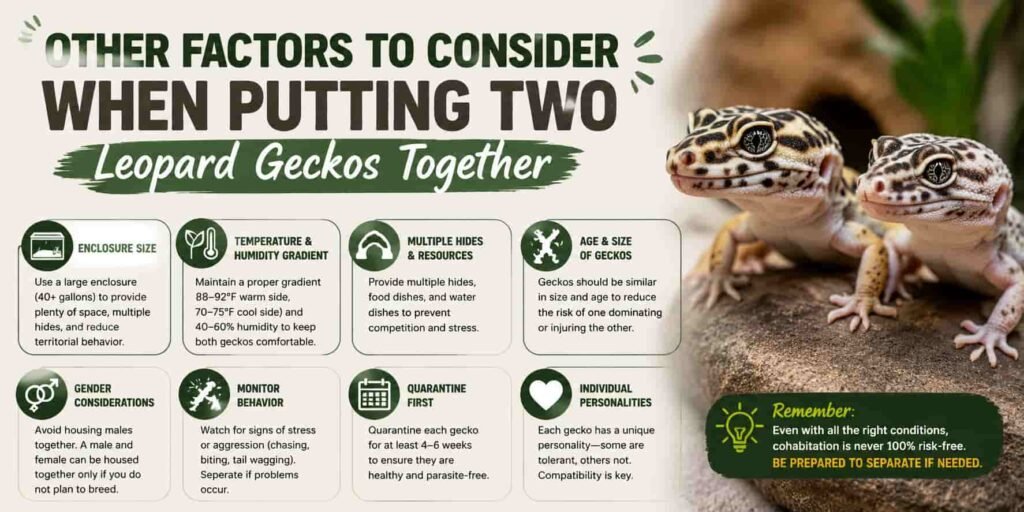
Although gender is often viewed as the primary consideration, it’s not the sole factor to consider. Let’s explore additional aspects that are also important.
1. Relationship and History
In the context of leopard geckos cohabiting, their relationship and history play a pivotal role. Female leopard geckos that have been raised with each other from being born together have a higher chance of getting along compared to an adult pair that has never met. Clutch mates often exhibit more tolerant behaviour, making them a more likely perfect match than introducing two strangers. In contrast, males, regardless of their shared history, are more prone to fight, underscoring the complexity of their social dynamics.
2. Enclosure Size and Available Resources
Creating an enclosure for one leopard gecko is relatively straightforward, but accommodating two leos requires more thought, particularly if you’re considering saving space. It’s crucial to balance the resources, ensuring multiple areas for hiding, basking, staying cool, and eating. Leopard geckos are asocial creatures and can become competitive, so it’s vital to limit opportunities for fighting by providing plenty of everything, especially hiding spaces.
Adhering to best practices in care, such as providing at least 3 hiding spots in both the warmer part and a cooler spot, with an optional humid spot for the shed, can make them feel more at ease. While it may seem a lot more work, housing two in a space double the size doesn’t necessarily mean it will be significantly more difficult. However, it does add to the worry about whether each gecko can claim something valuable to them.
In my experience, geckos have an overall better chance of getting along in an absolutely massive enclosure, compared to trying to squeeze them into something like a 5-gallon tank. Such an expansive environment reduces stress, allowing each gecko to establish its own territory and minimizes conflicts. This not only ensures their well-being but also makes monitoring and caring for them easier for the keeper. Remember, the key to success in cohabitating with leopard geckos lies in generous space allocation and resource distribution.
3. Size Of The Leopard Geckos
Regardless of how friendly leopard geckos may appear, they naturally compete for resources to an extent. A significantly larger gecko can dominate in terms of competition, especially when it comes to end goals like food and hunting a cricket. To compensate for the smaller size, keepers should count on providing environments where they can comfortably cohabitate. It is recommended to make sure the geckos are of a similar size to minimize dominance and ensure a more harmonious living arrangement.
4. Sexual Maturity and Age
In reptiles like leopard geckos, sexual maturity is a critical factor, often determined by weight rather than age. Typically, they reach this stage between 18 months and 24 months or upon reaching around 35 grams. As juveniles, these geckos may exhibit less aggressive behaviours, but with hormonal changes, they can become more territorial and engage in mate-seeking activities.
This shift can disrupt the stability of a previously peaceful habitat.
Tip: For young geckos, cohabitation might seem harmonious initially, but as they mature, guaranteed problems can arise, especially among male geckos. This underscores the importance of understanding and monitoring their growth and behavioural changes over time.
Best Housing Options for Multiple Leopard Geckos
If you keep more than one leopard gecko, the safest housing choice is very important. Some keepers may think about placing them together in one vivarium, but leopard geckos are naturally solitary reptiles. This means shared housing can sometimes cause stress, competition, or fighting.
Can Leopard Geckos Live Together?
In some cases, compatible female leopard geckos may live together in a large and well-prepared enclosure. A spacious vivarium can give them enough room to move, hide, and stay away from each other when needed.
However, shared housing must be managed carefully. The enclosure should include several hiding spots, separate feeding areas, proper heating, safe lighting, warm zones, cool zones, and enough space for each gecko. These resources help reduce territorial behaviour, food competition, and stress.
Even if the setup looks peaceful, owners should check the geckos daily. Signs such as bite marks, weight loss, hiding too much, or one gecko stopping eating may mean they need to be separated.
Why a Large Vivarium Matters
A small tank is not suitable for multiple leopard geckos. When space is limited, geckos may fight over food, heat, shelter, and hiding areas.
A large, well-equipped reptile habitat gives each gecko a better chance to feel safe. It also makes it easier to create separate areas for feeding, resting, shedding, and temperature control.
Proper leopard gecko care depends on a safe environment. This includes correct heat, clean water, dry and humid hides, and enough space for natural behaviour.
Keeping Leopard Geckos Separately
For most owners, keeping leopard geckos separately is the best and safest option. Separate tanks allow each gecko to have its own territory, food, hiding places, and heat source.
This reduces the risk of bullying, injury, and feeding problems. It also makes health checks much easier because you can clearly see which gecko is eating, shedding, pooping, or losing weight.
If you have several reptiles, a vivarium stack can be a useful space-saving option. These stacked enclosures allow each leopard gecko or other reptile, such as a bearded dragon, to live in its own private space without sharing territory.
Can a Baby Leopard Gecko Live With an Adult?
A baby leopard gecko should not live with an adult gecko. The size difference can be dangerous. An adult may steal food, stress the baby, bite it, or even mistake it for prey.
Baby geckos need their own safe reptile enclosure where they can grow properly without competition. Keeping babies and adults separate helps prevent injury, stress, and poor growth.
Does Keeping Two Leopard Geckos Together Save Space?
Many people think that putting two leopard geckos in one tank will save space, but this is usually not true. A shared enclosure must be much larger than a single-gecko tank because both animals need enough room, hides, and resources.
In many cases, two separate enclosures placed on shelves or in a vivarium stack can save space more safely. This setup also matches the natural solitary behaviour of leopard geckos.
Why Shared Housing Makes Health Checks Harder
When two leopard geckos live together, it becomes harder to monitor their health. If you find unusual stool, blood, shed skin problems, or uneaten food, it may be difficult to know which gecko has the issue.
Feeding can also become a problem. One gecko may eat more while the other slowly becomes weaker or thinner. This is why shared housing needs close observation and regular weight checks.
leopard Gecko Behaviour Can Change Quikly

Even if two leopard geckos seem calm for weeks or months, problems can happen suddenly. A fight over territory, food, or hiding places can lead to injury very quickly.
Owners cannot watch their geckos every second of the day. For this reason, it is always smart to have a spare enclosure ready in case the geckos need to be separated immediately.
Do Leopard Geckos Need a Friend?
No, leopard geckos do not need a friend. They are asocial reptiles, which means they are naturally comfortable living alone. They do not need another gecko to feel happy or safe.
In fact, keeping them together may increase stress instead of reducing it. A single leopard gecko can live a healthy and comfortable life when it has the right tank setup, food, water, heat, and hiding places.
Are There Any Real Benefits to Cohabitation?
There are very few real benefits to leopard gecko cohabitation. Shared housing may look interesting for photos, but it often creates more work and more risk.
Owners must provide extra space, more hides, separate feeding areas, and constant monitoring. The risks of stress, fighting, injury, bullying, and health confusion often outweigh any possible benefit.
Living Together vs. Being Taken Out Together
Housing leopard geckos together is different from taking them out at the same time under supervision. A shared vivarium is a limited space, so territorial behaviour can happen more easily.
In a controlled area outside the tank, such as a safe supervised space, brief interaction may be less risky. However, they should still be watched closely. Geckos can move quickly, fall from furniture, or show sudden aggression.
Short supervised time is safer than permanent cohabitation, but separate housing remains the best choice.
Final Thoughts
The safest way to keep multiple leopard geckos is to give each one its own enclosure. Shared housing may sometimes work with careful planning, but it always carries risks.
Separate tanks reduce stress, prevent territorial fighting, improve health monitoring, and allow each gecko to live naturally. For most keepers, one leopard gecko per vivarium is the most responsible and safest option.
Can Two Leopard Geckos Live Together? [Real Risks]
FAQ’s
Is it safe to keep two leopard geckos together?
No, it is usually not safe to keep two leopard geckos in the same enclosure. They are solitary reptiles and can become territorial, which may cause stress, bullying, fighting, injuries, or even death. For their health and safety, it is best to house each leopard gecko individually.
Do geckos carry rabies?
No, geckos do not carry or spread rabies. Rabies is a viral disease that affects warm-blooded mammals, not cold-blooded reptiles. This means geckos are not able to hold, develop, or transmit the rabies virus to humans or other animals.
Is a male or female leopard gecko better?
Neither a male leopard gecko nor a female leopard gecko is truly better. Both can make good pet reptiles. Males are often a little larger and may eat more regularly, while females can be active but may face egg-laying or reproductive health issues. The best choice depends on the gecko’s temperament, health, and care needs.
Do geckos get attached to their owners?
Geckos do not form emotional bonds like dogs or cats, but they can learn to trust their owners. With gentle handling, regular care, and a calm routine, a gecko may recognize your scent, voice, and presence. Over time, it can see you as a safe source of food, warmth, and securit
Can geckos hear you?
Yes, geckos can hear sounds and feel small vibrations around them. Their normal ears can detect higher sound frequencies, while a part of the inner ear called the saccule helps them sense lower vibrations. This means a gecko may notice your voice, movement, and nearby sounds, but loud noise can cause stress.