![Substrate for Leopard Geckos [What to Use]](https://reptileopedia.com/wp-content/uploads/2026/07/Substrate-for-Leopard-Geckos-What-to-Use-1024x512.jpg)
A leopard gecko substrate is more than just a floor covering for the tank. It affects your gecko’s comfort, safety, movement, feeding, shedding, and overall health. Since leopard geckos are ground-dwelling reptiles, they spend most of their time walking, resting, hunting, and exploring on the surface inside their terrarium.
Choosing the Right Substrate for a Leopard Gecko
Choosing the wrong reptile substrate can cause serious problems. Some products are sold as safe for geckos, but they may still increase the risk of impaction, injury, stress, or illness. For this reason, every owner should understand which substrates for leopard geckos are safe, which are risky, and which should be avoided.
Why Substrate Matters for Leopard Geckos
The right tank substrate helps create a cleaner, safer, and more natural environment. It supports normal behavior such as walking, hiding, digging, and resting. It can also make the enclosure easier to clean and maintain.
However, unsafe materials can harm your pet. Loose or sharp substrates may be swallowed during feeding, which can lead to digestive blockage. Dusty or scented materials can also irritate your gecko’s skin, eyes, or breathing. A good leopard gecko enclosure should always focus on safety before appearance.
Safe Substrate Options for Leopard Geckos
Several safe substrates for leopard geckos are easy to use and suitable for beginners. Paper towels and newspaper are simple, cheap, and easy to replace. They are especially useful for young geckos, sick geckos, or new pets during quarantine.
Reptile carpet is another common option, but it must be cleaned often to prevent bacteria buildup. Ceramic tiles, stone slates, and large smooth river pebbles can also work well because they are solid, stable, and easy to sanitize.
More natural-looking options include excavator clay substrate, bioactive substrate, and a carefully prepared DIY blended substrate. These can support digging and natural behavior, but they need proper setup and regular maintenance. Other practical choices include reptile sand mats, lino, and shelf liner, as long as they are non-toxic, secure, and easy to clean.
Moist Hide Substrates
A moist hide is important for healthy shedding. Inside the hide, you can use safe moisture-holding materials such as coconut coir, Eco Earth, sphagnum moss, or damp paper towels. These materials help keep humidity higher in one small area without making the whole tank too wet.
Still, loose moist materials should be watched carefully. Some geckos may eat them by mistake, so they should be replaced when dirty and used in a way that lowers the risk of swallowing.
Substrates to Avoid
Some materials are not recommended for leopard gecko care. Loose sand is one of the most debated options because it may increase the risk of impaction, especially in young or unhealthy geckos. Ground walnut shell, corn cob, gravel, wood chips, and small loose stones can also be dangerous if swallowed.
Avoid pine, fir, and cedar because these woods may release oils or chemicals that can irritate reptiles. Sharp, dusty, scented, or easily swallowed materials should not be used in a leopard gecko tank.
Best Flooring Options for Leopard Gecko Tanks
The right leopard gecko substrate keeps your pet safe, comfortable, and healthy. A good tank flooring should be easy to clean, safe to walk on, and suitable for the gecko’s natural behavior. Some substrates look attractive, while others are simple but more practical for daily care.
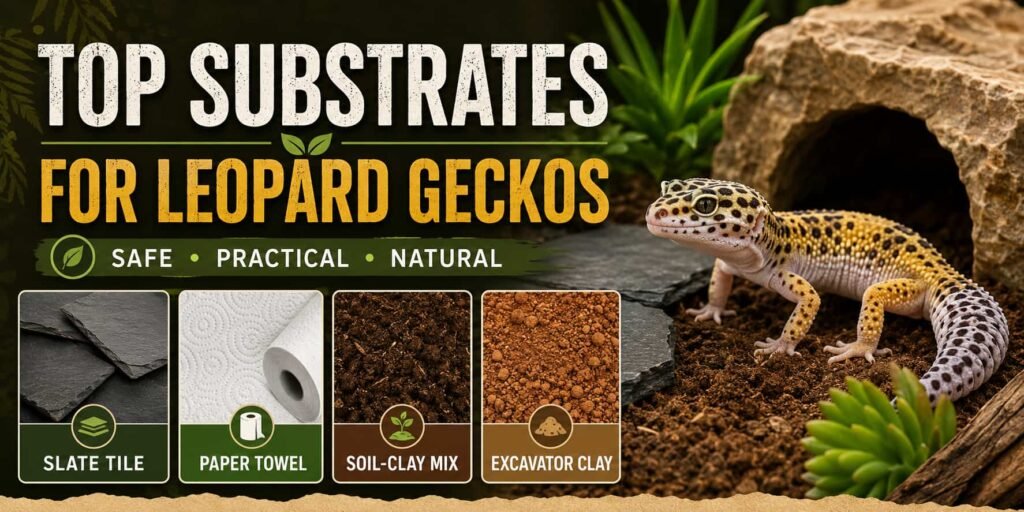
Top Substrates for Leopard Geckos
Natural Stone Slate
Natural stone slate is one of the best-looking and safest substrate options for a leopard gecko enclosure. It gives the tank a natural appearance and provides a firm surface with good grip. This helps leopard geckos walk comfortably without slipping.
The main downside is that slate can be difficult to find, cut, and install properly. It must also be placed securely so it does not shift or hurt the gecko. Once installed correctly, it is long-lasting, reusable, and easy to clean.
Paper Towels
Paper towels are one of the safest and most practical leopard gecko substrates, especially for baby geckos, sick geckos, or new reptiles in quarantine. They are cheap, absorbent, and easy to replace.
Many reptile breeders use paper towels because they make cleaning simple. Their white color also helps owners notice mites, waste, blood, or other health problems quickly. Although paper towels do not look natural and do not allow digging, they are still a reliable choice for safety and hygiene.
For best results, use unbleached, non-perfumed, and low-chemical paper towels. Avoid scented or heavily treated products because strong chemicals may irritate your gecko.
Two layers are usually enough for most tanks. Too many layers can become mushy if they get wet.
Excavator Clay
Excavator clay substrate is a good choice for owners who want a more natural-looking terrarium setup. It allows you to create tunnels, burrows, raised areas, and rock-like shapes inside the enclosure.
Once it becomes hard, it can look and feel similar to the dry ground found in a leopard gecko’s natural habitat. This makes the tank more interesting and gives the gecko a more realistic environment. However, it must be prepared carefully and kept clean to remain safe.
Other Safe Substrate Choices
Newspaper
Newspaper is another affordable and simple substrate for leopard geckos. It is absorbent, easy to replace, and useful for recycling old paper. It may not look attractive, but it can still work well for basic tank care.
The top layer should stay dry, and the newspaper should be changed at least once a week. Most newspaper ink is considered non-toxic, but it is better to use dry newspaper that does not have a strong smell.
Around five or six layers are usually enough to make the surface firm and absorbent.
Reptile Carpet
Reptile carpet is a synthetic terrarium liner made for reptile tanks. It gives leopard geckos better grip than smooth paper and can make the enclosure look cleaner and more organized.
However, it is important to use only carpet made specifically for reptiles. Regular household carpet or artificial grass should never be used because a gecko’s claws can get stuck in the fibers. This may cause stress, injury, or broken toes.
A good reptile carpet liner should be easy to cut, washable, and safe for delicate reptile feet. It should also be checked often for loose fibers and cleaned regularly to prevent bacteria and odor.
Large River Pebbles
Large, smooth river pebbles can create a natural and attractive leopard gecko habitat. They are reusable and can last for a long time if cleaned properly.
Only large stones should be used. Pebbles should be bigger than the gecko’s head so they cannot be swallowed. Small stones, gravel, or loose pieces can cause impaction if accidentally eaten.
River pebbles are not the easiest substrate to clean. Waste can fall between the stones, and insects such as mealworms may hide in the gaps. To reduce this problem, food can be offered with feeding tongs or in a shallow dish.
The pebble layer should be stable and quiet when the gecko walks on it. The goal is to create a safe surface, not a noisy or unstable floor.
Safe Natural and Artificial Substrates for Leopard Geckos
Choosing the right leopard gecko substrate helps keep your pet safe, active, and comfortable. Some substrates give a natural look, while others are easier to clean and maintain. The best option should support good grip, reduce injury risk, and keep the terrarium environment healthy.
Stone Slate Flooring
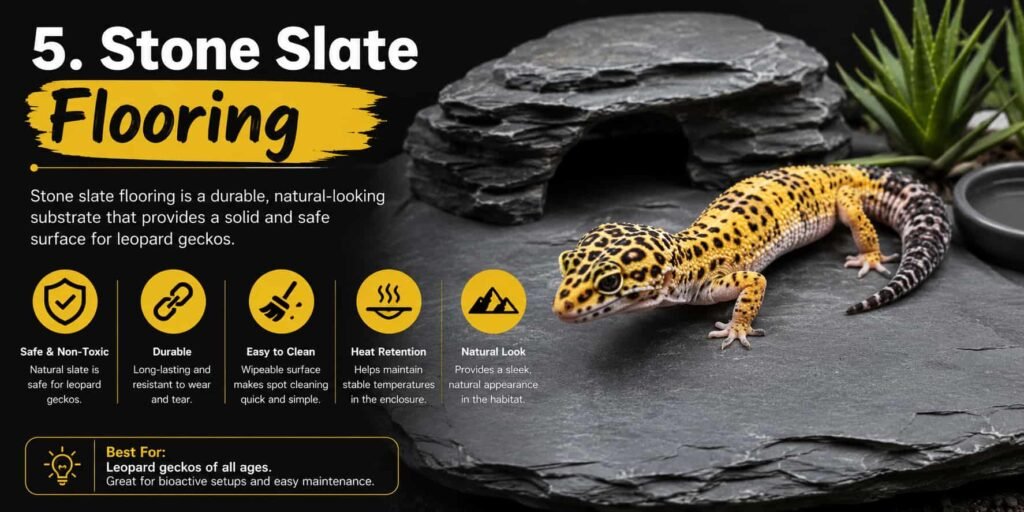
Stone slates, stone slabs, and pavers are strong, natural-looking substrate choices for a leopard gecko tank. They are not loose, which means there is less risk of your gecko swallowing the material. Their rough surface also gives good grip, helping your gecko walk safely.
Stone slate can also hold and spread heat well, making it useful for creating a warm surface in the enclosure. However, every piece should be placed firmly on the bottom of the tank. Loose or wobbly stones can hurt your gecko or trap its toes near the tank edges.
Some owners use a very small amount of sand to fill gaps between flat stones. This can make the setup look more natural, but too much sand can be dangerous because it may be swallowed and cause impaction.
A single layer of slate should cover the full bottom of the terrarium. Try to avoid cracks, spaces, or unstable edges. Finding the exact slate size may be difficult, so it is best to ask a supplier if they can cut it to match your tank.
Ceramic Tile Base
Ceramic tiles are a lighter and cheaper alternative to stone slate. They are easy to find, simple to clean, and usually easier to cut and install. This makes them a practical substrate option for many leopard gecko owners.
The main thing to check is the tile surface. Very smooth tiles can make it hard for geckos to walk because they may slip. Slipping can cause stress or injury, so textured tiles are usually a better choice.
Use one layer of ceramic tiles to cover the entire bottom of the tank. You can also place paper towels under the tiles to add extra support and make cleaning easier.
Excavator Clay Setup
Excavator clay substrate is a creative choice for owners who want a more natural leopard gecko habitat. When it is wet, it can be shaped like modelling clay. You can use it to build caves, tunnels, basking areas, and small burrows.
Once the clay dries, it becomes firm and keeps its shape. This gives the enclosure a natural desert-style appearance and allows your gecko to explore a more realistic surface. It is also safer and more stable than loose desert sand when used correctly.
The amount of excavator clay depends on the tank size and the structures you want to build. Always follow the package instructions and allow the clay to dry properly before placing your gecko inside.
Bioactive Tank Substrate
A bioactive substrate works like a small natural ecosystem inside the tank. It usually includes natural soil, live plants, beneficial bacteria, and small cleanup insects that help break down waste.
This setup can make the enclosure look more natural and allow your gecko to show normal behaviors such as digging and exploring. It can also support a healthier reptile habitat when managed correctly.
However, a bioactive setup is not the easiest option for beginners. It needs the right balance of heat, humidity, soil, drainage, and cleaning organisms. It can also be expensive and time-consuming to set up. Owners should understand basic plant care and habitat maintenance before choosing this option.
Homemade Natural Substrate Mix
A DIY blended substrate is a cheaper way to create a natural-looking tank without building a full bioactive setup. A common mix includes organic topsoil, play sand, and clay.
Avoid calcium sand, beach sand, fertilizers, and pesticides because these can be harmful to leopard geckos. The mixture should be firm enough to hold shape but soft enough for light digging.
After preparing the substrate, let it settle and dry for about one to two weeks before adding your gecko. This helps create a safer and more stable surface.
A homemade substrate gives you more control over the tank’s look and texture. However, it still needs regular checks for moisture, temperature, and cleanliness. It should also be replaced when needed to prevent bacteria buildup.
Reptile Sand Mat
A reptile sand mat gives the tank a sandy and rocky appearance without using loose sand. It looks more natural than plain paper or carpet, but it is safer because the gecko cannot easily swallow loose grains.
These mats usually provide good grip and are simple to install. They can be cut to fit the tank and are available in different sizes. They are also affordable and easy to find in many pet stores.
The surface may feel rough, so choose a mat that is not too harsh on your gecko’s belly. Reptile sand mats can be spot-cleaned, but they should also be washed deeply every two weeks with safe cleaning methods. This helps keep the leopard gecko enclosure clean, healthy, and comfortable.
For most owners, the safest choice is a stable, non-toxic, easy-to-clean substrate that helps prevent impaction, injury, and bacteria growth.
Read Also: Leopard Gecko Turning White: Causes Revealed [Pale][Stress][Diet]Practical Substrate Options for Leopard Gecko Tanks
A good leopard gecko substrate should be safe, easy to clean, and comfortable for daily movement. Some materials are better for the main tank floor, while others are better for a moist hide. Before choosing any terrarium flooring, always think about safety, heat control, hygiene, and the risk of impaction.
Linoleum Flooring
Linoleum, also called lino, is a flexible mat-like flooring that can look like stone, wood, or ceramic tile. It is lightweight, easy to cut, and simple to place inside a leopard gecko enclosure. Because it is smooth and flat, it can make cleaning much easier.
Lino is also affordable and available in many designs, making it a practical option for owners who want a clean and neat-looking tank. Waste can usually be wiped away with a damp cloth and a reptile-safe cleaner that does not contain phenol.
However, lino must be used carefully. Peel-and-stick types can be hard to remove because of the glue. There is also a risk that the material may soften or melt if it is placed too close to strong heat sources. For this reason, always check the surface temperature and make sure the lino is safe under your tank’s heating setup.
Shelf Liner
Shelf liner is another budget-friendly substrate option for leopard geckos. It is often sold in large rolls, making it cheap and easy to replace. Many owners like it because it is simple to cut, easy to install, and available in different colors or patterns.
A non-perforated shelf liner is usually better because food, waste, and bacteria are less likely to get trapped in holes. It can create a clean surface for your gecko and may look more natural than plain paper towels.
The main concern is heat. Shelf liner can act as an insulator instead of a heat conductor. This means it may affect the way heat moves through the tank floor. Because leopard geckos need proper belly heat for digestion, you must monitor the basking area, warm side temperature, and overall tank heat gradient carefully.
Coconut Coir and Eco Earth
Coconut coir, also known as Eco Earth, coco fiber, or coconut fiber, is a debated substrate among leopard gecko keepers. It looks natural, holds moisture well, and may help reduce odor when maintained properly. Because of these qualities, it is often used inside a moist hide.
However, coconut coir is not always the best choice as a full tank substrate. If a gecko accidentally swallows dry coco fiber while eating, it may increase the risk of digestive blockage or impaction. It can also become dusty when dry, which may irritate the gecko’s eyes, nose, or skin.
If you choose to use coconut coir, select an organic product made for reptile and amphibian tanks. Avoid products with fertilizers, chemicals, or added scents. A thin layer of about 1 cm is usually enough for basic use, but a deeper layer may be used in specific areas if digging is needed.
Best Substrates for a Moist Hide
A leopard gecko moist hide helps with shedding, hydration, and comfort. The substrate inside the hide should hold moisture without becoming dirty or moldy too quickly. It should also be checked often to keep the hide clean and safe.
Coconut Coir for Moist Hides
Coconut coir is commonly used in moist hides because it holds water well and allows light digging. Female leopard geckos may also use it for egg-laying behavior. It should be damp, not soaking wet.
Still, coconut coir needs regular care. If it stays too wet for too long, it may develop mold or a bad smell. Replace it often and use fresh, clean fiber to keep the hide box hygienic.
Final Thoughts
Lino, shelf liner, and coconut coir can all be useful in a leopard gecko habitat, but each one has risks. Lino is easy to clean but must be kept away from unsafe heat. Shelf liner is cheap and simple but may affect heat transfer. Coconut coir is useful for a moist hide, but it should be used carefully because of dust, mold, and possible swallowing risks.
The safest choice is always a non-toxic, stable, clean, and easy-to-monitor substrate that supports your leopard gecko’s health and natural behavior..
Moist Hide and Unsafe Substrates for Leopard Geckos
Choosing the right leopard gecko substrate is important for your pet’s safety, comfort, and long-term health. Some materials are useful only inside a moist hide, while others should not be used at all because they may cause impaction, infection, injury, or breathing problems.
Sphagnum Moss for Moist Hides
Sphagnum moss is a common moist hide substrate for leopard geckos. It holds moisture well and helps create the humid area your gecko needs during shedding. Its texture is rougher and more stringy than coconut coir, but it can still work well when used in a small amount.
This substrate is usually safe when placed only inside the hide box. However, it should not be used carelessly because some geckos may accidentally swallow it. If swallowed in large pieces, it may increase the risk of digestive blockage or impaction.
For best results, use clean terrarium-safe sphagnum moss in a thin layer. Keep it damp, not soaking wet, and replace it regularly to prevent mold, bad smells, and bacterial growth.
Damp Paper Towels
Wet paper towels are another simple option for a leopard gecko moist hide. They are cheap, easy to replace, and safer than many loose substrates. They also make it easy to keep the hide clean.
However, paper towels are not completely risk-free. Some geckos may tear and swallow small pieces, especially during shedding or digging behavior. Female geckos may also dig more when preparing to lay eggs, so loose or torn paper should be removed quickly.
Use plain, unscented, non-perfumed paper towels. Replace them often to keep the humid hide fresh and hygienic.
Unsafe Substrates for Leopard Geckos
Some substrates for leopard geckos look natural but can be dangerous. The wrong material can cause bowel impaction, skin irritation, mouth injury, infection, or respiratory issues. Safety should always come before appearance.
Sand and Calcium Sand
Although leopard geckos come from dry regions, they do not naturally live on deep loose sand like a Sahara-style desert. Their natural environment is closer to rocky, dry grassland and hard-packed soil.
Loose sand is risky because geckos may swallow it while eating, licking, or hunting. This can lead to intestinal blockage, also called impaction. Young leopard geckos are at higher risk because they eat quickly and may swallow substrate by mistake.
Calcium sand is often sold as digestible, but it is still not a safe choice. If a gecko eats too much of it, it can block the digestive system. In serious cases, the gecko may need veterinary treatment or surgery.
A safer way to provide calcium is through proper calcium powder, vitamin supplements, and good husbandry. This helps prevent metabolic bone disease without using risky sand.
Pine, Fir, and Cedar
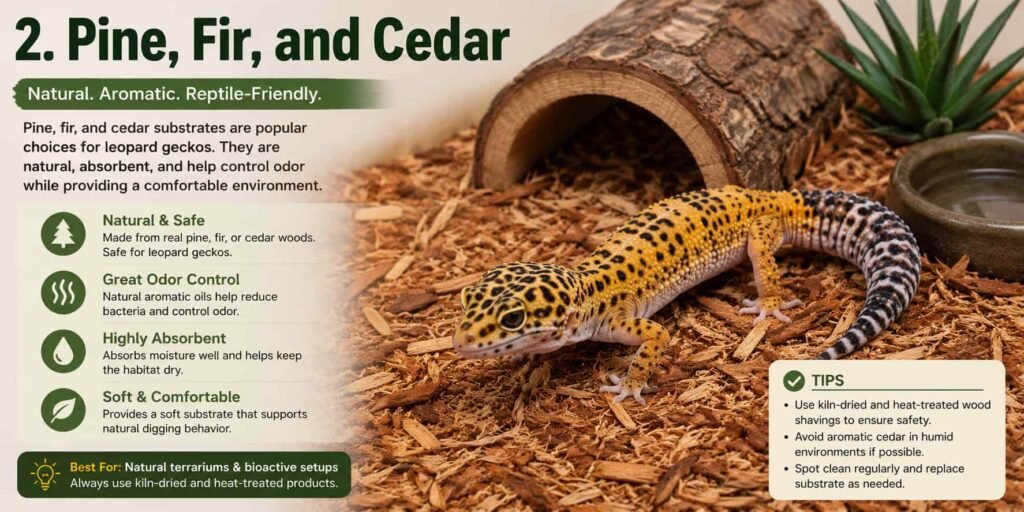
Pine, fir, and cedar should not be used in a leopard gecko enclosure. These woods contain natural oils that can be toxic to reptiles.
The oils may cause respiratory problems, skin irritation, and other health issues. Even if these materials are common for other animals, they are not suitable for leopard geckos.
Coconut Fiber as a Main Substrate
Coconut fiber, also called coco fiber or coconut coir, can hold moisture well. This makes it useful in a moist hide, but it is not ideal as a full tank substrate.
When used across the whole tank, it can become dusty when dry or too humid when wet. This may lead to skin infections, respiratory irritation, or mold problems. If swallowed, it may also increase the risk of impaction.
For this reason, coconut fiber is better used carefully in small moist areas rather than as the main terrarium flooring.
Corn Cob Granules
Corn cob substrate is cheap and easy to find, but it is unsafe for leopard geckos. When it gets wet, it can grow fungus and bacteria quickly. This can lead to health problems such as mouth infections and poor tank hygiene.
The granules can also be too large and may get stuck in the gecko’s mouth or throat during licking or feeding. Because of these risks, corn cob should not be used in a leopard gecko tank.
Ground Walnut Shell
Ground walnut shell is sometimes sold as a natural desert-style substrate, but it is dangerous for leopard geckos. The small particles can be sharp and may irritate the digestive system if swallowed.
It can also cause gastrointestinal inflammation, impaction, and injury. Like corn cob, it may support bacterial and fungal growth when wet. This makes it a poor and unsafe substrate choice.
Wood Chips
Wood chips are not recommended for leopard gecko enclosures. They are loose, rough, and difficult to keep clean. Small insects can hide between the chips, making feeding harder and causing stress for the gecko.
Sharp pieces may also scratch the gecko’s belly, feet, or mouth. Because of these risks, wood chips are not a practical or safe reptile substrate.
Gravel
Gravel may look natural, but it can be harmful. Small pieces can be swallowed and may cause impaction. Sharp edges can also hurt the gecko’s soft belly and feet.
If gravel is used in loose layers, it may shift or collapse when the gecko digs. This can make the surface unstable and unsafe. For these reasons, gravel is not a good main substrate for leopard geckos.
Sphagnum Moss as a Full Substrate
Sphagnum moss is useful inside a moist hide, but it should not cover the whole tank floor. Too much moisture can increase humidity levels beyond what leopard geckos need. This may lead to mold growth, bacteria, and breathing issues.
Use sphagnum moss only in small, controlled areas where extra moisture is needed for shedding.
Read Also Feeding a Leopard Gecko Right [Avoid Mistakes]How to Choose the Best Leopard Gecko Substrate
The best leopard gecko substrate should be safe, clean, stable, and easy to maintain. It should also support natural behaviors such as hiding, light digging, climbing, and exploring.
Safe options may include ceramic tile, stone slate, paper towels, reptile carpet, a well-prepared DIY blended substrate, or a carefully managed bioactive substrate. Each option has benefits, but it must match your gecko’s age, health, and tank setup.
A bioactive substrate can create a more natural ecosystem with soil, clay, plants, drainage layers, and helpful cleanup organisms. However, it requires careful control of temperature, humidity, and cleanliness.
A DIY substrate mix can also work if it uses safe materials such as organic topsoil, play sand, and clay. Avoid beach sand, calcium sand, fertilizers, pesticides, and sharp materials. Let the mix settle and dry properly before adding your gecko.
Ceramic tiles are easy to clean and help with heat control, but sharp edges and slippery surfaces should be avoided. Reptile carpet is simple, but it must be cleaned often and replaced when worn. Paper towels are one of the safest beginner options, especially for baby or sick geckos.
Final Thoughts
A healthy leopard gecko enclosure begins with the right substrate. Avoid risky materials such as sand, calcium sand, pine, fir, cedar, corn cob, ground walnut shell, wood chips, gravel, and full-tank coconut fiber.
The safest substrate is one that lowers the risk of impaction, controls bacteria, supports proper heat transfer, and keeps the tank easy to clean. A simple, stable, and non-toxic setup is always better than a decorative but dangerous one.
FAQ’s: Substrate for Leopard Geckos [What to Use]
What type of bedding is best for leopard geckos?
The best bedding for leopard geckos is a safe substrate that supports their natural needs. A good loose option is a mix of 70% organic topsoil and 30% washed play sand because it feels like their dry natural habitat and allows burrowing. For an easier and safer choice, use paper towels, ceramic tile, or slate, as they are simple to clean and reduce the risk of impaction.
Do leopard geckos prefer sand or soil?
Leopard geckos usually do better on a natural substrate made from soil, clay, and a little sand. Pure sand can work for some keepers, but a mixed bedding is safer and better because it copies their natural dry habitat, supports digging, and helps create a more realistic terrarium environment.
Can a leopard gecko go 4 days without food?
A leopard gecko can go 4 days without food, but it depends on its age, health, and body condition. Baby leopard geckos should eat every day and should not go more than about 2 days without food. Juvenile leopard geckos can manage up to 7 days in an emergency, while healthy sub-adult leopard geckos may go up to 14 days if they are already well-fed.
What stresses geckos out?
Geckos can feel stressed by an overcrowded enclosure, sudden temperature changes, loud noises, unfamiliar pets, poor habitat conditions, or anything that makes them feel unsafe. If your gecko waves its tail, hides too much, or acts nervous, check its terrarium, temperature, space, and surroundings to make sure it feels calm and secure.
Can geckos hear you?
Yes, geckos can hear sounds, including your voice. They have visible ear openings and inner hearing structures that help them detect airborne sounds, not just ground vibrations. However, loud noise can stress them, so it is best to speak softly around your pet gecko.