
![Leopard Gecko Turning White Causes Revealed [Pale][Stress][Diet]](https://reptileopedia.com/wp-content/uploads/2026/07/Leopard-Gecko-Turning-White-Causes-Revealed-PaleStressDiet-2-1024x512.jpg)
Seeing your leopard gecko turning white or appear pale can be surprising. Most often, this change is a natural part of shedding, where the old outer skin loosens and eventually comes off, revealing fresh, healthy skin underneath.
Shedding Patterns by Age
Young geckos shed more frequently, often weekly, because they grow quickly. Adult geckos may shed every three weeks. Before shedding, their skin may start showing subtle changes: darker spots may fade slightly, and the skin takes on a dusty or paler look.
Pre-Shed Whitening
A few hours before the shedding begins, the gecko’s skin turns very white. This is a normal physiological response preparing the skin for renewal. Shedding is important for health maintenance, allowing the gecko to discard old skin, reduce the risk of infections, and support proper growth.
Key Factors Affecting Color Changes
While shedding is the most common reason for whiteness, other factors may influence your gecko’s appearance:
- Stress: Environmental changes, handling, or illness can cause paleness.
- Diet: Poor nutrition or vitamin deficiencies may affect skin color.
- Temperature and Humidity: Incorrect tank conditions can impact skin health.
Understanding Why Your Leopard Gecko Turns White
When a leopard gecko starts turning white and looks pale, it is usually a natural sign of shedding. During this process, the old outer skin peels away, revealing a fresh layer underneath. Shedding generally happens every 1–2 months as part of their normal growth cycle.
Behavioural Changes During Shedding
Before and during skin renewal, your gecko may appear duller in color and spend more time hiding in its moist hide. This environment keeps the skin soft and helps the gecko shed without difficulty. It also protects sensitive areas, like toes and tail, from leftover skin.
How Geckos Manage Shedding
Most geckos remove the shed skin naturally, either by rubbing against surfaces like rough bark or using their own movements. Occasionally, owners may need to assist if skin sticks to delicate areas. Interestingly, geckos often consume their shed skin, so it is normal not to see remnants.
Key Factors Affecting Skin Colour
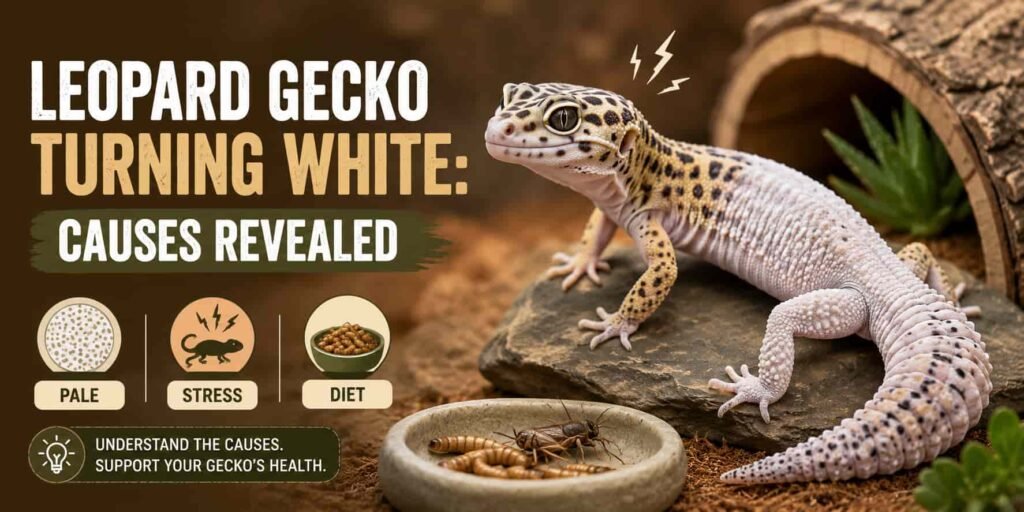
While shedding is the main reason for whiteness, other factors can influence paleness, including:
- Stress: Environmental changes, handling, or illness can make the gecko appear lighter.
- Diet: Poor nutrition or vitamin deficiencies may affect skin health.
- Tank conditions: Inadequate temperature or humidity can disrupt the shedding process.
Why Your Leopard Gecko Turns White or Pale: 4 Key Reasons
Leopard geckos sometimes appear white or pale, which can be alarming for owners. Understanding the underlying causes helps maintain their health and supports proper shedding. Here are the four main reasons:
1. Natural Shedding and Skin Consumption
When a gecko turns pale, it often signals that shedding is about to occur. During this process, they remove old skin and usually consume it. This behavior is natural and keeps the enclosure clean. After shedding, the skin appears bright and healthy.
Geckos instinctively retreat to their moist hide for privacy and safety. It’s important not to forcefully pull any remaining skin, as they are fully equipped to handle the process themselves. Observing these behaviors helps you understand their stress levels, shedding cycle, and overall skin health.
2. Low Humidity Levels
Improper humidity can make a gecko’s skin pale or dry. A healthy enclosure maintains 40–50% humidity, but during shedding, it should rise to 60–80% to ensure a smooth shed.
Simple measures, like lightly spraying water or keeping the moist hide damp, help the skin remain flexible. Adequate moisture prevents stuck sheds, protects sensitive areas (toes, tail, eyes), and supports vibrant skin appearance.
3. Nutritional Deficiencies
A pale color can indicate a lack of a balanced diet. Leopard geckos require daily intake of multivitamins, calcium, and vitamin D3, along with 5% UVB exposure.
Feed appropriately sized insects (no larger than the space between the gecko’s eyes) to prevent stress or refusal. While geckos may enjoy treats like waxworms, overfeeding certain insects (e.g., crickets) can lead to obesity, affecting mobility and overall health.
4. Shedding Frequency and Growth
Understanding the shedding cycle clarifies why geckos turn pale. Baby geckos shed weekly, while adults shed roughly every three weeks. Some may take up to two months for a complete shed.
During these periods, geckos may appear pale for several days. Monitoring their environment, nutrition, and stress levels ensures healthy skin renewal and reduces the risk of prolonged paleness or other health issues.
Common Health and Environmental Challenges for Leopard Geckos
Leopard geckos may sometimes appear unusually pale or white due to health or environmental factors. Understanding these issues can help maintain their skin health, stress levels, and overall well-being.
1. Dry or Stuck Shed
A dry shed occurs when old skin does not detach easily, making the gecko look pale or whitish.
- Gently assist by soaking the gecko in shallow water or using a damp cotton bud to loosen stuck skin.
- Observe the gecko for 24 hours to see if the shed comes off naturally.
- Check the enclosure for proper humidity levels and ensure a moist hide is available for future sheds.
- Persistent problems should be evaluated by a veterinarian to avoid complications and ensure long-term skin health.
2. Digestive Issues
Indigestion can also cause a pale appearance and reduce appetite.
- Geckos rely on consistent heat for proper digestion. Keeping a heat mat on 24/7 allows their body to process food effectively.
- Temporary food refusal is normal during shedding, but consistent warmth supports digestion and overall metabolic health.
- Monitoring their diet, feeding behavior, and environmental temperature helps prevent chronic digestive problems.
3. Inadequate Hides and Stress
Proper environmental enrichment is crucial. Leopard geckos need at least three hides in their enclosure:
- A warm hide above the heat source
- A cool hide at the opposite end
- A moist hide to aid shedding
Without these options, geckos may experience stress, becoming shy or overly cautious. Access to multiple hiding spots helps them regulate body temperature, manage stress, and maintain a healthy shedding cycle.
Read Also: Can Leopard Geckos Be Kept Together? [Truth]Key Takeaways on Leopard Geckos Turning White
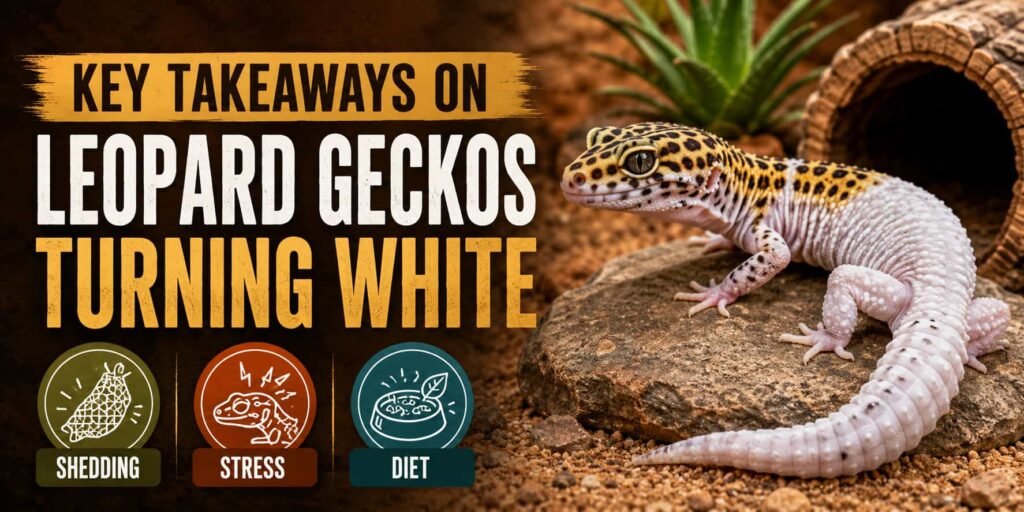
A pale or white appearance in leopard geckos is most often a normal part of their shedding process, an essential phase in their growth cycle where old skin is replaced by a fresh, healthy layer. Shedding frequency varies by age, occurring more often in younger geckos and less frequently in adults.
However, paleness can also result from environmental or health factors, including:
- Low humidity, which can make shedding difficult and the skin appear dry
- Nutritional deficiencies, such as inadequate calcium, vitamin D3, or a poor diet
- To support your gecko’s health and well-being, maintain proper enclosure conditions, including:
- Humidity levels of 60–80% during shedding periods
- Access to nutritious food and supplementation for bone and skin health
- Adequate heat and environmental enrichment for stress reduction
If your gecko remains unusually pale, struggles with stuck skin, or shows signs of illness or discomfort, consulting a veterinarian is recommended to address any underlying health concerns and ensure optimal skin and metabolic health.
Leopard Gecko Turning White: Causes Revealed [Pale][Stress][Diet]
FAQs: Leopard Gecko Turning White
Why does a leopard gecko turn white?
Leopard geckos can appear lighter or darker not because of their mood, but due to temperature and environmental conditions. When they are cooler, their skin often becomes paler as a natural thermoregulatory response. This color change is also influenced by shedding cycles, where old skin loosens and reveals a fresh layer beneath. Proper humidity, nutrition, and health are important to support natural shedding and maintain vibrant coloration.
What are signs of stress in leopard geckos?
Leopard geckos show stress through behavioral cues such as tail waving, vocalizing, biting, or refusing to eat. Other indicators include rapid breathing, hiding excessively, and restless movement. These NLP-related behavioral signals help owners understand that the gecko is experiencing stress or discomfort, allowing timely care adjustments.
Do leopard geckos change color when stressed?
Yes, leopard geckos can show color changes in response to stress. A calm gecko often appears vibrant, while a stressed or anxious gecko may darken. Thermoregulation, genetics, and morph type influence these changes—tangerine morphs may become brighter, albinos may look paler, melanistic lines may darken, and juveniles can lose bold patterns as they mature. These contextual and physiological cues signal the gecko’s internal state.
Why is my gecko pale and not eating?
A leopard gecko may become pale and refuse food due to overheating. When the temperature in the enclosure is too high, the gecko’s body reduces light absorption to prevent stress and overheating. Ensuring the tank temperature is within the proper range is essential for maintaining thermoregulatory balance, appetite, and overall health.
What are 5 warning signs of stress?
Five key emotional and behavioral indicators of stress include:
- Loss of interest in hobbies or activities once enjoyed.
- Sudden mood changes or irritability.
- Feeling overwhelmed or unable to cope with daily demands.
- Restlessness or vague uneasiness.
- Frequent negative thoughts or recurring nightmares.