
![How To Be Friends With Your Leopard Gecko [Easy Tips]](https://reptileopedia.com/wp-content/uploads/2026/06/How-To-Be-Friends-With-Your-Leopard-Gecko-Easy-Tips-1024x512.jpg)
Building a strong bond with your leopard gecko is mainly about trust, patience, gentle handling, and proper care. Unlike dogs or cats, leopard geckos do not show affection in the same emotional way. However, they can learn to feel safe around you, recognize your presence, and connect you with food, safety, and calm interaction.
How to Bond With Your Leopard Gecko
A good relationship with your Leo starts with understanding its natural behavior. Leopard geckos are shy, crepuscular reptiles, which means they are usually more active during the evening and early morning. They need time to adjust, explore, and feel secure before they become comfortable with handling.
How Can You Build Trust With Your Leopard Gecko?
Bonding with a leopard gecko is not something that happens in one day. It is a slow process based on consistent care, gentle interaction, and low-stress handling. Your gecko needs to learn that your hands are not dangerous and that your presence usually brings something positive, such as food or safety.
The best way to build this connection is by creating a peaceful routine. Feed your gecko at regular times, speak softly, move slowly near the enclosure, and avoid sudden actions. When your gecko feels secure, it is more likely to come forward, explore, and accept your presence.
A strong bond depends on three important things: proper husbandry, positive experiences, and respect for your gecko’s comfort level. If your gecko feels stressed, cold, unsafe, or unhealthy, bonding will become much harder.
Positive Reinforcement Builds Trust
Positive reinforcement means rewarding your leopard gecko for calm and desired behavior. For example, if your gecko comes near your hand and receives a tasty insect, it may begin to connect your hand with something good. Over time, this helps your gecko feel safer around you.
Leopard geckos are simple but intelligent reptiles. They can learn patterns, routines, and familiar sounds. If feeding, handling, and interaction are always calm and safe, your gecko may start to recognize you as part of its normal routine.
Food rewards, such as crickets, mealworms, dubia roaches, or safe treats, can help create a positive connection. However, you should never force your gecko to interact. Let it choose when to come closer. Trust grows best when your leopard gecko feels in control.
Best Ways to Bond With Your Leopard Gecko
1. Start With Proper Habitat Care
Before trying to handle or train your leopard gecko, make sure its enclosure, temperature, humidity, hides, heating, and substrate are correct. A stressed or uncomfortable gecko will not bond easily.
Your leopard gecko needs a warm side, a cool side, and safe hiding places. This allows it to control its body temperature and feel protected. A good habitat helps reduce fear and makes your gecko more confident.
Do not treat your gecko like a human baby. It may hide because it feels safe, not because it is sad. It may avoid handling because it is stressed, not because it dislikes you personally. Understanding reptile behavior is very important for successful bonding.
Basic Leopard Gecko Care Guide

| Care Area | Recommended Setup |
|---|---|
| Enclosure Size | A single leopard gecko needs a spacious tank with enough room to move, hide, and explore. Bigger enclosures are usually better if heating and hides are managed properly. |
| Temperature Range | Keep a proper temperature gradient, usually around 68°F to 89°F or 20°C to 32°C, with a warm side and a cooler side. |
| Humidity Level | Normal humidity should usually stay around 30% to 40%. A moist hide is helpful during shedding. |
| Heating Source | Use a safe heat mat, heat lamp, or other reptile-safe heating source with temperature control. Warm rocks or slate tiles can help hold heat when used safely. |
| Substrate | Safer options include slate tiles, paper towels, reptile carpet, newspaper, or large smooth stones. Avoid loose substrate for young or weak geckos because it may cause health risks. |
| Hiding Spots | Provide at least three hides: one warm hide, one cool hide, and one moist hide for shedding support. |
Why Good Husbandry Helps Bonding
A leopard gecko that feels safe in its habitat is more likely to trust its owner. If the enclosure is too cold, too hot, too bright, too noisy, or too empty, your gecko may become stressed. Stress can lead to hiding, tail waving, refusing food, or avoiding handling.
When your gecko has the right temperature, humidity, hides, food, water, and enrichment, it can relax. A relaxed gecko is easier to approach and more likely to accept gentle interaction.
2. Use a Familiar Sound for Bonding
One simple way to build trust with your leopard gecko is to create a special sound that your gecko can recognize. Leopard geckos do not usually respond to their names like cats or dogs, but they can learn to connect a repeated sound with something positive, such as food, treats, safety, and calm interaction.
Your sound can be very simple. You can use a soft tongue click, gentle tapping, quiet humming, or a short repeated sound. The sound does not need to be loud or complicated. The most important thing is to use the same sound every time, especially before feeding or offering a treat.
This works like a basic form of positive reinforcement. When your gecko hears the sound and then receives food, it may slowly learn that the sound means something good is coming. Over time, your Leo may begin to come closer, move toward the front of the enclosure, or become more relaxed when it hears you.
Always keep this sound linked with positive experiences only. Do not use it before stressful activities such as forced handling, cleaning too roughly, or moving your gecko when it is scared. If the sound becomes connected with fear, your gecko may start avoiding it.
A special sound can help make bonding easier because it gives your leopard gecko a clear, familiar signal. It teaches your pet that your presence is safe, calm, and rewarding.
3. Give Your Gecko Time to Settle In
When a leopard gecko arrives in a new home, it needs time to adjust. A new enclosure, new smells, new sounds, and a different environment can feel stressful for your gecko. Even if the setup looks comfortable to you, it may still feel unfamiliar and unsafe to your pet at first.
During the first few weeks, your gecko may hide more often. This is normal behavior. Hiding helps leopard geckos feel protected while they learn about their new surroundings. Do not worry if your gecko does not want to interact right away.
It is best to give your Leo about three to four weeks to become comfortable in its new habitat. During this time, avoid unnecessary handling and do not keep changing the enclosure. Too many changes can increase stress, fear, and insecurity.
Let your gecko explore slowly. Keep the environment quiet, stable, and safe. Once your leopard gecko understands that its enclosure is a secure place, it will become more confident. This confidence is the first step toward trust-building and bonding.
4. Let Your Leopard Gecko Recognize Your Scent
Leopard geckos use smell to understand their surroundings. They can notice different scents and may connect them with either good or bad experiences. When your gecko is new to you, your scent may feel unfamiliar at first.
A gentle way to help your gecko get used to you is by placing a clean piece of clothing with your scent near the enclosure. Do not put it inside the tank unless it is safe and cannot cause problems. Keeping it near the enclosure is enough for your gecko to slowly become familiar with your smell.
This helps your leopard gecko learn that your scent does not mean danger. Over time, your pet may feel calmer when you come near the enclosure or place your hand nearby.
This method is useful because bonding is not only about touching or handling. It is also about creating familiarity, comfort, safety, and positive association. When your gecko becomes used to your scent, it may become more relaxed around you.
5. Let Your Gecko Know You Are Nearby
Leopard geckos can become scared if you suddenly appear near their enclosure. To avoid startling them, it is helpful to announce your presence in a calm way. You can speak softly, use the same gentle word, or make your special sound before approaching.
The goal is to help your Leo understand that you are coming. This makes your presence more predictable and less stressful. A calm voice or repeated sound can become part of your gecko’s daily routine.
Consistency is very important. Try to use the same tone, word, or sound each time you approach the enclosure. This helps your gecko connect your voice with safety, feeding, gentle care, and calm handling.
Do not rush this process. Start with short moments. Stand near the enclosure, speak softly, and allow your gecko to watch you. With time, your leopard gecko may become less nervous and more comfortable when you are around.
6. Respect Your Gecko’s Natural Activity Time

Leopard geckos are often called nocturnal, but they are actually crepuscular reptiles. This means they are most active during the early morning and evening. In the wild, these times are safer and cooler, so leopard geckos naturally prefer them.
Because of this, you should avoid disturbing your gecko during its normal sleeping hours. For example, waking your gecko in the middle of the day for handling can cause stress and may slow down the bonding process.
A better approach is to build a routine around your gecko’s active time. Feed, handle, and interact with your leopard gecko in the evening or early morning when it is naturally more alert.
A consistent schedule helps your gecko feel secure. When feeding and handling happen at predictable times, your gecko may become more relaxed and cooperative. Respecting its natural rhythm supports better trust, comfort, behavior, and long-term bonding.
7. Keep Outdoor Enclosure Time Calm and Safe
When your leopard gecko is outside its enclosure, it can easily become stressed. In the wild, small reptiles must stay alert because they can be hunted by larger animals. Even in your home, loud noises, bright lights, fast movement, other pets, or too many people can make your gecko feel unsafe.
Always keep outside-enclosure time short, quiet, and controlled. Do not allow cats, dogs, or other animals near your gecko. Even if another pet is friendly, your leopard gecko may still see it as a threat.
Choose a safe area where your gecko cannot escape, fall, or get injured. Keep your hands low and move slowly. Avoid placing your gecko on high furniture or open floors where it may run away.
You can use positive reinforcement during these short sessions. For example, offer a safe feeder insect after calm handling. This helps your gecko connect outside time with a positive experience.
Leopard geckos do not need tank mates or busy play areas. They feel better in a calm and secure environment. By reducing stress, fear, noise, bright light, and sudden movement, you make bonding safer and more successful.
8. Reduce Stress Inside the Enclosure Too
A leopard gecko’s enclosure should feel like a safe home. Stress inside the tank can affect your gecko’s health, behavior, feeding, and bonding. Even small things can make your gecko uncomfortable.
Other pets can be a major source of stress. For example, a cat sitting near the tank and watching your gecko may seem harmless to you, but your gecko may feel threatened. Dogs, birds, or other animals near the enclosure can also cause fear.
Temperature changes can also create problems. Direct sunlight, fans, cold drafts, or poor heating can disturb your gecko’s comfort. Leopard geckos need a stable temperature gradient so they can move between warm and cool areas.
Strong smells should also be avoided. Candles, perfumes, air fresheners, incense, smoke, and chemical sprays can bother sensitive reptiles. Their enclosure should stay clean, calm, and free from harsh scents.
A peaceful enclosure helps your leopard gecko feel secure. When your gecko feels safe inside its home, it is more likely to come forward, eat well, explore, and accept your presenc
Here is the professionally rewritten version in simple English with fresh headings and bold semantic/NLP keywords included naturally.
9. Use Treats to Build Trust
Treats can help your leopard gecko feel more comfortable around you, especially during the first few weeks in a new home. At this stage, your Leo is still learning that its enclosure is safe and that you are not a threat.
In the beginning, you can place food near your gecko’s favorite hiding place. This allows your pet to eat without feeling pressured. Once your leopard gecko becomes more confident, you can slowly start offering insects with feeding tongs or tweezers. Later, if your gecko is calm, you may try careful hand-feeding.
Safe feeder insects such as crickets, mealworms, and occasional waxworms can be used as rewards. These treats help your gecko connect your presence with something positive. When your Leo learns that you bring food, it may begin to trust you more.
You can also use a familiar sound before feeding, such as a soft click or gentle voice cue. Over time, your gecko may connect that sound with feeding time, safety, and positive interaction.
However, treats should be given carefully. Do not overfeed your leopard gecko, and make sure the insect is an appropriate size. A good rule is to offer insects that are not too large for your gecko to swallow safely.
The main goal is to make each feeding moment calm and positive. This helps create trust, familiarity, comfort, and a stronger bond between you and your leopard gecko.
Read Also: Feeding a Leopard Gecko Right [Avoid Mistakes]10. Make Feeding Time a Positive Experience
Feeding is not only about giving your leopard gecko nutrition. It is also a useful way to build a better relationship. When your gecko feels safe during feeding, it may start to see you as part of a positive routine.
Your leopard gecko may learn simple feeding cues, such as the sound of the enclosure opening, your voice, or the movement of feeding tongs. These small signals can help your gecko understand that food is coming.
Offering insects directly with tongs can be a safe and effective bonding method. It allows your gecko to hunt while still connecting the experience with you. Leopard geckos are careful hunters, but they may sometimes miss the insect and gently nip your fingers by accident. If this happens, stay calm. Do not panic or pull away suddenly, as this could scare your gecko.
Using tongs or tweezers is often safer than feeding by hand, especially for beginners. It helps protect your fingers and keeps feeding time more controlled.
Avoid disturbing your gecko while it is eating. Do not pick it up during feeding or right after it has swallowed food. This can cause stress and may make your gecko feel unsafe. Let your Leo finish eating and settle calmly.
A peaceful feeding routine supports positive reinforcement, trust-building, natural hunting behavior, and calm interaction. When feeding time feels safe, your leopard gecko is more likely to become relaxed around you.
11. Handle Your Leopard Gecko Safely
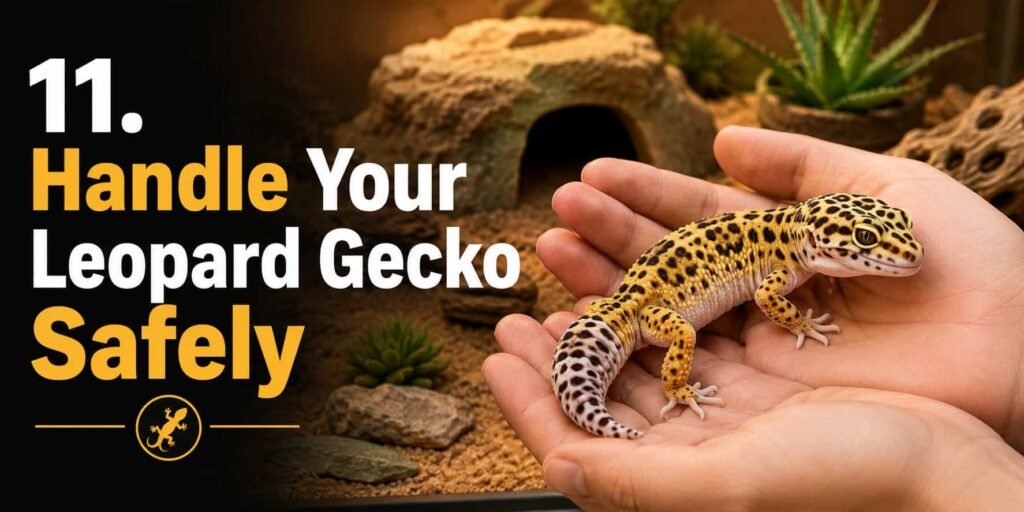
Safe handling is one of the most important parts of bonding with a leopard gecko. At first, your gecko may run away when your hand comes near. This is normal. Your pet needs time to understand that your hand is not dangerous.
Start slowly by placing your hand inside the enclosure and keeping it still for a few minutes. Do not chase your gecko or force it to come near you. Let your Leo sniff, lick, or observe your hand at its own pace.
Some leopard geckos are curious and may walk toward your hand quickly. Others may need more time. Both reactions are normal. The key is to stay patient and respect your gecko’s body language.
Do not grab your gecko suddenly. Instead, allow it to climb onto your hand when it feels ready. If you need to lift your gecko, use the scooping method. Place your hand gently in front of your gecko, then slowly slide your hand under its front legs and body. Support the whole body with your fingers.
Never hold your leopard gecko tightly around the middle. Also, avoid picking it up from above because this can feel like a predator attack. Keep your movements slow, calm, and gentle.
If your gecko becomes restless, tries to jump, or looks uncomfortable, place it back in the enclosure safely. Short and calm handling sessions are better than long stressful ones.
Safe Handling Tips for Leopard Geckos
Start handling your leopard gecko gently when it is young or newly settled, but only after it has adjusted to its enclosure. Early calm contact can help your gecko become more comfortable with human interaction.
Warm your hands before handling your Leo. Cold hands may feel uncomfortable and may make your gecko want to move away.
Never pick up your gecko from above. Leopard geckos may see this as a threat because predators often attack from above.
Use light pressure only. Your gecko’s body is small and delicate, so always handle it with care.
Let your gecko know you are nearby before touching it. Speak softly, move slowly, and avoid sudden movements.
Keep your gecko close to a safe surface. This reduces the risk of injury if it jumps or slips.
Watch your gecko’s behavior during handling. If it shows signs of stress, fear, tail waving, fast breathing, or trying to escape, end the session and return it to the enclosure.
Here is the professionally rewritten version in simple English with fresh headings and bold NLP/semantic keywords added naturally.
12. Let Your Leopard Gecko Explore Safely
Once your leopard gecko becomes comfortable with your presence, you can allow it to explore in a safe and controlled way. Leopard geckos are naturally curious reptiles, and some may enjoy walking across your hands, arms, shoulders, or even resting near a warm area of your body.
However, exploration should always be supervised. Your Leo is small, quick, and very good at hiding. If you let it move around outside the enclosure, keep your eyes on it at all times. A leopard gecko can easily slip under furniture, enter small gaps, or become lost in the room.
Make sure the area is quiet, clean, and free from danger. Keep other pets, such as cats, dogs, and birds, away from your gecko. Even friendly animals can scare a leopard gecko because reptiles may see them as possible predators.
Also, avoid high surfaces. Leopard geckos are not built for big falls, so keep them close to your hands, lap, or a safe low area. If your gecko starts moving too fast, hiding, or trying to escape, calmly return it to its enclosure.
Safe exploration can support trust-building, confidence, enrichment, and bonding. The goal is to let your gecko explore without fear, stress, or risk of injury.
13. Know When Your Gecko Needs a Break
Bonding with a leopard gecko also means knowing when to stop. Your gecko has limits, and respecting those limits is very important for building trust. If you force interaction, your leopard gecko may become scared and may start avoiding you.
Always watch your gecko’s body language during handling or exploration. If your Leo seems stressed, tired, frightened, or uncomfortable, place it back in its enclosure and give it time alone.
Common signs of stress or discomfort include tail waving, hissing, squeaking, mouth gaping, body flattening, pale color, fast movements, trying to run away, arm waving, or excessive licking. These behaviors can mean your gecko feels unsafe or overstimulated.
Temperature can also affect your gecko’s comfort. If the room is too cold or too hot, your leopard gecko may become uncomfortable quickly. Since leopard geckos depend on external heat to control their body temperature, they should not stay outside the enclosure for too long.
If your gecko resists being picked up, hides from you, or tries to flee, do not chase it. Give it space and try again another time. A calm and patient approach works much better than forcing contact.
Why Respecting Boundaries Builds Trust
A strong bond does not come from holding your gecko for a long time. It comes from safe, calm, and positive experiences repeated over time. When your leopard gecko learns that you respect its comfort, it becomes more likely to trust you.
Short handling sessions are often better than long ones. You can spend quality time with your gecko through gentle handling, quiet observation, careful feeding, or allowing safe exploration.
Use positive reinforcement when your gecko stays calm. For example, you can reward calm behavior with a safe feeder insect or simply end the session before your gecko becomes stressed. Ending on a good note helps your gecko remember the interaction as a positive experience.
Bonding is a gradual process. Some leopard geckos become comfortable quickly, while others need more time. Both are normal. The most important thing is to stay patient, gentle, and consistent.
Signs Your Leopard Gecko Trusts You
You can tell that bonding with your leopard gecko is working when your pet begins to act calm, curious, and comfortable around you. A bonded gecko will not always show affection like a dog or cat, but it can show trust through small, clear behaviors.
One positive sign is relaxed behavior during feeding time. If your gecko eats while you are nearby, accepts food from feeding tongs, or carefully takes insects from your hand, it may be starting to trust you. A gecko that does not immediately run to its hiding spot when you approach is also showing comfort and confidence.
Another good sign is curiosity. Your Leo may come to the front of the enclosure when it sees you, watch your movements, or respond to your familiar voice or special sound. Some leopard geckos may even walk onto your hand willingly or climb out of the enclosure when given a safe chance to explore.
These behaviors show that your gecko sees you as part of a safe routine. It may connect your presence with food, safety, calm handling, positive reinforcement, and gentle interaction. When your leopard gecko feels relaxed around you, it is a strong sign that your patience and care are building a healthy bond.
Keep Your Expectations Realistic
It is important to understand that leopard geckos are not social pets in the same way as dogs or cats. They are naturally solitary reptiles, so they may not enjoy cuddling, constant handling, or attention all the time.
This does not mean your gecko is unfriendly or unintelligent. Leopard geckos can learn routines, recognize familiar sounds, respond to feeding cues, and become comfortable with their owner. However, they show trust in quiet and simple ways.
A good bond may look like your gecko coming forward at mealtime, staying calm when your hand is nearby, or accepting gentle handling without fear. These small signs are meaningful for a reptile.
Do not expect your leopard gecko to act like a dog that runs to greet you or wants affection all day. Instead, appreciate its natural behavior. If your gecko feels safe, eats well, explores calmly, and does not panic around you, that is a successful bond.
Simple Bonding Tip
For a leopard gecko, trust often appears through small actions. If your Leo responds to your voice, comes to the front of the tank, accepts food calmly, or stays relaxed during short handling sessions, your bond is growing.
Your gecko may never enjoy cuddles like a dog, but its comfort, curiosity, and eagerness for food can still be very rewarding. The best bond is built through patience, routine, respect, safe handling, and positive experiences.
Short Summary
Successful bonding with a leopard gecko can be seen when your pet stays calm around you, eats in your presence, comes forward during feeding time, responds to familiar sounds, or climbs onto your hand willingly. Keep your expectations realistic because leopard geckos are solitary reptiles and do not show affection like common pets. Their trust is shown through comfort, curiosity, relaxed behavior, and positive interacti
FAQ’s: How To Be Friends With Your Leopard Gecko [Easy Tips]
How to Befriend a Leopard Gecko?
To befriend a leopard gecko, focus on building trust, patience, and positive interaction. Move slowly, speak softly, and let your gecko get used to your presence. Offer food with care, avoid sudden handling, and allow it to come to your hand naturally. Since leopard geckos are prey animals, they may not show affection like dogs or cats, but they can learn to feel safe, comfortable, and relaxed around you.
How Can You Tell If a Leopard Gecko Trusts You?
You can tell your leopard gecko trusts you when it feels calm, safe, and comfortable around you. A bonded gecko may recognize your scent, stay relaxed in your hands, come out when you are nearby, or show interest during feeding time. Although reptiles do not feel love like dogs or cats, they can build trust, learn your routine, and feel secure with gentle handling and positive care.
How Should You Play With a Leopard Gecko?
You should play with your leopard gecko through gentle handling, safe interaction, and short supervised playtime outside the enclosure. Keep each session around 5–10 minutes, a few times a week, so your gecko does not feel stressed or tired. Let it walk on your hands, explore a safe area, or climb gently under your watch. Never grab its tail, because leopard geckos can drop their tail as a defense response when they feel scared.
How Do I Bond With My Leopard Gecko?
You can bond with your leopard gecko by building trust through patience, gentle handling, and a regular feeding routine. Move slowly, speak softly, and let your gecko smell your hand before touching it. Since leopard geckos are prey animals, they may not enjoy cuddling like dogs or cats, but they can learn to recognize your scent and see your hand as a safe, calm, and positive presenc
Can Geckos Hear You?
Yes, geckos can hear sounds and feel vibrations around them. Their normal ears help them detect higher-frequency sounds, while a special inner-ear part called the saccule helps them sense low-frequency vibrations. This means your leopard gecko may hear your voice, footsteps, or movement, especially if the sounds are close, soft, and repeated