
![Leopard Gecko Stare Meaning [Pet Owner Guide]](https://reptileopedia.com/wp-content/uploads/2026/06/Leopard-Gecko-Stare-Meaning-Pet-Owner-Guide-1024x512.jpg)
Why Does My Leopard Gecko Stare at Me?
Leopard Gecko Stare Meaning that they are curious, alert, hungry, or simply watching movement around them. This behavior is usually normal and does not always mean something is wrong. Since leopard geckos rely strongly on their sharp eyesight, they may focus on their owner, moving objects, food, reflections, or nearby animals.
Understanding this reptile behavior helps you build a stronger bond with your pet leopard gecko. By watching its body language, feeding habits, stress signs, and environment, you can better understand whether your gecko is relaxed, scared, curious, or asking for something.
Main Reasons Leopard Geckos Stare
1. Staring Is Often Normal Behavior
A leopard gecko staring at you is usually not a problem. These reptiles are naturally alert and may watch their surroundings to understand what is happening around them.
2. Your Gecko Is Curious
Your gecko may stare because it is interested in you. Curiosity, movement, sounds, and changes near the enclosure can make your gecko focus on you for a long time.
3. Your Gecko Feels Nervous or Scared
If your leopard gecko is new, poorly socialized, or stressed, staring may be a sign of caution. It may be watching you closely to decide whether you are safe or a threat.
4. Your Gecko Expects Food
Many geckos learn to connect their owner with feeding time. If your pet stares when you walk near the tank, it may be waiting for insects such as crickets, mealworms, or dubia roaches.
5. Movement Gets Its Attention
Leopard geckos are attracted to motion. Moving hands, walking feet, pets, shadows, or insects can trigger their natural hunting and watching instincts.
6. It May Be Looking at a Reflection
Sometimes your gecko is not staring at you directly. It may be looking at its reflection in the glass, water bowl, shiny decorations, or even your shoes.
7. Leopard Geckos Have Strong Eyesight
These reptiles have excellent vision, especially in low light. Their sharp eyes help them hunt, avoid danger, and notice small changes in their habitat.
8. Your Gecko May Want Attention
Some leopard geckos become comfortable with their owners and may come to the front of the tank. Staring can sometimes mean they are interested in interaction, food, or gentle handling.
Other Common Leopard Gecko Behaviors
Besides staring, leopard geckos may lick surfaces, hide, wave their tail, dig, climb, sleep during the day, or become active at night. These behaviors are often normal, but sudden changes may show stress, illness, poor temperatures, or enclosure problems.
Why Leopard Geckos Stare at Objects or Animals
Your gecko may stare at other pets, insects, shadows, tank decorations, or moving objects because it is alert and aware of its surroundings. If another animal is near the enclosure, your gecko may feel stressed or threatened.
Territorial or Stress-Related Staring
Some leopard geckos may stare because they feel protective of their space. This can happen if another gecko, pet, or unfamiliar object is too close to the enclosure. A calm, secure habitat helps reduce territorial behavior and stress.
Enigma Syndrome and Unusual Staring
In some morphs, especially geckos with Enigma syndrome, staring may appear with unusual symptoms such as head tilting, circling, poor balance, or trouble catching food. If you notice these signs, a reptile veterinarian should check your gecko.
Should You Worry If Your Leopard Gecko Stares?
In most cases, staring is harmless. You should only worry if it comes with warning signs such as not eating, weight loss, cloudy eyes, weakness, constant hiding, shaking, mouth breathing, or unusual body movements.
Natural Watching Behavior
If your leopard gecko stares at you while you are using your phone, watching TV, or walking around the room, there is usually no reason to worry. In most cases, staring is a completely normal behavior for these small reptiles. It does not always mean your gecko is sick, stressed, or uncomfortable.
Many leopard geckos simply enjoy watching movement around them. Your gecko may follow your steps, look at your hand, or focus on your finger if you move it slowly near the enclosure. This can seem cute and interesting to owners, and it is often just part of your gecko’s natural personality.
However, it is still important to watch your pet’s overall body language. If your gecko is eating well, moving normally, and acting calm, staring is usually harmless. But if staring comes with hiding, tail waving, loss of appetite, or unusual behavior, it may be a sign of stress or discomfort.
Curiosity About Its Owner
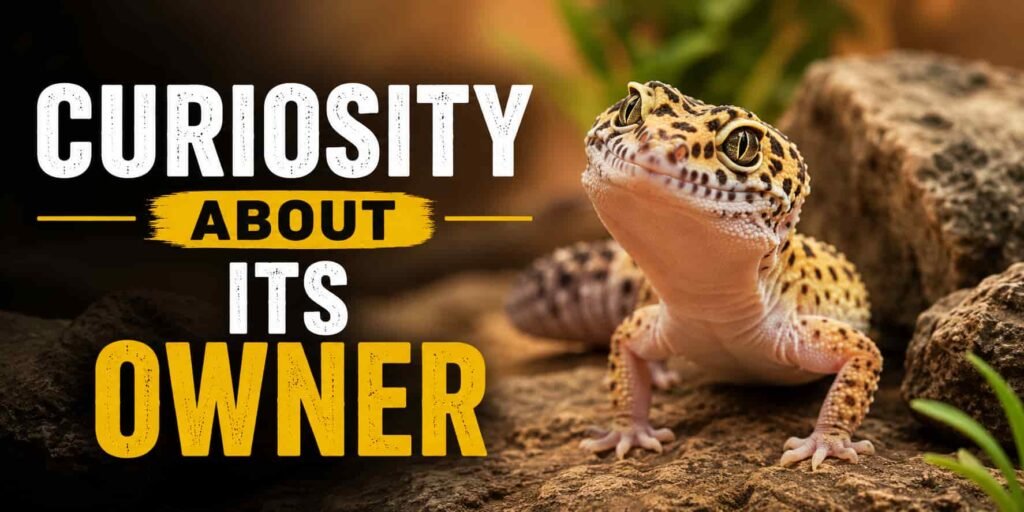
A leopard gecko staring at you may simply be trying to understand who you are. This is especially common if your gecko is new to your home. It is not judging you or acting strangely. Instead, it is observing you as part of its natural curious behavior.
Leopard geckos are highly alert animals. They notice changes in their environment, such as new objects, different smells, movement near the tank, or changes inside the enclosure. This awareness helps them survive in the wild because they must recognize food, danger, and safe hiding places.
Your gecko may stare longer when something is new or unfamiliar. This could be your face, your hand, a decoration, a toy, or a moved hide inside the tank. Their strong observation skills help them learn what is safe and what needs attention.
So, if your pet leopard gecko keeps looking at you, it may just be studying you and getting used to your presence. With time, patience, and gentle care, your gecko can become more relaxed around you.
Fear or Lack of Trust
Sometimes, a leopard gecko stares because it feels nervous or unsafe. If your gecko is not used to people, it may see you as a possible predator. This is more common with new geckos, young geckos, or pets that have not been handled gently.
If you move too quickly, reach into the tank suddenly, or pick up your gecko before it feels secure, it may stare at you as a warning sign. This cautious behavior helps the gecko keep an eye on anything it sees as a possible threat.
Other stress signs may include hiding often, waving the tail, making small noises, running away, freezing in place, or refusing food. If you notice these behaviors, your gecko may need more time to feel safe.
To build trust, approach your gecko slowly and calmly. Spend time near the enclosure without forcing contact. You can also offer food with tongs and allow your gecko to come closer at its own pace. Gentle handling, patience, and a calm environment will help your reptile pet feel more comfortable over time.
Building Trust With Your Leopard Gecko
You can build trust with your leopard gecko by being calm, gentle, and patient. These small reptiles need time to feel safe around people, especially if they are new to their habitat or not used to handling.
Start by interacting with your gecko slowly and carefully. Avoid touching or picking it up too often, as this can make it feel stressed or overwhelmed. Instead, allow your gecko to become comfortable at its own pace.
Spend time near the enclosure so your gecko can get used to your presence. You can sit in the same room, speak softly, or do quiet activities nearby. Over time, your gecko may learn that you are not a predator or threat.
Always stay calm when you are close to your pet leopard gecko. Sudden movements, loud noises, or rough handling can cause anxiety, fear, and defensive behavior. A peaceful environment, gentle interaction, and regular care will help your gecko feel more secure and confident around you.
Your Leopard Gecko May Be Expecting Food
A leopard gecko may stare at you because it has learned to connect your presence with feeding time. When you walk near the enclosure, your gecko might think that food is coming, especially if you usually feed it at the same time or from the same place.
This is a type of learned behavior. Your gecko may begin to recognize you as the person who brings live insects, such as crickets, mealworms, dubia roaches, or other feeder insects. Over time, it may stare at you, come closer to the glass, or look more alert when it expects a meal.It is important not to overfeed your pet leopard gecko. Too much food can lead to obesity, extra fat storage, and health problems affecting the liver, heart, and joints. A healthy feeding routine helps your gecko stay active, strong, and comfortable.
If your gecko is gaining or losing weight quickly, eating less than usual, or acting weak, it is best to speak with a reptile veterinarian for proper advice.
Movement Naturally Gets Their Attention
Leopard geckos are naturally attracted to movement. If you walk into the room and your gecko quickly turns its head to look at you, it is usually reacting to motion. This is normal reptile behavior and is linked to their hunting instincts.
In the wild, leopard geckos hunt moving prey. Their eyes are designed to notice small movements, which helps them find live insects and avoid danger. This is why your gecko may focus on moving hands, walking feet, shadows, pets, or insects inside the tank.
When you place live crickets or worms in the vivarium, your gecko will often focus more on the insects that move. Dead or still insects are usually less attractive because leopard geckos naturally prefer fresh, moving prey.
This behavior is healthy and instinctive. Your gecko is not acting strange when it watches you move. It is simply using its natural hunting skills and strong awareness of its surroundings.
It May Be Watching Its Reflection
Sometimes, your leopard gecko may look like it is staring at you, but it may actually be looking at its own reflection. Glass, water bowls, shiny decorations, mirrors, or smooth surfaces can create reflections that catch your gecko’s attention.
Your gecko may not understand that the reflection is itself. Instead, it may think another gecko is nearby. This can make it stare, become alert, or act cautious.
In some cases, a gecko may view the reflection as a possible rival, mate, or unfamiliar animal. If the reflection causes stress, you may notice tail waving, hiding, freezing, or defensive behavior.
To reduce stress, keep the enclosure calm and avoid placing mirrors or highly reflective objects near your gecko’s tank. A safe and simple habitat setup helps your gecko feel more secure.
Read Also: Leopard Gecko Eyes Shut? [When to Worry]Leopard Geckos Have Strong Eyesight
A leopard gecko has sharp eyesight that helps it survive. Its eyes are useful for finding food, watching movement, and noticing possible threats. This is one reason your gecko may stare for a long time at people, objects, insects, or other animals.
Leopard geckos can see well in low light, which is helpful because they are most active during the evening and night. Their vision helps them hunt crickets, mealworms, and other feeder insects, while also staying alert to danger.
In the wild, a leopard gecko must watch for larger animals, including snakes, birds, and mammals. Staring can help it decide whether something is safe or dangerous.
This strong visual awareness is not a bad sign. It is part of your gecko’s natural survival behavior and shows that it is paying attention to its environment.
Your Gecko May Want Attention
Some leopard geckos become comfortable with their owners over time. If your gecko often comes to the front of the tank and stares at you, it may be showing interest in interaction, food, or gentle handling.
However, leopard geckos are not social animals in the same way as dogs or cats. They may tolerate handling and recognize routines, but they usually do not need constant attention.
If your gecko seems calm, relaxed, and active, you can spend quiet time near the enclosure or offer gentle handling when appropriate. Always move slowly and avoid forcing contact. A calm approach helps build trust between you and your reptile pet.
Other Common Leopard Gecko Behaviors
Besides staring, leopard geckos show many other natural behaviors. Understanding these signs can help you know whether your gecko is comfortable, stressed, hungry, or exploring.
Chirping, squeaking, or screaming may happen when a gecko feels scared, uncomfortable, or threatened. These sounds should not be ignored if they happen often.
Tail wagging can be a form of communication. A slow tail wave may show caution, while fast tail movement may happen during hunting, stress, or excitement.
Hiding is also normal because leopard geckos like secure spaces. However, if your gecko hides all the time, refuses food, or becomes inactive, it may be stressed, sick, or uncomfortable in its habitat.
Why Does Your Leopard Gecko Stare at Objects or Animals?
A leopard gecko may stare at other objects, pets, or animals because it is curious, alert, scared, or trying to understand its surroundings. Just like it may stare at you, it may also focus on movement, new items, reflections, insects, or another animal near its enclosure.
In many cases, this is normal reptile behavior. However, some types of staring can be linked to territorial behavior, stress, or health problems.
Watching Its Territory
Leopard geckos are usually solitary animals, which means they prefer living alone. If another gecko, reptile, or pet comes too close to their tank, they may stare because they feel their space is being challenged.
This staring can be a way of checking whether the other animal is a threat. Your gecko may freeze, raise its body, wave its tail, hide, or act defensive. These signs may show that your gecko feels stressed or protective of its habitat.
To keep your gecko safe, avoid placing another animal inside its enclosure. Housing leopard geckos together can lead to stress, fighting, injuries, food competition, and serious health problems.
Enigma Syndrome and Unusual Staring
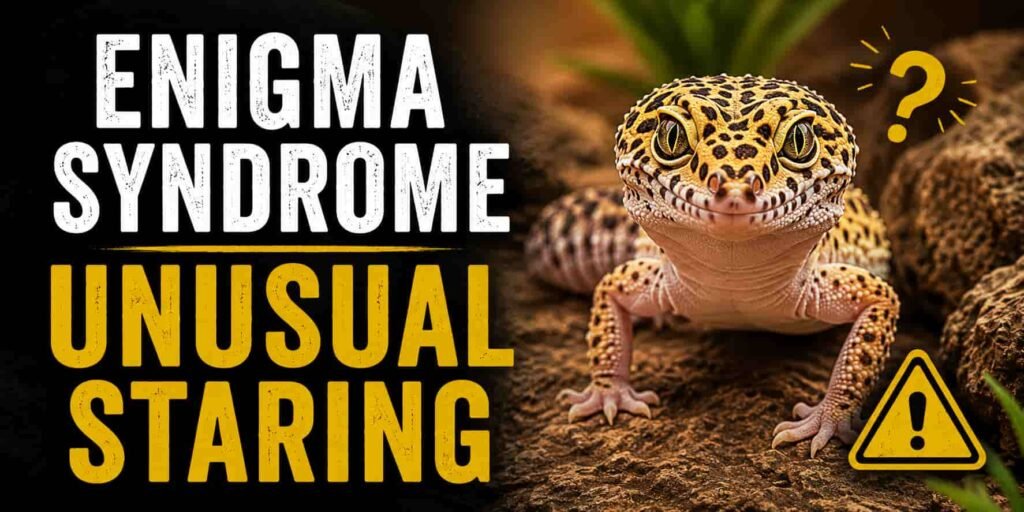
Sometimes, unusual staring may be linked to Enigma Syndrome, a neurological condition seen in some leopard gecko morphs. This condition can affect balance, movement, feeding, and normal behavior.
A gecko with Enigma Syndrome may show symptoms such as staring upward for long periods, also called stargazing, walking in circles, tilting the head, missing prey, refusing food, or rolling its body strangely.
If your pet leopard gecko shows these signs, the behavior should not be ignored. A reptile veterinarian can check whether the problem is related to a neurological issue, stress, poor husbandry, or another health condition.
When Staring May Need a Vet Check
If your leopard gecko shows more than one unusual symptom, it is best to contact a reptile veterinarian. Normal staring is usually harmless, but long periods of persistent staring combined with other signs may point to a health or neurological issue.
For example, Enigma Syndrome can only be properly diagnosed by a qualified vet. This condition has no full cure, but it can often be managed by reducing stress, keeping the habitat stable, and giving the gecko extra care.
Helpful changes may include limiting excessive handling, removing tankmates, avoiding frequent enclosure changes, and keeping the tank calm and predictable. In serious cases, a gecko may need help eating, and some owners may need to hand-feed their pet to support its long-term health.
Is Staring Something to Worry About?
In most cases, leopard gecko staring is completely normal. Your gecko may simply be reacting to movement, watching something outside the enclosure, or observing its surroundings. This can be a sign that your gecko is alert, curious, and aware of its environment.
Each leopard gecko has its own personality. Some geckos stare often, while others rarely do it. Both can be normal.
You usually do not need to worry if your gecko has a good appetite, clear eyes, healthy skin color, normal activity levels, and moves between the warm and cool sides of the tank to control its body temperature. These are positive signs of a healthy reptile pet.
Your Gecko Is Probably Not Angry
A leopard gecko is unlikely to stare because it is angry. Unlike some animals, geckos usually show fear, stress, or aggression in other ways.
An upset gecko may wag its tail, open its mouth, rush forward, hiss, chirp, squeak, or make a barking-like sound. In rare cases, it may bite, but leopard gecko bites usually do not cause serious harm to humans.
If your gecko shows these warning signs, give it space and avoid handling it until it calms down. Forcing contact can increase stress and may even cause tail dropping, which is a defense response used when the gecko feels threatened.
What If Your Gecko Never Stares?
If your leopard gecko never stares at you, that does not mean something is wrong. Every gecko behaves differently. Some are bold and watchful, while others are shy, relaxed, or less interested in watching people.
As long as your gecko has a clean enclosure, proper temperatures, enough hiding places, fresh water, a healthy diet, and normal activity, it is likely doing well.
New owners should not worry if their gecko does not stare. It may simply have a different personality or may feel calm enough that it does not need to watch everything closely.
Do Other Reptiles Stare Too?
Yes, many reptiles stare at people, objects, or movement. This behavior is not limited to leopard geckos. Bearded dragons, iguanas, crested geckos, and other reptiles may also stare as part of their natural behavior.
They may stare to follow movement, recognize feeding routines, build trust, or check for possible threats. This watchful behavior comes from their survival instincts and helps them understand what is happening around them.
Short Summary
Leopard gecko staring is usually normal and often shows curiosity, alertness, or interest in movement. You should only be concerned if staring comes with symptoms like poor appetite, weight loss, head tilting, circling, stargazing, weakness, unusual sounds, or trouble catching food. If these signs appear together, a reptile vet should examine your gecko.
FAQ’s: Leopard Gecko Stare Meaning [Pet Owner Guide]
What does it mean if my leopard gecko is staring at me?
A leopard gecko staring at you usually means it is curious, alert, or watching your movement. It may recognize your sight, smell, and dailyBfeeding routine, so it might connect you with food, safety, or attention. In most cases, this is normal reptile behavior and not a sign of anger. However, if staring comes with stress signs like hiding, tail waving, poor appetite, or weakness, check its habitat and contact a reptile vet if needed.
How do leopard geckos show affection to their owners?
Leopard geckos do not show affection like dogs or cats, but they can show trust in gentle ways. A comfortable pet leopard gecko may stay calm near you, walk onto your hand, watch you without fear, recognize your scent, voice, and feeding routine, or come to the front of the enclosure when you are nearby. These signs usually mean your gecko feels safe, familiar, and relaxed around its owner.
How can you tell if a leopard gecko likes you?
A leopard gecko does not feel love the same way humans do, but it can build trust with its owner. Your gecko may like and trust you if it stays calm near you, walks onto your hand by choice, allows gentle handling, licks your fingers, watches you without fear, and relaxes outside its hide when you are nearby. These are positive signs that your pet leopard gecko feels safe, comfortable, and familiar with you.
How can you tell if a leopard gecko likes being pet?
You can tell a leopard gecko likes being pet by watching its body language. If your gecko stays calm, does not run away, keeps coming back to your hand, or relaxes while you gently touch its head or back, it may feel safe and comfortable with you. Some pet leopard geckos may even walk onto their owner’s hand when the enclosure is opened.However, every gecko has a different personality. If your gecko hides, waves its tail, opens its mouth, makes noises, or tries to escape, it may feel stressed and should be left alone. Always use slow movements, gentle handling, and never pet your gecko while it is sleeping.
How can you get a leopard gecko to trust you?
You can help a leopard gecko trust you by using a slow, calm, and positive approach. Start by sitting near the enclosure so your gecko gets used to your scent, voice, and daily routine. Avoid sudden movements, loud sounds, or forced handling because these can cause stress and fear.Once your gecko feels more comfortable, place your hand inside the tank without touching it and let it come closer on its own. You can also offer safe feeder insects with tongs to create a positive link between your hand and feeding time. Later, try short and gentle handling sessions, but stop if your gecko hides, tail waves, runs away, or seems nervous.With patience, gentle care, and regular positive interaction, your pet leopard gecko can learn that your hands are safe and that you are not a predator