
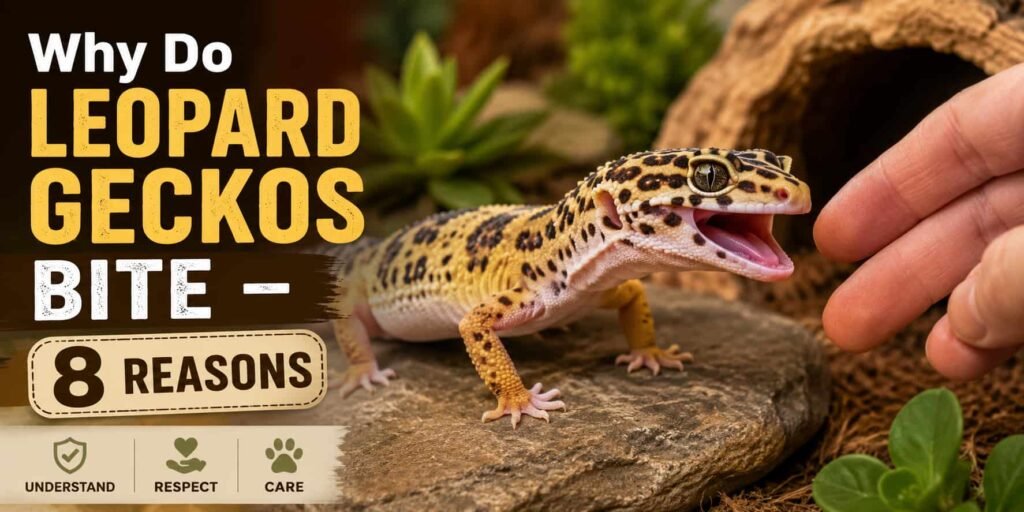
leopard gecko may bite if it mistakes your finger for food, such as a cricket, mealworm, or pinky mouse. It may also bite if you move too quickly, handle it roughly, disturb it while it is resting, or touch it when it is injured. Young leopard geckos can be more nervous because they are still learning to trust people. Some adult geckos may also bite during mating season or if they have had poor handling experiences in the past.
After a bite, wash the area with warm water and soap. You can also use an antiseptic if the skin is broken. Then think about what caused the bite. Your gecko may need slower handling, less stress, better feeding tools, or more time to get used to you.
In most cases, leopard gecko bites do not hurt much. They may feel like a small pinch. Sometimes, a bite may leave a tiny mark or draw a little blood, but this is not common. If your gecko bites you, stay calm. Do not pull your hand away quickly, as this can scare the gecko or make the bite worse. Gently place the gecko back in its enclosure and give it time to relax.
Leopard geckos usually do not bite as their first defense. Their normal defense behavior includes hiding, running away, dropping their tail, or making warning movements. With regular gentle handling, proper care, and a calm environment, most leopard geckos become safe, friendly, and easy pets.
Leopard gecko bites are uncommon, and most bites happen because the gecko feels scared, stressed, surprised, or confused. If you handle your gecko gently and understand its behavior, you can greatly reduce the chance of being bitten, especially when the gecko is new to your home.
Leopard geckos are not venomous. They do not produce poison or harmful toxins, so their bite will not poison you. In most cases, a bite may feel like a small pinch or a light sting. Adult leopard geckos may cause a little more discomfort than baby geckos, but serious pain is rare. A bite may sometimes leave a small mark or draw a tiny amount of blood, but this does not happen often.
Why Do Leopard Geckos Bites? [8 Common Reasons]
If a leopard gecko bites you, stay calm. Wash the area with soap and warm water, then use an antiseptic if the skin is broken. Medical treatment is rarely needed, but cleaning the bite is important to prevent infection.
Reasons Of Leopard Geckos Bites
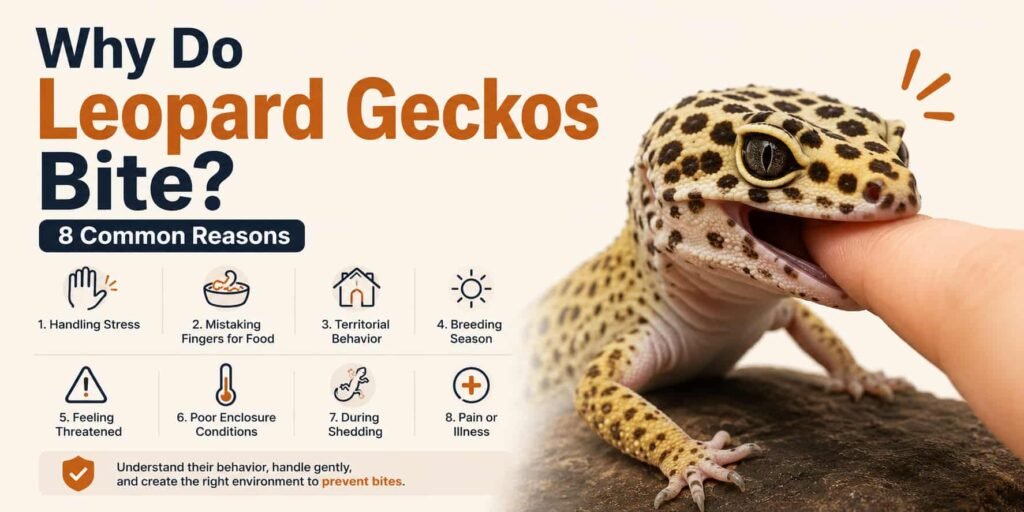
1. Feeling Threatened
Leopard geckos usually bite only when they feel threatened. This is more common in a new environment because the gecko has not yet learned to trust its owner. Fast movements, rough handling, loud noises, or sudden touching can make your gecko feel unsafe. When this happens, it may bite as a defense response.
2. Food Confusion
Another common reason for biting is food confusion. Leopard geckos are insectivores, which means they mainly eat insects such as crickets, mealworms, and roaches. During feeding time, your gecko may mistake your finger for food, especially if your hand moves like live prey. This is usually an accident, not aggression. Using feeding tongs can help prevent this problem.
3. During Shedding
Leopard geckos may also bite if they are surprised. In the wild, they are mostly nocturnal, which means they are more active at night and often rest during the day. Even in captivity, they may sleep deeply or take naps. If you suddenly pick up or touch a sleeping gecko, it may become shocked and react quickly. Its first instinct may be to defend itself.
To avoid this, always approach your leopard gecko slowly. Let it see your hand before touching it. Avoid grabbing it from above, because this can make it feel like a predator is attacking. Give your gecko time to feel safe, especially if it is young, new, stressed, or still adjusting to its enclosure.
Overall, leopard gecko bites are rare, mild, and easy to prevent. By moving slowly, feeding carefully, handling gently, and watching your gecko’s body language, you can keep both yourself and your pet safe.
![Why Do Leopard Geckos Bites? [8 Common Reasons]](https://reptileopedia.com/wp-content/uploads/2026/07/Here-is-a-professional-original-simple-and-keyword-rich-rewrite-1024x512.jpg)
4. Fear or Stress
Leopard geckos may bite when they feel scared, stressed, or unsafe. Even in captivity, where owners try to create a safe environment, these reptiles can become nervous because of sudden changes in their enclosure. A new rock, hide, water dish, substrate, or decoration may seem small to us, but it can feel like a major change to a leopard gecko.
If changes are made too quickly, your gecko may become jumpy, defensive, or more likely to bite. Long-term husbandry problems, such as incorrect temperature, poor humidity, too much noise, or an uncomfortable habitat, can also cause stress. When a gecko stays in fight-or-flight mode, it may bite to protect itself.
To prevent stress-related bites, keep the enclosure stable, clean, and comfortable. Make changes slowly, provide proper heating and humidity, and give your gecko enough hiding places. A calm environment helps your leopard gecko feel safe and relaxed.
5. Pain or Injury
A leopard gecko may also bite if it is hurt or unwell. Pain can make even a calm gecko react suddenly. If you touch a sore area while handling your pet, it may bite as an automatic response.
Sometimes, leopard geckos look healthy on the outside but may have hidden health problems. Common issues in pet reptiles can include internal parasites, stomach pain, shedding problems, injuries, or respiratory infections. Owners may not notice these problems until the gecko becomes defensive, refuses food, hides more often, or starts biting.
If your leopard gecko suddenly becomes aggressive or bites without a clear reason, it is important to check for signs of illness or injury. A reptile vet can help find the real cause and provide proper treatment. Solving the health issue can reduce biting and improve your gecko’s well-being.
6. Lack of Socialization
Leopard geckos need time to adjust before they feel comfortable with handling. This is especially true for geckos from breeders, pet stores, or new homes. During the first few weeks, it is best to avoid unnecessary handling and allow the gecko to settle into its new enclosure.
Handling too soon can make your gecko feel attacked. The way you pick it up also matters. Grabbing it from above, holding it tightly from the sides, or lifting it by the tail can feel like a predator attack. This may trigger fear, stress, escape behavior, or a defensive bite.
Good socialization should be slow and gentle. Let your gecko get used to your presence first. Then, slowly introduce short handling sessions. Over time, patient and careful interaction can help build trust between you and your leopard gecko.
7. Temperament and Personality
Every leopard gecko has its own personality. Some geckos are calm, social, and easy to handle, while others prefer to be left alone. A gecko’s temperament affects how it reacts to touch, handling, feeding, and human interaction.
Leopard geckos often show warning signs before they bite. These signs may include tail waving, fast movements, hiding, trying to escape, opening the mouth, or making a high-pitched sound. These behaviors usually mean the gecko is uncomfortable, stressed
8.Handle Them Regularly
Regular, gentle handling can help your leopard gecko become more comfortable with people. However, you should not rush the process. A new or nervous gecko needs time to adjust before it is ready to be handled.
Start with short handling sessions and increase the time slowly. Evening is often a good time because leopard geckos are naturally more active at night. With patience and consistency, your gecko can learn that handling is safe and not a threat.
Use Tongs for Feeding
Feeding tongs can help prevent accidental leopard gecko bites. Hand-feeding may cause your gecko to mistake your fingers for insects, especially during feeding time.
Using tongs keeps your fingers away from your gecko’s mouth while still allowing an active feeding experience. It also helps your gecko connect your presence with food in a safe and positive way. Over time, tong feeding can support trust, reduce food confusion, and make feeding safer.
Watch Their Body Language
Leopard geckos often show warning signs before they bite. Learning their body language is one of the best ways to prevent defensive behavior.
A stressed or frightened leopard gecko may breathe faster, hide, run away, wave its tail, open its mouth, make a high-pitched sound, or stand on its hind legs. These signs usually mean the gecko is uncomfortable and needs space.
If you notice these behaviors, stop handling your gecko and let it calm down. Respecting these warning signs helps prevent stress, biting, and injury.
What Does a Leopard Gecko Bite Feel Like?
A leopard gecko bite usually feels like a small pinch or light sting. Leopard geckos have tiny, sharp teeth, but their bites are not usually serious.
An adult leopard gecko may bite harder than a baby gecko, but the pain is still usually mild. Their jaws are strong for their size, but a bite is unlikely to cause bruising, deep injury, or major damage.
Do Leopard Gecko Bites Hurt?
A leopard gecko bite may hurt a little, but it is often more surprising than painful. Most people describe it as a quick pinch. The shock of being bitten is usually worse than the bite itself.
Compared with many other animal bites, a leopard gecko bite is minor. It rarely causes serious soreness, swelling, or lasting pain.
Do Leopard Gecko Bites Draw Blood?
Leopard gecko bites usually do not draw blood. Their teeth are very small, and most bites do not break human skin.
In rare cases, a bite may leave a tiny mark or cause a small amount of bleeding. This is more likely if the gecko bites firmly or catches a sensitive area of skin. Even then, the injury is usually minor.
What to Do If Your Leopard Gecko Bites You
If your leopard gecko bites you, stay calm. A bite is rarely serious and is usually a sign that your gecko felt scared, stressed, confused, or threatened.
Do not pull your hand away suddenly because this can frighten the gecko more or make the bite worse. Gently place your gecko back in its enclosure and give it time to relax.
Clean the Bite
If the bite breaks the skin, wash the area with warm water and antibacterial soap. You can also use a safe antiseptic to reduce the risk of infection.
A leopard gecko’s mouth can carry bacteria, so cleaning the bite properly is important. Medical care is rarely needed, but you should watch for unusual redness, swelling, pain, or infection.
Let Your Gecko Calm Down
After a bite, do not continue handling your leopard gecko right away. Place it back in its enclosure and allow it to hide, rest, and feel safe again.
This helps your gecko calm down and prevents more stress or another bite. Later, think about what caused the bite. It may have been fast movement, stress, hunger, pain, poor socialization, or fear. Understanding the cause can help you prevent future bites.
I removed repeated ideas, improved the flow, and kept important related keywords such as leopard gecko bite, stress, fear, handling, enclosure, body language, feeding tongs, wound cleaning, infection prevention, defensive behavior, and reptile care.
Stay Calm After a Leopard Gecko Bite
If your leopard gecko bites you, the first thing to do is stay calm. A leopard gecko bite is rarely serious and is usually not an emergency. In most cases, the gecko is not trying to hurt you. It may be scared, stressed, surprised, confused, or reacting in self-defense.
Do not pull your hand away suddenly, as this may frighten your gecko more or make the bite worse. Take a moment, stay gentle, and place your gecko safely back inside its enclosure.
Clean the Bite Area
If the bite breaks the skin, wash the area carefully with warm water and antibacterial soap. Cleaning the wound is important because a leopard gecko’s mouth can carry bacteria.
You may also use a safe antiseptic if needed. Medical treatment is rarely required, but you should watch the bite area for redness, swelling, pain, or signs of infection. Keeping the wound clean helps prevent problems.
Give Your Gecko Time to Calm Down
After a bite, do not continue handling your leopard gecko right away. Put it back in its enclosure and allow it to hide, rest, and feel safe.
Your gecko may have bitten because it felt threatened or uncomfortable. Giving it space helps reduce stress and prevents another defensive bite. A calm, familiar habitat allows your gecko’s body to relax after the stressful moment.
Learn What Caused the Bite
After the incident, think about what may have caused your leopard gecko to bite. It may have been fast movement, rough handling, hunger, feeding confusion, pain, stress, fear, or changes in the enclosure.
Understanding the cause can help you prevent future bites. You may need to move more slowly, use feeding tongs, handle your gecko less often, improve the habitat, or watch its body language more carefully. Small changes in care can make your leopard gecko feel safer and more comfortable.
Read Also: Leopard Gecko Licking Vent? [Hidden Reasons]What Is a Leopard Gecko’s Normal Defense Mechanism?
Biting is not usually a leopard gecko’s first defense. In the wild, leopard geckos use several natural defense mechanisms to stay safe from predators.
One of their main defenses is camouflage. Their colors and patterns help them blend into rocky, sandy, desert-like areas. This makes it harder for predators to see them. They may also stay very still to avoid being noticed.
If a leopard gecko feels threatened, it may make chirping sounds, puff up its throat, run away, hide, or try to look bigger. These behaviors are warning signs that the gecko feels unsafe.
Another important defense mechanism is tail dropping, also called caudal autonomy. When a leopard gecko is in danger, it can drop part of its tail to escape. The detached tail may continue moving for a short time, which distracts the predator and gives the gecko a chance to run away.
Tail dropping is useful for survival, but it is very stressful for the gecko. The tail stores important fat and energy, so losing it can affect the gecko’s health. A new tail can grow back, but it usually looks different from the original.
In captivity, leopard geckos may show these same defense behaviors when they feel stressed, scared, or unsafe. They may hide, run away, vocalize, wave their tail, or try to escape before they bite. Understanding these signs can help owners respond gently and avoid stressing their pet.
I kept the rewrite focused on leopard gecko bite care, wound cleaning, infection prevention, stress response, defensive behavior, body language, tail dropping, camouflage, caudal autonomy, and reptile safety.
FAQ’s: Why Do Leopard Geckos Bite – 8 Reasons
Why do leopard geckos bite?
Leopard geckos may bite when they feel stressed, scared, threatened, or uncomfortable. Poor handling, sudden movements, hunger, pain, or an unsuitable enclosure setup can also cause biting. A bite is usually mild, but it is often your gecko’s way of saying something is wrong.
Is it bad if a leopard gecko bites you?
A leopard gecko bite is usually not bad or dangerous. Leopard geckos are not venomous or poisonous, and their small teeth usually cause only a mild pinch. If the bite breaks the skin, wash the wound with soap and water to prevent bacterial infection.
Why did my leopard gecko bite me suddenly?
Your leopard gecko may bite suddenly if it feels scared, stressed, confused, or unsafe. Sudden movements, poor handling, hunger, pain, or an uncomfortable enclosure can trigger a defensive bite. With gentle care, proper husbandry, and a calm environment, most leopard geckos learn to trust their owners.
What should you do after a gecko bite?
If your gecko bites you, stay calm because most gecko bites are non-venomous and minor. Wash the bite area with soap and warm water, apply a safe antiseptic, and keep the wound clean to prevent bacterial infection. Seek medical help if you notice swelling, redness, pain, or pus.
Does a gecko bite hurt?
A gecko bite is usually not very painful. In common pet geckos, such as leopard geckos and crested geckos, it often feels like a mild pinch, small scratch, or quick snap. Larger species, like Tokay geckos, may bite harder and can sometimes draw blood.