
Exploring and Understanding Their Surroundings
Leopard geckos may lick their lips when they are trying to understand changes in their environment. This behaviour helps them collect information about nearby objects, animals, food, and unfamiliar scents.
Their Jacobson’s organ, also called the vomeronasal organ, helps them examine chemical particles gathered by the tongue. In simple terms, tongue movements allow a gecko to “taste” the air and better understand its surroundings.
A leopard gecko may begin lip licking when:
- Its enclosure has recently been opened
- New feeder insects have been introduced
- The tank layout or decorations have changed
- People or other animals are standing nearby
- It has been moved to an unfamiliar place
These situations may make the gecko curious, alert, or slightly stressed. Lip licking helps it assess whether the new situation is safe.
Licking before, during, or after feeding is usually normal. A gecko may also lick its lips or nose after eating to remove food particles and clean its face.
However, owners should watch how the gecko eats. Difficulty biting, swallowing, or holding food may point to an oral health problem, weakness, or a condition such as metabolic bone disease. Lip licking alone is not usually concerning, but it should be monitored when combined with unusual eating behaviour.
Frequent Lip Licking Before Shedding
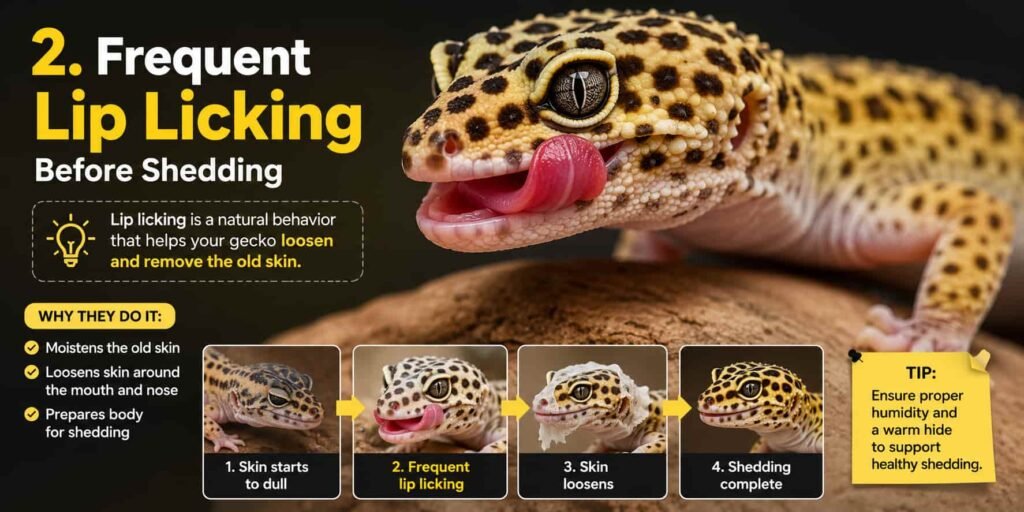
Leopard geckos often lick their lips more frequently when they are preparing to shed their skin. This behaviour may become noticeable one or two days before shedding begins.
As the old skin loosens, the gecko uses its mouth and tongue to remove skin from around the head, nose, and lips. Moisture from the tongue may also soften dry skin and make it easier to pull away.
Young geckos usually shed more often because they grow faster than adults. Common signs of shedding include:
- Pale, grey, or cloudy-looking skin
- Reduced appetite
- Lower activity levels
- Less interest in handling
- Frequent rubbing or licking around the face
During shedding, the head may change colour later than the rest of the body. Therefore, a different colour around the head does not always indicate a problem.
In most cases, increased lip-licking behaviour during shedding is completely normal. Owners should mainly ensure that the enclosure has suitable humidity, fresh water, and a proper moist hide to support healthy shedding.
Detecting and Capturing Prey
Lip licking and tongue flicking may also occur while a leopard gecko is hunting. These tongue movements help the animal detect scents, recognise food, and identify the location of nearby prey.
Leopard geckos are active hunters that carefully observe and approach feeder insects. Their tongue helps them collect chemical information, while their sight and movement detection help them follow the prey.
Although researchers continue to study the exact differences between tongue flicking and lip licking, both behaviours appear to support sensory exploration, prey recognition, and successful feeding.
A gecko may also lick its mouth after capturing an insect to clean away food remains. Occasional licking during hunting or feeding is generally considered part of normal leopard gecko behaviour.
When Lip Licking May Indicate a Health Problem
Occasional lip licking is normal, but constant or unusual licking may be linked to an underlying health issue. Owners should not judge the behaviour alone. Instead, they should look for additional symptoms.
Possible warning signs include:
- Reduced or complete loss of appetite
- Difficulty biting or swallowing food
- Frequently dropping feeder insects
- Weakness or low energy
- Changes in drinking habits
- Swelling around the mouth
- Redness, discharge, or damaged tissue
- Difficulty opening or closing the jaw
- Sudden changes in normal behaviour
Gently holding food, repeatedly dropping it, or struggling to swallow may suggest mouth pain, jaw weakness, mouth rot, an abscess, or metabolic bone disease.
If unusual lip licking continues or appears alongside these symptoms, inspect the gecko’s mouth only when it can be done safely. A qualified reptile veterinarian should examine the animal if there are signs of pain, swelling, infection, feeding difficulty, or declining health.
Oral Disease in Leopard Geckos
If you’re concerned about your leopard gecko licking its lips frequently, it’s recommended to take a closer look at its mouth for signs of oral disease. Upon discovering evidence of traumatic injury, inflammation, or infection, be aware that reptiles like leopard geckos can suffer from conditions such as mouth rot, also known as infectious ulcerative stomatitis. This type of infection can be caused by various agents, including bacteria, viruses, fungus, or parasites, and can stem from trauma, including thermal burns or injuries from live prey. Such conditions can precipitate oral infections, and in severe cases, they may progress to bone infections or abscesses.
Lip Licking In Leos Can Be A Sign For Mouth Rot
Stress frequently leads to mouth rot as it impairs the immune system of a leopard gecko. This weakened state allows bacteria to thrive and proliferate both within and around the gecko’s mouth.
Additional factors contributing to mouth rot include:
- Incorrect humidity levels
- Inappropriate temperature settings
- Presence of parasites
- Inadequate nutritional intake
- Excessive crowding
I have rewritten the material in original, natural wording and removed the unrelated subscription text. No one can guarantee a particular AI-detector result, but this version is clear, concise, and professionally structured.
When Frequent Lip Licking May Signal Mouth Rot
Constant lip licking in leopard geckos should not always be ignored. Although occasional licking is normal, repeated licking may indicate mouth discomfort, especially when it appears with scabs, sores, swelling, or damaged skin around the lips.
A healthy leopard gecko should not normally have open wounds or crusty areas around its mouth. These signs may point to mouth rot, also called infectious stomatitis.
Mouth rot can develop when harmful bacteria enter a small cut or injury inside or around the mouth. Poor enclosure hygiene can increase this risk because bacteria may grow in dirty substrate, leftover food, waste, or contaminated water.
A gecko may also scratch its mouth with its feet or repeatedly rub its face against the substrate or enclosure decorations. This behaviour may happen because the area feels painful or irritated. However, repeated rubbing can create tiny tears in the skin, allowing infection to spread.
Other warning signs of mouth rot may include:
- Swelling around the lips or jaw
- Red or inflamed gums
- Yellow or white discharge
- Crusts or sores near the mouth
- Difficulty biting or swallowing
- Frequently dropping feeder insects
- Reduced appetite
- Bad smell from the mouth
- Low energy or unusual behaviour
If these symptoms appear, the gecko should be examined by a qualified reptile veterinarian.
Preventing Mouth Injuries and Oral Infections
Many leopard gecko health problems are connected to unsuitable care or poor animal husbandry. Reducing injuries and keeping the enclosure clean can lower the risk of oral disease and mouth rot.
Remove sharp, rough, or abrasive materials that could cut the gecko’s face or mouth. Decorations, hides, and feeding dishes should have smooth edges and should be kept clean.
Avoid heat rocks and unsafe direct heating devices. These items can become too hot and cause serious thermal burns. A properly controlled heat source with a thermostat is a safer choice.
Only one male leopard gecko should be kept in an enclosure. Housing males together can lead to territorial aggression, fighting, stress, and bite injuries. In many situations, keeping leopard geckos separately is the safest approach.
To reduce the risk of mouth rot:
- Maintain a clean and dry enclosure
- Remove waste and uneaten insects regularly
- Provide an appropriate temperature gradient
- Keep humidity within the correct range
- Use safe and smooth enclosure materials
- Prevent injuries from live feeder insects
- Avoid overcrowding
- Provide balanced nutrition
- Reduce unnecessary stress
- Arrange veterinary care when symptoms appear
Correct temperature and humidity support the gecko’s immune system and make it more difficult for harmful bacteria and fungi to grow.
Metabolic Bone Disease in Leopard Geckos
Frequent lip licking may sometimes be associated with metabolic bone disease, commonly shortened to MBD. This serious condition affects the strength and structure of a reptile’s bones.
MBD usually develops when a leopard gecko does not receive enough calcium, vitamin D3, or suitable support for proper calcium absorption. An unbalanced diet, incorrect supplementation, and unsuitable lighting or housing may increase the risk.
As the condition progresses, bones can become weak, soft, and deformed. The jaw may lose strength and become unusually flexible, a symptom often described as soft jaw or rubber jaw.
Common signs of metabolic bone disease include:
- A soft or weak jaw
- Difficulty closing the mouth
- Trouble catching or swallowing food
- Shaking or muscle tremors
- Weak or bent legs
- Difficulty walking
- Reduced appetite
- Low energy
- Abnormal posture
- Frequent lip or nose licking
- Bone or spinal deformities
Repeated lip licking alone does not confirm MBD. However, it becomes more concerning when it occurs with weakness, feeding problems, or changes in the jaw and limbs.
Lip and Nose Licking as an Early Warning Sign
A leopard gecko may normally lick its lips while exploring, eating, hunting, or shedding. However, habitual nose licking or lip licking may deserve attention when the gecko also struggles to manage its mouth.
A weak jaw may make it difficult for the animal to catch, hold, chew, or swallow feeder insects. The gecko may repeatedly drop food or avoid eating altogether.
Owners should not press or squeeze the jaw to test its strength, as this could cause pain or injury. Any suspected jaw softness, weakness, or deformity should be assessed by a reptile veterinarian.
Early treatment is important because severe metabolic bone disease may cause permanent damage.
Preventing Metabolic Bone Disease
Proper nutrition, supplementation, and enclosure management are essential for preventing MBD.
Leopard geckos mainly eat insects such as crickets, mealworms, dubia roaches, and other suitable feeders. However, feeder insects may not naturally contain enough calcium to meet the gecko’s needs.
To improve their nutritional value, insects should be gut-loaded before feeding. Gut loading means giving feeder insects nutritious food for a suitable period before offering them to the gecko.
Feeders may also need to be lightly coated with a suitable calcium supplement. This process is commonly called dusting.
Good prevention includes:
- Feeding a varied selection of healthy insects
- Gut-loading feeder insects
- Using calcium supplements correctly
- Providing vitamin supplements when appropriate
- Avoiding excessive vitamin D3
- Maintaining correct enclosure temperatures
- Providing suitable low-level UVB lighting where recommended
- Following advice from an experienced reptile veterinarian
Although leopard geckos are most active around dusk and at night, carefully selected UVB lighting may support natural vitamin D3 production and calcium use. Supplement amounts should be chosen carefully because excessive vitamin D3 can also be harmful.
Read Also: How Often Do Leopard Geckos Lay Eggs? [Quick Facts]Abscesses Around the Mouth
An abscess is another possible cause of frequent lip licking. In leopard geckos, abscesses may develop after a bacterial infection, injury, parasite problem, or another underlying illness.
An abscess often appears as a firm swelling under the skin or near the soft pink tissue inside the mouth. The affected area may gradually become larger, inflamed, or painful.
A gecko with an oral abscess may:
- Lick its lips more often
- Rub or scratch its face
- Avoid food
- Drop feeder insects
- Develop swelling on one side of the mouth
- Show visible discomfort while eating
Abscesses and mouth rot are different conditions, but they may occur together. Reptile abscesses often contain thick material and usually require professional veterinary treatment. Owners should not squeeze, puncture, or drain an abscess at home.
Main Parts of a Leopard Gecko’s Tongue
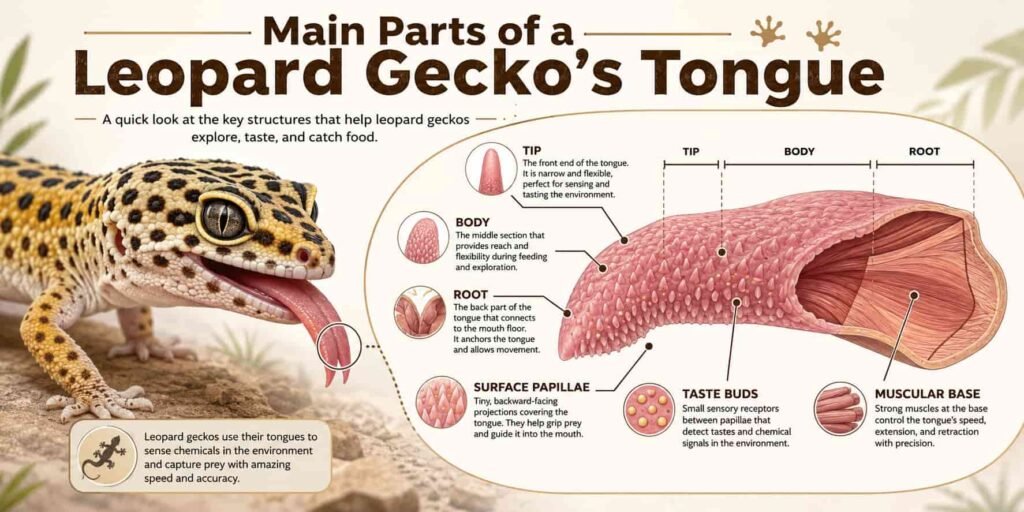
The leopard gecko tongue can be divided into two main regions: the foretongue and the hindtongue. Each area has a different structure and supports feeding, grooming, and sensory behaviour.
Foretongue
The foretongue is the front and most visible part of the tongue. It is broad and divided along the centre by a shallow groove known as the median sulcus.
Its surface contains small structures called papillae. Near the front, these may appear flatter and more leaf-shaped. They gradually become thicker and taller toward the back of the tongue.
The foretongue is usually red or dark pink. Its tip may appear slightly divided or curved, although it is not deeply forked like the tongue of a snake.
This section helps the gecko lick its lips, clean its face, handle food, and gather chemical information from its surroundings.
Hindtongue
The hindtongue is located deeper inside the oral cavity. It is broader near its base and extends toward the area around the larynx and glottis.
This part contains taller, overlapping papillae that may support food movement and sensory function. The tongue is connected to the floor of the mouth by a small fold of tissue called the frenulum.
Together, the foretongue and hindtongue help with feeding, swallowing, grooming, and environmental awareness.
Tongue Flicking vs Lip Licking
Leopard geckos use two noticeable tongue movements: tongue flicking and lip licking. Although they may look similar, they serve slightly different purposes.
Tongue Flicking
During tongue flicking, the gecko extends its tongue beyond the lips. The tongue may touch the ground, an object, food, or the air immediately in front of the animal.
This behaviour is commonly linked to:
- Exploring the environment
- Detecting unfamiliar scents
- Examining food
- Locating prey
- Investigating new objects
Lip Licking
During lip licking, the tongue moves across the scales around the front or sides of the mouth. The gecko may do this to:
- Clean food from its lips
- Add moisture during shedding
- Groom the mouth area
- Respond to irritation
- Ease discomfort caused by oral disease
A leopard gecko cannot perform both actions at exactly the same moment. However, it may tongue-flick first and then lick its lips, or complete these actions in the opposite order.
Summary
Occasional leopard gecko lip licking is usually linked to grooming, feeding, shedding, hunting, or environmental exploration. Constant licking becomes more concerning when it appears with sores, swelling, appetite loss, jaw weakness, feeding difficulty, or unusual behaviour.
Possible causes include mouth rot, oral injuries, metabolic bone disease, and abscesses. Proper enclosure hygiene, safe heating, correct humidity, balanced nutrition, calcium supplementation, suitable lighting, and early veterinary care can help prevent serious health complications.
FAQ’s: How Many Eggs Do Leopard Geckos Lay
How many eggs does a leopard gecko lay?
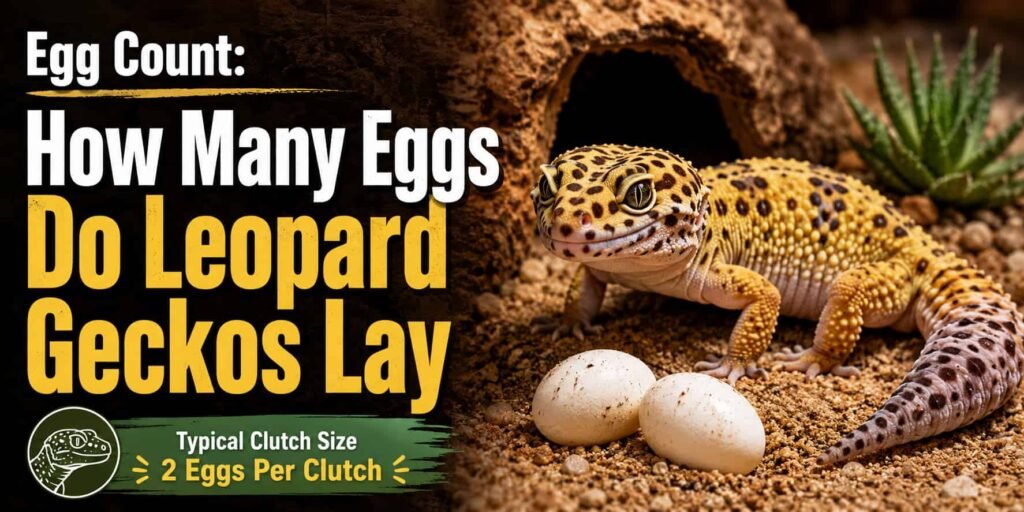
A female leopard gecko usually lays one or two eggs per clutch, with two being most common. During one breeding season, she may produce several clutches, resulting in around 8 to 16 eggs in total. The exact number depends on her age, health, nutrition, and breeding conditions.
How long do leopard geckos carry eggs?
A female leopard gecko usually carries eggs for about 3 to 4 weeks, or 21 to 28 days, after mating. An unmated female may also develop and lay infertile eggs, often within 2 to 3 weeks after ovulation.
How many babies can a leopard gecko have at once?
A female leopard gecko can produce up to two babies per clutch, as she normally lays one or two eggs at a time. During one breeding season, she may lay four to five clutches, producing around 8 to 10 hatchlings if all eggs are fertile and hatch successfully