Complete Leopard Gecko Feeding Guide
Many new leopard gecko owners want to know one important thing: how much to feed a leopard gecko. These small pet reptiles are popular because they are cute, calm, and fairly easy to care for. However, their diet is different from cats, dogs, or other common pets.
A leopard gecko is an insectivore, which means it mainly eats live insects. Because of this, feeding them the right amount, the right insect size, and the right type of feeder insects is very important for their health, growth, and energy.
The amount of food your gecko needs depends on its age, body size, activity level, and overall health condition. A baby or juvenile gecko usually eats more often because it is still growing. An adult gecko needs fewer meals but still requires a balanced and safe diet.
Before feeding your pet gecko, you should understand the nutritional value of each insect. Some insects are better for regular feeding, while others should only be given as treats. It is also important to avoid insects that are too large, wild-caught, or unsafe, as they can cause choking, stress, parasites, or digestive problems.
A proper leopard gecko feeding routine helps prevent common problems such as overfeeding, obesity, poor appetite, and weak digestion. By choosing safe insects and feeding the correct portion, you can keep your gecko active, healthy, and comfortable.
What Should Leopard Geckos Eat?
Leopard geckos should eat safe live feeder insects such as crickets, dubia roaches, mealworms, and other suitable bugs. These insects give them protein, movement, and natural hunting activity.
Should Leopard Geckos Eat Live Insects?
Yes, live insects are best for leopard geckos because they encourage natural hunting behaviour. Moving prey also helps keep your gecko active and interested in food.
What Size Insects Are Safe?
A good rule is to feed insects that are no wider than the space between your gecko’s eyes. Insects that are too large may cause choking or digestive stress.
Best Feeder Insects for Leopard Geckos
Good daily or regular food options include crickets, dubia roaches, black soldier fly larvae, and properly sized mealworms. These insects are commonly used in a healthy reptile diet.
Treat Insects for Leopard Geckos
Some insects, such as waxworms and superworms, should only be given sometimes. They are high in fat and can lead to weight gain if used too often.
Insects Leopard Geckos Should Avoid
Avoid wild insects, fireflies, large bugs, and insects from unsafe places. Wild insects may carry parasites, chemicals, or toxins that can harm your gecko.
How Much Does a Leopard Gecko Eat?
A baby leopard gecko may eat every day, while an adult usually eats a few times per week. The exact amount depends on age, size, and body condition.
How Much Should a Juvenile Leopard Gecko Eat?
A juvenile leopard gecko needs frequent feeding because it is still growing. Small, gut-loaded insects are the best choice for healthy development.
Feeding by Age
Young geckos need smaller meals more often. Adult geckos need larger insects but fewer feeding days. Senior or less active geckos may need smaller portions to avoid obesity.
How to Feed a Leopard Gecko Safely
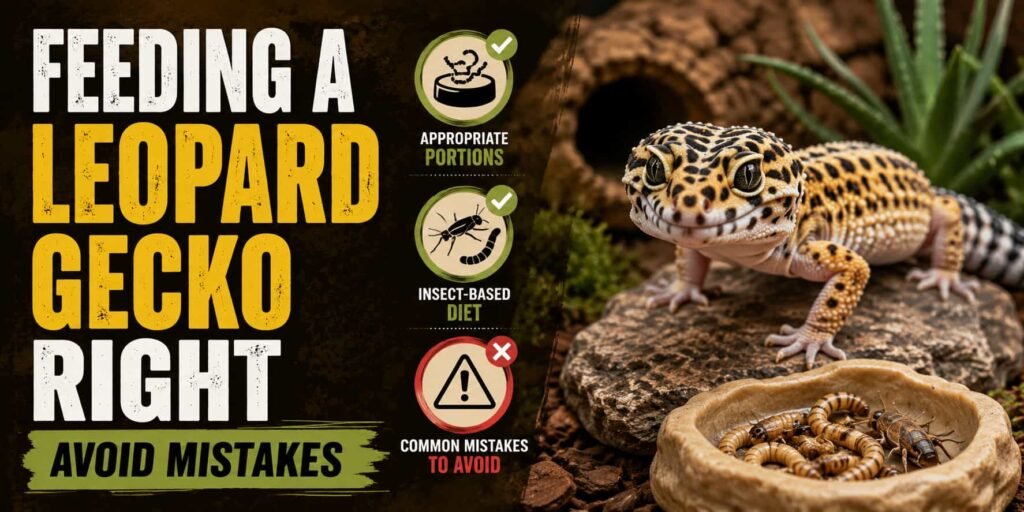
![Feeding a Leopard Gecko Right [Avoid Mistakes]](https://reptileopedia.com/wp-content/uploads/2026/07/Can-You-Overfeed-a-Leopard-Gecko-1-1024x512.jpg)
Use clean feeding tongs or place insects in a safe feeding area. Always remove uneaten insects from the enclosure because they can st, may cause leopard gecko obesity, slow movement, and health problems.
Signs Your Leopard Gecko Is Overweight
An overweight gecko may have a very thick tail, fat around the belly, and less interest in moving. A healthy gecko should look firm, active, and balanced.
Why Is My Leopard Gecko Not Eating?
A leopard gecko may stop eating because of stress, shedding, low temperature, illness, or changes in its environment. If your gecko refuses food for a long time, check the enclosure setup and consider reptile vet advice.
What Foods Are Best for Leopard Geckos?
Leopard geckos are insectivores, which means their diet is based on insects instead of plants, fruits, or regular pet food. In the wild, these small reptiles eat different types of bugs depending on what they can find. In captivity, owners can provide a safer and more balanced leopard gecko diet by choosing healthy feeder insects.
The best food choices for pet leopard geckos usually include mealworms, crickets, and roaches. These insects provide important nutrition, protein, and energy that help geckos stay active and healthy. Live insects are usually the best option because they also allow the gecko to show its natural hunting behaviour.
Even when a leopard gecko lives in a tank, it still has a strong instinct to chase and catch prey. Feeding live insects keeps this natural behaviour active and makes feeding time more interesting. A good feeding routine supports the gecko’s health, digestion, growth, and overall well-being.
Should Leopard Geckos Eat Live Insects?
Yes, live insects are highly recommended for leopard geckos. They are not only a food source but also an important part of their mental and physical care. Hunting moving insects gives your gecko enrichment, exercise, and natural stimulation.
Dead, dried, or freeze-dried insects may seem easier to use, but they are usually less beneficial than fresh live feeders. They often have lower nutritional value and may not attract your gecko’s attention in the same way. Live prey is more natural, more appealing, and better for supporting healthy feeding habits.
Before feeding insects to your gecko, it is best to gut-load them for about 24 hours. This means feeding the insects healthy food rich in vitamins and minerals before your gecko eats them. After gut-loading, the insects can also be lightly dusted with a calcium supplement to support strong bones, proper shedding, and long-term reptile health.
This feeding method helps keep your pet gecko healthy, active, and comfortable. It also supports normal shedding, better appetite, and stronger overall body condition.
What Size Insects Can Leopard Geckos Eat?
Choosing the right insect size is very important for safe feeding. Insects that are too large can be difficult for a gecko to swallow or digest. A simple rule is to offer insects that are no bigger than the space between your gecko’s eyes.
For baby and young leopard geckos, small insects are best because their bodies are still developing. Tiny crickets or small worms are easier for them to eat and digest. Adult geckos can eat small to medium-sized insects, but the prey should still be safe and manageable.
Never give your gecko insects that can bite, sting, or injure it. Large or aggressive bugs can cause stress, wounds, or feeding problems. The goal is to provide insects that are the right size, safe to eat, and suitable for your gecko’s age and body condition.
Insect Size Guide by Age
For baby leopard geckos, small crickets around 3/8 inch are usually suitable.
For young leopard geckos, 1/4 inch crickets or similar small feeder insects are a good choice.
For adult leopard geckos, small adult or full adult crickets may be used, as long as they are not larger than the space between the gecko’s eyes.
The safest general rule is simple: always feed insects that your gecko can swallow easily without stress, choking, or digestive difficulty.
Best Feeder Insects for Leopard Geckos
A healthy leopard gecko diet should include safe, nutritious, and properly sized feeder insects. Since leopard geckos are insectivores, they need live insects that provide good protein, energy, and natural hunting stimulation.
Some of the best feeder insects for pet leopard geckos include crickets, mealworms, dubia roaches, discoid roaches, silkworms, black soldier fly larvae, small superworms, and captive-bred hornworms.
Crickets are a common choice because they are active and encourage natural hunting. Mealworms are easy to store and useful for regular feeding, but they should be offered in suitable amounts. Dubia roaches and discoid roaches are also excellent options because they are rich in nutrition and easier for many geckos to digest.
Silkworms and black soldier fly larvae can add variety to the diet and support better reptile health. Small superworms may be given sometimes, but they should not become the main food because they are higher in fat. Hornworms can also be offered as a treat, but only captive-bred hornworms are safe. Wild hornworms may be toxic and should never be fed to your gecko.
For the best results, always feed clean, live, and appropriately sized insects. A varied feeding routine helps support healthy growth, strong digestion, normal shedding, and overall leopard gecko health.
Why Variety Matters in a Leopard Gecko Diet
A healthy leopard gecko diet should include a mix of different feeder insects. It is best to rotate at least three safe insect options, such as crickets, mealworms, and roaches. This gives your gecko better nutrition, more feeding interest, and natural enrichment.
Feeding only one type of insect for a long time can limit your gecko’s nutrient intake. Each insect has a different balance of protein, fat, moisture, vitamins, and minerals. By offering variety, you can help reduce the risk of nutrient deficiency and support better reptile health, growth, digestion, and energy.
A varied feeding routine also keeps mealtime more natural. Since leopard geckos are insectivores, they enjoy chasing and eating live prey. Changing the insects from time to time can encourage normal hunting behaviour and prevent boredom.
Before choosing feeder insects, it is helpful to learn about their nutritional value. Some insects are better for regular feeding, while others should only be used as occasional treats. Understanding the nutrition of each feeder insect helps you create a safer and more balanced diet for your pet gecko.
Safe Treat Insects for Leopard Geckos
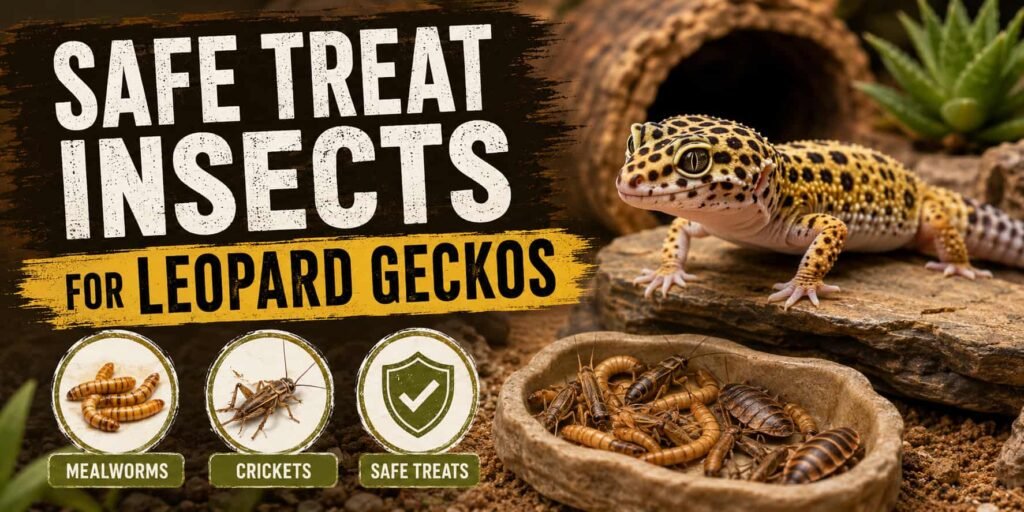
Treat insects should be given only sometimes because they are usually higher in fat. Good treat options for leopard geckos include waxworms and butterworms.
Waxworms are soft and very appealing to many geckos, but they are fatty and can cause weight gain if fed too often. Butterworms can also be used as a treat, but they should not replace healthy staple insects.
For the best care, keep treats limited and use regular feeder insects as the main part of your gecko’s diet. This helps maintain a healthy weight, strong digestion, and long-term leopard gecko health.
Fatty Treats Should Be Limited
Some worm treats are very tasty for leopard geckos, but they are also high in fat. For this reason, fatty worms should only be offered in small amounts and not too often. In most cases, they should be given as an occasional treat, not as a regular part of the main leopard gecko diet.
Feeding too many fatty insects can quickly cause weight gain, poor movement, and obesity. A healthy gecko should get most of its food from safer feeder insects such as crickets, mealworms, dubia roaches, and other properly sized live insects.
Pinky Mice as an Emergency Treat
Some keepers may offer pinky mice to help a weak or underweight gecko gain weight, especially after a serious problem such as tail loss. However, pinky mice are not a normal food for leopard geckos and should only be used with great care.
They should not be part of a regular feeding routine. If your gecko has dropped its tail, lost weight, or looks weak, it is better to ask a reptile vet for advice before giving high-fat or unusual foods. This helps protect your gecko’s digestion, recovery, and overall reptile health.
Insects Leopard Geckos Should Not Eat
Not every insect is safe for a pet leopard gecko. Some insects can carry parasites, chemicals, or toxins that may cause illness. To keep your gecko safe, avoid risky insects and always choose clean, captive-bred feeder insects.
Avoid Wild-Caught Insects
Insects caught from your garden, yard, or outside areas should not be fed to your gecko. These bugs may look healthy, but they can carry pesticides, bacteria, or harmful parasites. Even one unsafe insect can make your gecko sick.
Avoid Fireflies and Other Glowing Insects
Glowing insects are extremely dangerous for leopard geckos. Fireflies, lightning bugs, and other insects that produce light contain natural chemicals that can be highly toxic to reptiles. These insects should never be used as food.
Why Store-Bought Feeders Are Safer
Some people believe wild insects are cheap and natural, but they are risky for captive geckos. The safer choice is to buy captive-bred feeder insects from a trusted source. These insects are cleaner, easier to gut-load, and safer for your gecko’s nutrition, health, and long-term care.
For the best results, feed your leopard gecko safe live insects, limit fatty treats, and avoid anything that may contain toxins, pesticides, or parasites.
Choosing Safe Insects for Leopard Geckos
When choosing feeder insects for your leopard gecko, safety should always come first. Some insects may look natural or healthy, but they can be harmful if they carry pesticides, parasites, bacteria, or toxins.
Insects caught from your garden, yard, or outdoor areas should be avoided. These wild insects may have touched chemicals or eaten toxic plants. Even if they seem safe, they can still make your gecko sick. For this reason, it is better to use clean, captive-bred live insects from a trusted pet store or reptile supplier.
Some treat insects can also become a problem if they are fed too often. Fatty insects may taste very appealing, but your gecko can start refusing healthier shop-bought feeder insects. To avoid this, treats should be limited, and the main diet should include nutritious options such as crickets, mealworms, dubia roaches, and other safe feeders.
It is also normal for leopard geckos to stop eating for some time. This can happen during breeding season, brumation, shedding, stress, or environmental changes. If your gecko is not losing much weight and still looks alert, it may not be an emergency. However, if weight loss, weakness, or unusual behaviour appears, a reptile vet should be contacted.
A safe and balanced leopard gecko diet helps support better digestion, healthy weight, normal shedding, strong energy, and long-term reptile health.
How Much Should a Leopard Gecko Eat?
The amount of food a leopard gecko needs depends on its age, size, weight, and overall health condition. Adult geckos usually eat less often than babies and juveniles because they are no longer growing as quickly.
One simple method is the 15-minute feeding method. Place suitable live insects in the enclosure or feeding area and watch how many your gecko eats within 15 minutes. This can help you understand how much food your gecko usually needs in one feeding.
Another common guide is based on body length. A healthy adult leopard gecko can usually eat around two insects for every inch of body length. For example, a 6-inch gecko may eat around 12 properly sized insects. However, this is only a general guide. Sick, injured, underweight, overweight, or young geckos may need a different feeding routine.
The best feeding plan should always match your gecko’s body condition, appetite, and growth stage.
How Much Should a Juvenile Leopard Gecko Eat?
A juvenile leopard gecko needs more food than an adult because it is still growing. Young geckos need extra nutrition, protein, vitamins, and minerals to support healthy bones, muscles, and body development.
A good rule is to offer about two small insects for every inch of body length. Juveniles also need to eat more often than adults. In many cases, they may need food daily or several times a week, depending on their age and appetite.
Because young geckos are still developing, their insects should be small and easy to digest. Always make sure the insects are not larger than the space between the gecko’s eyes. This helps prevent choking, stress, and feeding problems.
Read Also: Your Leopard Gecko Turns WhiteFeeding Guide by Age and Size
The feeding amount and schedule for leopard geckos changes as they grow. Baby geckos usually need food every day because their bodies are developing quickly. As they become adults, they can move to an every-other-day feeding routine.
Overweight geckos may need fewer meals, while sick or recovering geckos may need more careful feeding. If your gecko is weak, losing weight, or recovering from illness, it is best to follow advice from a reptile veterinarian.
Growth speed is not the same for every gecko. It can be affected by gender, diet, humidity, temperature, light exposure, genetics, and general care. Because of this, any feeding chart should be used as a general guide, not a strict rule.
Simple Leopard Gecko Feeding Chart
| Age / Size | Suggested Amount | Feeding Frequency |
|---|---|---|
| Newborn / 3 inches | Around 6 small insects | Every day |
| 1 month / 4 inches | Around 8 small insects | Every day |
| 3 months / 5 inches | Around 10 small insects | Every day |
| 6 months / 6 inches | Around 12 insects | Every day |
| 9 months / 7 inches | Around 14 insects | Every day or every other day |
| 1 year / 8 inches | Around 16 insects | Every other day |
| 18 months / 10 inches | Around 20 insects | Every other day |
Important Feeding Reminder
Always choose insects that are close to the right size for your gecko. The insect should not be bigger than the space between your gecko’s eyes. This simple rule helps keep feeding safe, comfortable, and easy for your gecko to manage.
A healthy feeding routine should include safe live feeder insects, proper portion sizes, limited treats, and regular body-condition checks. This helps your pet leopard gecko stay active, healthy, and well-fed without becoming overweight.
Safe Feeding Methods for Leopard Geckos
Feeding a leopard gecko is usually simple and enjoyable, but it should always be done carefully. Since leopard geckos eat live insects, it is best to watch them during feeding time. This helps you make sure the insects are the right size and do not bite or stress your gecko.
A safe method is to place one or two feeder insects in the enclosure first. Let your gecko hunt and eat them, then add more insects slowly until the correct amount has been offered. This keeps feeding controlled and prevents too many insects from running around the tank.
Uneaten insects should always be removed after feeding. Leftover insects can hide in the enclosure, create mess, disturb your gecko, or even bite it while it is resting. Keeping the feeding area clean supports better reptile health, comfort, and hygiene.
Some owners also use hand-feeding or feeding tongs to build trust with their gecko. This can help with bonding, taming, and gentle handling. However, you must be careful because your gecko may mistake your fingers for food and bite. If you want to try hand-feeding, use proper technique and avoid sudden movements.
Before feeding, insects should be lightly dusted with a calcium supplement. Proper calcium, vitamins, and safe UVB lighting can help reduce the risk of metabolic bone disease, a serious condition that affects bones and body strength in reptiles.
Here is the professionally rewritten version in simple English, with improved headings and semantic/NLP-related keywords in bold.
Signs Your Leopard Gecko May Be Overweight
A leopard gecko can become overweight if it is fed too much food or given too many fatty insects. To check your gecko’s weight, look at its overall body condition, tail shape, belly size, and activity level.
A very thin gecko may have a narrow body, a thin tail, and visible bones. This can mean the gecko is underweight or unwell. On the other hand, an overweight gecko may have a very thick tail, a round body, and extra fat around the belly or base of the tail.
A healthy pet gecko should look balanced. Its tail should be full but not extremely swollen, and its stomach should not look overly round for a long time after feeding. If your gecko looks too heavy, moves less than usual, or seems uncomfortable, it may be gaining too much weight.
If you are unsure, it is best to speak with a reptile veterinarian. A vet can check your gecko’s health, confirm whether it is overweight, and suggest a safe feeding plan to manage its weight.
Leopard Gecko Obesity and Health Risks
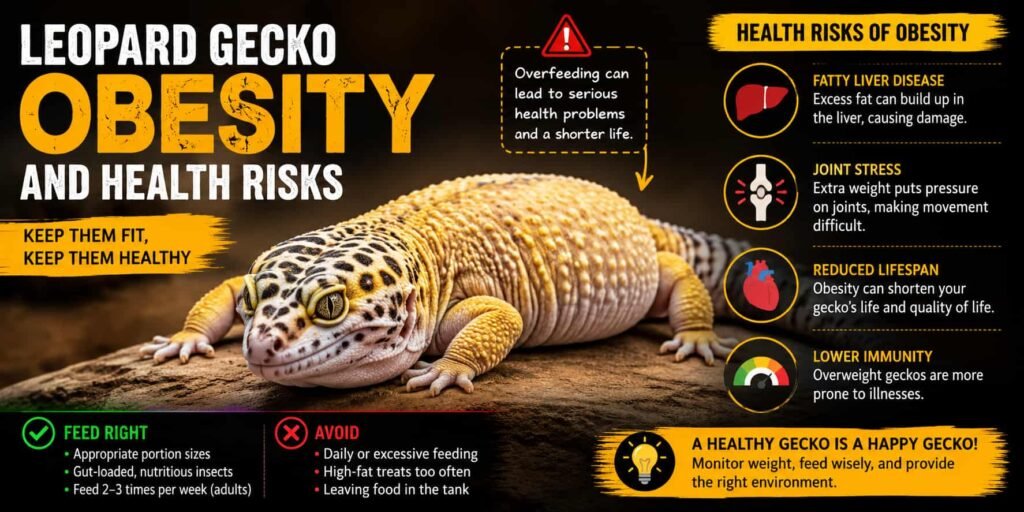
Preventing obesity is an important part of leopard gecko care. In the wild, leopard geckos are used to storing fat in their tails because food is not always available. This helps them survive during difficult conditions. However, in captivity, food is usually offered regularly, so they can gain weight easily if their diet is not controlled.
Too much food can put pressure on the gecko’s body and may lead to health problems. Signs of possible overfeeding include a very fat tail, a rounded belly, low energy, slow movement, and sometimes regurgitating food.
To help prevent obesity, avoid giving too many high-fat insects. Waxworms and butterworms should only be used as occasional treats because they are rich in fat. The main leopard gecko diet should include safer feeder insects such as crickets, mealworms, dubia roaches, and other properly sized live insects.
Regularly checking your gecko’s body shape, appetite, and movement can help you keep it at a healthy weight.
Why Your Leopard Gecko May Stop Eating
A leopard gecko not eating is a common concern for many owners. Sometimes it is normal, but it can also be a sign that something in the enclosure or health condition needs attention.
One common reason is low temperature. Leopard geckos need outside heat to control their body temperature and digest food properly. If the tank is too cold, your gecko may stop eating because its digestion slows down. A cold enclosure can also weaken its immune system over time.
Dehydration can also reduce appetite. Always make sure your gecko has access to clean water. A lack of water can affect digestion, shedding, energy, and overall reptile health.
If your gecko refuses food for a long time, loses weight, becomes weak, or shows unusual behaviour, contact a reptile vet for proper advice.
Simple Care Reminder
A healthy feeding routine should include safe live insects, correct portion sizes, limited fatty treats, proper temperature, clean water, and a stress-free enclosure. These simple steps can help your leopard gecko stay active, healthy, and comfortable.
Final Thoughts
Feeding a leopard gecko is simple when you understand its needs. Choose safe feeder insects, offer the right portion size, and adjust the feeding schedule based on age and health. A balanced leopard gecko diet helps your pet stay strong, active, and healthy.
FAQs: Feeding a Leopard Gecko Right
How should you properly feed a leopard gecko?
Leopard geckos are insectivores, so they should eat only live insects such as crickets, dubia roaches, mealworms, and black soldier fly larvae. Feed juvenile leopard geckos daily, young geckos every 2–3 days, and healthy adult geckos about every 5 days. Always give gut-loaded insects that are no wider than the space between the gecko’s eyes. Lightly dust the insects with calcium powder, vitamin D3, and a reptile multivitamin to support strong bones and healthy growth. Remove uneaten insects after feeding, and always keep fresh, clean water in the enclosure.
Should leopard geckos be fed every day?
No, leopard geckos should not be fed every day once they become adults. Baby and juvenile leopard geckos need food more often because they are still growing, but adult geckos usually eat every 2–5 days. Feeding them daily can lead to overfeeding, obesity, a thick tail, and other health problems. A proper feeding schedule helps keep your gecko active, healthy, and at a safe body weight.
What should you not feed a leopard gecko?
Avoid feeding leopard geckos any wild-caught insects, because they may carry pesticides, parasites, or harmful bacteria. Never feed fireflies, as they contain toxins that can be deadly to reptiles. Also, do not offer large insects that are wider than your gecko’s head, because they can cause choking, injury, or digestive problems. Safe feeding helps protect your gecko’s health, digestion, and overall well-being.
Can a leopard gecko go 2 weeks without food?
Yes, a healthy adult leopard gecko can usually go 2 weeks without food, and some may even survive longer because they store fat in their tail. However, this should not become a normal feeding routine. If your gecko refuses food for many days, check its temperature, hydration, stress level, and overall health. If it is losing weight, acting weak, or its tail is becoming thin, contact a reptile veterinarian.
How can you tell if a leopard gecko is hungry?
A leopard gecko may be hungry if it becomes more active at dusk or night, starts pacing around the tank, watches you through the glass, or moves quickly toward your hand, feeding tongs, or live insects. Some geckos may also show a slow tail wag when they are excited about food. These signs usually mean your gecko is ready for its next feeding time