
![Leopard Gecko Licking You [What It Means]](https://reptileopedia.com/wp-content/uploads/2026/07/Leopard-Gecko-Licking-You-What-It-Means-1024x512.jpg)
When your leopard gecko licks you, it is usually trying to understand you and its surroundings. This behavior is called tongue flicking or licking behavior. It does not mean your gecko is kissing you or showing love in the human way. Instead, your gecko is using its tongue to collect information from the world around it.
What It Means When a Leopard Gecko Licks You
Unlike chameleons, which use long tongues to catch prey, leopard geckos use their tongues mainly for smelling, tasting, and exploring their environment. When your gecko licks your hand, the air, or objects inside its tank, it is checking for scent particles, food smells, danger, or other clues.
How Leopard Geckos Use Their Tongue
A leopard gecko has a special sensory organ called the Jacobson’s organ, also known as the vomeronasal organ. This organ is located in the upper part of the mouth. When the gecko flicks its tongue, it collects tiny particles from surfaces and the air.
These particles are then sent to the Jacobson’s organ, which helps the gecko understand what is nearby. This allows the gecko to recognize its keeper, find food, notice other animals, explore new areas, and feel safer in its habitat.
In simple words, licking is one of the main ways a leopard gecko learns about its world.
Is Licking a Sign of Affection?
A leopard gecko licking you is usually not a sign of affection. Your gecko is not trying to show love like a dog or cat might. It is mainly using its tongue to learn your smell and understand whether you are safe.
However, if your gecko calmly licks your hand and does not run away, it may show that it feels comfortable around you. This can be a positive sign of trust, but it should not be confused with human-style affection.
When Licking Is Normal
Most licking behavior in leopard geckos is completely normal. Your gecko may lick when it is exploring a new place, walking on your hand, searching for food, checking its tank, or reacting to a new smell.
This behavior is part of its natural reptile instincts. As long as your gecko is eating well, moving normally, and acting healthy, occasional licking is usually nothing to worry about.
When Licking May Be a Warning Sign
Sometimes, licking can point to a health problem, especially if it becomes excessive or happens with other unusual signs. A responsible leopard gecko owner should watch for changes in behavior, appetite, movement, and appearance.
If your gecko is licking too much, refusing food, looking weak, or showing swelling, redness, or discharge, it may need veterinary care. Early treatment can help prevent serious health problems.
Mouth Licking in Leopard Geckos
Mouth licking can happen during feeding or after your gecko touches something with its mouth. This can be normal. However, frequent mouth licking may sometimes suggest a problem.
If your leopard gecko has trouble holding food, struggles to move its mouth, or has a soft or weak jaw, it may be suffering from calcium deficiency or metabolic bone disease, also called MBD.
Metabolic bone disease can cause weak bones, jaw problems, body deformities, and serious pain. This condition is often linked to poor diet, lack of calcium supplements, or incorrect UVB lighting. To reduce the risk, give your gecko proper reptile calcium powder, healthy feeder insects, and the right habitat setup.
Lip Licking in Leopard Geckos
Lip licking may be normal after eating, but frequent lip licking can sometimes be a sign of illness. It may point to mouth rot, abscesses, small cuts, stuck food, or infection inside the mouth.
Warning signs may include redness, swelling, sores, pus, bad smell, dead tissue, or refusal to eat. These problems can become serious if they are not treated.
A vet may clean the infected area, prescribe medicine, or suggest special care. In severe cases, treatment may include surgery or a soft liquid diet during recovery.
Eye Licking in Leopard Geckos
Eye licking is usually normal for leopard geckos. These reptiles do not clean their eyes the same way humans do. They often lick their eyes to keep them clean and moist.
This helps remove dust, shed skin, or small pieces of debris. However, eye licking can become a concern if the eyes look swollen, irritated, cloudy, crusted shut, or infected.
Possible causes include eye infection, conjunctivitis, stuck shed, injury, or poor tank conditions. A reptile vet may recommend an antibiotic eye ointment or another treatment depending on the cause.
Vent Licking and Grooming
Leopard geckos may also lick their vent area as part of normal cleaning. This is common and often part of their natural grooming behavior.
Vent licking may happen after shedding, after using the bathroom, or during normal body cleaning. In many cases, it is not dangerous.
However, if the licking is constant or the area looks swollen, red, dirty, blocked, or painful, it could suggest impaction, infection, stuck shed, or another health issue. In that case, a vet check is the safest choice.
Why Careful Observation Matters
Understanding leopard gecko behavior helps you know the difference between normal habits and possible illness. Licking is usually harmless, but it can sometimes reveal stress, discomfort, or health problems.
A healthy gecko should have clear eyes, a clean mouth, a good appetite, normal movement, and a clean vent area. If you notice major changes, it is better to act early instead of waiting.
Why Leopard Geckos Lick After Secretions, Shedding, and Cleaning
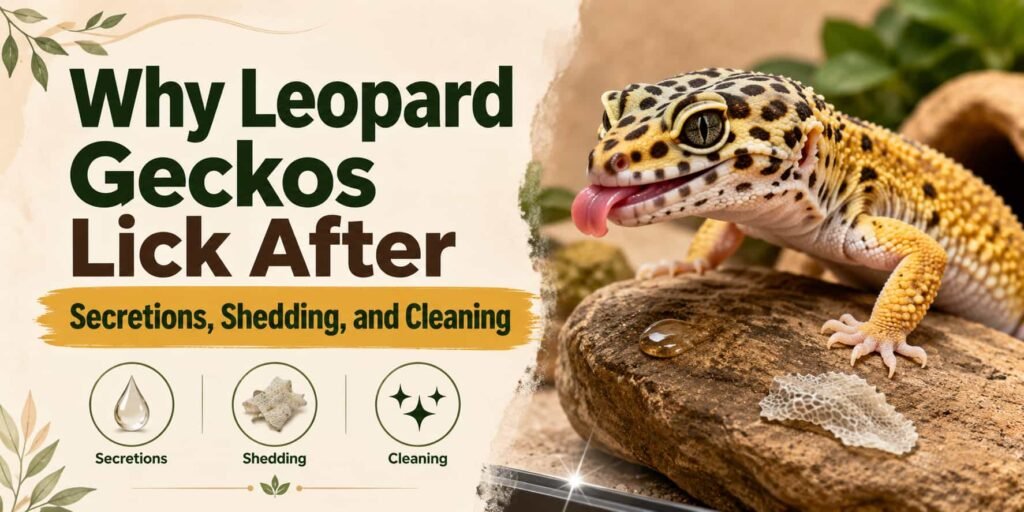
Leopard geckos lick themselves for many natural reasons. This behavior is usually linked to cleaning, hygiene, scent detection, territory marking, shedding, and body care. In most cases, licking is normal and helps your gecko stay clean, healthy, and aware of its surroundings.
Licking After Body Secretions
When a leopard gecko licks after releasing body secretions, it is usually cleaning itself. These reptiles use licking as part of their natural self-care routine. They may also lick to understand scents in their environment and recognize familiar smells, including their owner’s scent.
This behavior may look strange, but it is normal. A gecko’s tongue helps it collect tiny scent particles, which are processed through the Jacobson’s organ or vomeronasal organ. This helps the gecko learn more about its surroundings.
Licking After a Bowel Movement
A leopard gecko may lick its vent area after passing stool. This is part of its natural cleaning behavior. The gecko does this to remove waste, keep the vent clean, and reduce the chance of irritation or infection.
Even though this behavior is normal, owners should still be careful. Reptiles, including leopard geckos, can carry salmonella bacteria in their digestive system. Because of this, always wash your hands after touching your gecko, cleaning its tank, or handling anything inside the enclosure.
This is especially important for children, older adults, and people with weak immune systems.
Licking After Territory Marking
Leopard geckos are naturally territorial reptiles. They may release a waxy substance from pores near the vent area to mark their space. This is more common in male geckos, but it can also be linked to breeding behavior.
After releasing these secretions, a gecko may lick its vent to keep the area clean and stop the substance from hardening. This is a normal part of territorial behavior and grooming.
As an owner, you should keep the enclosure clean and watch for signs of swelling, redness, stuck secretions, or discomfort. These signs may mean your gecko needs help from a reptile veterinarian.
Licking for Cleaning and Shedding
Licking also plays an important role during shedding. When a leopard gecko sheds, it may lick its body to loosen and remove old skin. This helps the gecko complete the shedding process more easily.
Healthy shedding is important because stuck shed can cause problems, especially around the toes, eyes, tail, and vent area. If old skin stays attached for too long, it may cut off blood flow or cause irritation.
A proper humid hide, clean tank, correct temperature, and good hydration can support safe shedding.
Licking to Stay Clean
Leopard geckos are generally clean animals. They often lick different parts of their body to remove dirt, waste, or leftover secretions. Their smooth skin makes cleaning easier compared to animals with fur.
This natural grooming behavior helps them maintain good hygiene without much help from owners. However, owners still need to provide a clean enclosure, fresh water
Leopard Gecko Licking: Impaction, Shedding, Vent Cleaning, and Warning Signs
Leopard gecko licking behavior is usually normal, but sometimes it can point to a health problem. A gecko may lick its body, mouth, eyes, or vent area to stay clean, remove shed skin, explore its environment, or respond to discomfort. Owners should understand the difference between normal grooming behavior and signs that need veterinary care.
Licking During Impaction
Impaction is a serious health issue in leopard geckos. It happens when a gecko cannot pass stool properly. Hard stool, unsafe substrate, dehydration, low temperature, or poor digestion can block the digestive system.
When a gecko has impaction, it may lick its vent area because the area feels swollen, irritated, or uncomfortable. The vent may look inflamed, and the gecko may struggle to pass waste.
Common signs of impaction in leopard geckos include loss of appetite, a swollen belly, little or no stool, straining to poop, tiredness, and frequent vent licking.
A warm, shallow soak may help soften the stool and reduce discomfort. The water should be lukewarm, not hot, and the gecko should be handled gently. However, if the problem does not improve quickly, a reptile veterinarian should be contacted. Untreated impaction can become dangerous or even life-threatening.
Licking After Shedding
Licking after shedding is normal for leopard geckos. During the shedding process, geckos often lick their body from nose to tail to remove loose skin. This is part of their natural cleaning and grooming routine.
Sometimes, small pieces of shed skin can remain stuck on the toes, feet, eyes, tail, or vent. This is called stuck shed. If stuck shed stays on the toes for too long, it can reduce blood flow and cause serious damage. In severe cases, it may lead to necrosis, infection, or toe loss.
Owners should never pull stuck shed off forcefully because this can injure the gecko. A safe option is to provide a proper humid hide and allow the gecko to soak in lukewarm water. If the skin still does not come off after gentle care, a reptile vet should help remove it safely.
Best Humidity for Healthy Shedding

Proper humidity levels are important for safe shedding. A leopard gecko enclosure should usually stay around 30% to 40% humidity, with a slightly higher level inside the humid hide.
Low humidity can lead to dehydration, dry skin, and stuck shed. Poor temperature can also affect digestion and increase the risk of impaction. Keeping the right temperature, humidity, and tank setup helps your gecko shed safely and stay healthy.
Why Leopard Geckos Lick Their Vent
A leopard gecko licking its vent may be doing normal cleaning. Geckos often clean this area after passing stool, after shedding, or after releasing territorial secretions.
Male geckos may produce a waxy substance near the vent area. Licking helps keep the area clean and stops secretions from drying or building up.
However, vent licking can also be a warning sign. If the vent looks swollen, red, dirty, blocked, or painful, the gecko may have impaction, infection, stuck shed, irritation, or another medical problem.
Female geckos may also face a serious condition called egg binding, where they cannot pass eggs. This can become fatal without fast veterinary treatment.
Licking Is Not Always Affection
Many people think a pet licking them means love. This may be true for some animals, such as dogs, but it is different with leopard geckos.
When a leopard gecko licks you, it is usually using its tongue to smell, taste, and understand its surroundings. It may be learning your scent, checking if you are safe, or exploring your hand.
This does not mean your gecko hates you. It may still feel safe around you. However, licking should not be seen as affection in the same way humans understand it. Reptiles communicate differently from mammals.
A gecko may learn to connect its owner with food, safety, and calm handling. This can create trust, but it is not the same as emotional affection shown by dogs or cats.
Licking Is Not a Request for Attention
A leopard gecko licking your hand does not usually mean it wants to be picked up. Geckos are not naturally social animals like dogs or cats. They do not usually seek human attention in the same way.
If your gecko licks your hand, arm, shoulder, or clothing, it is most likely exploring scents or checking its surroundings. Your body may simply be the closest surface available.
Sometimes, a gecko may climb on you because it wants higher ground or is exploring. This behavior is more about curiosity, movement, and environmental exploration than a request for affection or attention.
When Leopard Gecko Licking Is Normal
Occasional licking is usually safe and natural. A gecko may lick its eyes, mouth, nose, body, vent, tank items, or your hand as part of normal reptile behavior.
Normal licking may happen during exploring, feeding, shedding, cleaning, or after using the bathroom. If your gecko is eating well, moving normally, and has clear eyes and a clean vent, there is usually no reason to worry.
Read Also: Leopard Gecko Licking Vent? [Hidden Reasons]When You Should Be Concerned
You should pay attention if licking becomes excessive, repetitive, or focused on one body part. For example, constant licking of one eye, the mouth, or the vent may suggest irritation, injury, infection, stuck shed, or impaction.
Warning signs include loss of appetite, hiding for long periods, swelling, redness, bleeding, cloudy eyes, trouble walking, lack of stool, straining, weakness, weight loss, or a dirty vent area.
If these signs appear, contact an exotic pet vet or reptile veterinarian. Early treatment can prevent serious complications and protect your gecko’s health.
Conclusion
A leopard gecko licking itself or its owner is usually a natural behavior. It helps the gecko stay clean, explore the environment, and manage shedding. Still, owners should observe licking carefully because it can sometimes reveal discomfort or illness.
Good care includes proper humidity, correct temperature, clean housing, safe substrate, fresh water, a humid hide, and regular health checks. If licking becomes unusual or comes with other symptoms, a reptile vet should be contacted as soon as possible.
FAQ’s: Leopard Gecko Licking You? [What It Means]
How can you tell if a leopard gecko trusts you?
A leopard gecko does not feel love the same way humans do, but it can build trust and feel safe around you. Signs include coming near the glass when you arrive, staying calm in your hand, climbing on you without fear, sleeping near you, and exploring while showing no stress or fear.
Why do geckos lick things?
Geckos lick objects, surfaces, and sometimes people to understand their surroundings. They use a special Jacobson’s organ in the roof of their mouth to read chemical signals, scents, and tastes in the environment. This helps them explore, recognize objects, and stay aware of what is around them.
What are the common signs of stress in leopard geckos?
A leopard gecko may be stressed if it waves its tail, makes sounds, tries to bite, hides too much, or acts restless. These behaviors usually mean the gecko feels unsafe or uncomfortable. Improving its habitat, temperature, hiding spots, and handling routine can help reduce stress and keep it healthy.
Is lip licking normal in leopard geckos?
Yes, lip licking is often normal in leopard geckos, especially during shedding, because it helps loosen skin around the face and mouth. However, frequent licking may also point to a health problem, such as mouth rot or metabolic bone disease. Check your gecko for other symptoms, changes in behavior, or signs of discomfort.
Can leopard geckos become attached to humans?
Leopard geckos do not feel love like dogs, cats, or people. However, they can learn to recognize their caretaker and build trust, comfort, and a sense of safety over time. A gecko that stays calm, comes near you, or allows gentle handling may be showing bonding and familiarity.