
![How Much Do Alligators Eat Daily [Shocking Truth]](https://reptileopedia.com/wp-content/uploads/2026/07/How-Much-Do-Alligators-Eat-Daily-Shocking-Truth-1024x512.jpg)
How Much Do Alligators Eat Daily?
During a single feeding, an adult allegation can consume up to 18 kilograms of meat or about nine and a half pounds of food per meal. Their diet includes a variety of prey such as gar, turtles, various mammals like coypu and muskrat, as well as birds, deer, and other reptiles. When lakes freeze over, these alligators may hibernate, showcasing their extraordinary adaptability.
What does an alligator eat?
Alligators, true carnivores, predominantly eat meat. They pose a significant danger to any animal near the water, including Chickens and Cows, which can be grabbed and dragged underwater to drown. Surprisingly, they also consume young Alligators, showcasing cannibalistic behaviour. This opportunistic feeding strategy underscores their adaptability and survival instincts in their natural habitat
Understanding Alligator Behavior: Feeding Habits, Hunting Skills, and Safety Awareness
Feeding Behavior and Diet Patterns of Alligators
Alligators are cold-blooded reptiles with highly adaptive feeding behavior. Their diet patterns depend on environment, season, and prey availability. An adult alligator can consume up to 18 kilograms of food in a single meal, but it does not eat every day. On average, it may feed about once a week due to its slow metabolism and efficient energy storage system.
Their diet includes fish, frogs, turtles, birds, small mammals such as muskrats, and sometimes larger animals like deer. In some cases, they also show cannibalistic behavior, meaning they may eat smaller alligators when food is limited. This makes them strong opportunistic predators, capable of surviving in different ecological conditions.
Vision, Senses, and Survival Adaptation
Alligators have sharper vision than commonly believed, especially useful during low light conditions such as dusk or nighttime. Their sensory system includes sensitive eyes, ears, and skin receptors that detect movement and vibrations in water. These semantic environmental signals help them locate prey even in muddy or vegetation-heavy waters.
They are highly adapted to wetlands, swamps, and rivers where visibility is low. Their ability to interpret contextual water movement cues plays a key role in successful hunting.
Hunting Strategy and Predator Behavior
Alligators are not active chasers but stealth-based hunters. Their hunting strategy relies on patience and timing. They often remain almost fully submerged, with only their eyes and nostrils visible above the water surface.
They can stay motionless for hours, waiting for prey to approach. When the moment is right, they strike with explosive speed. Using their powerful tails, they can even launch part of their body out of the water to catch prey near the shoreline or low branches.
Once they catch prey, they use a strong bite force to hold and drag it underwater, often drowning it before consumption. This reflects their advanced survival strategy and efficient energy use.
Habitat Behavior and Seasonal Activity
Alligators prefer warm climates and become less active in cold conditions. During extreme cold or freezing water conditions, they may enter a dormant state similar to hibernation, known as brumation, to conserve energy.
Safety Insight
Because alligators are powerful apex predators, they can pose a risk to animals and sometimes humans near water bodies. They may attack livestock or wildlife that comes too close to the water edge. Understanding their behavioral patterns and maintaining safe distance from their habitat is important for safety.
Alligator Hibernation and Cold-Weather Survival
During winter, alligators show strong seasonal adaptation in their behavioral patterns. When temperatures drop below about 70°F (21°C), their activity slows down and they stop feeding. As conditions become colder, they dig burrows or dens along riverbanks and pond edges and enter a dormant state called brumation, which helps them conserve energy.
One of their most remarkable survival strategies is their response to freezing water. If a pond begins to freeze, alligators may float to the surface and keep their nostrils above the ice, allowing them to breathe while the water freezes around them. In extreme cases, they can become partially frozen in ice for days and later regain full movement when temperatures rise, showing strong environmental resilience and adaptive physiology.
Diet, Feeding Habits, and Metabolic Adaptation
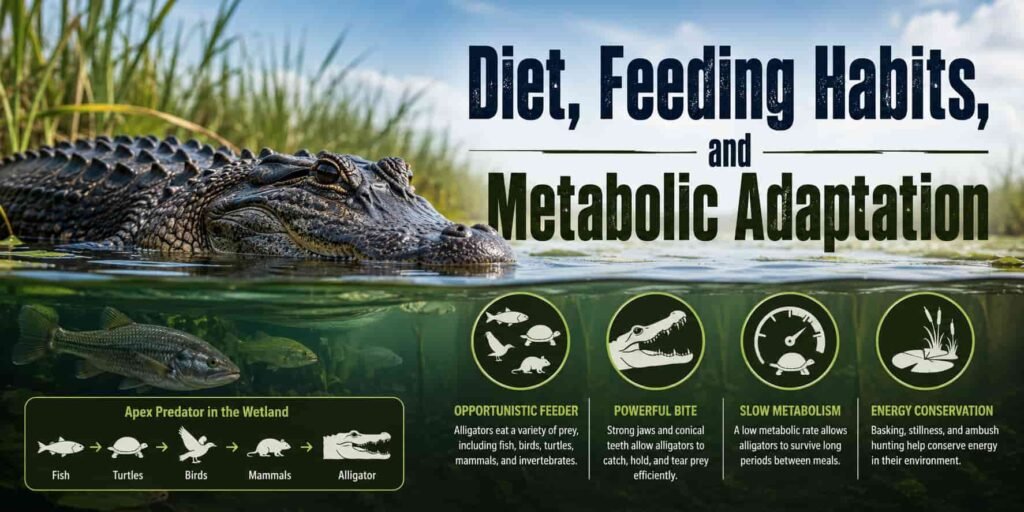
The dietary behavior of alligators and crocodiles varies depending on size, age, habitat, and food availability. These reptiles are opportunistic predators, meaning they eat whatever prey is accessible in their environment.
Alligators mainly consume fish, birds, reptiles, and mammals, and in some cases even smaller alligators. Young alligators focus on smaller prey due to limited strength, while adult alligators can capture and consume much larger animals. This difference shows clear age-based feeding hierarchy and ecological role variation.
A key biological feature is their slow metabolism, which reduces the need for frequent feeding. Because of this, alligators can survive long periods without food after a large meal, making their energy efficiency and digestion system highly effective for survival in unpredictable environments.
Geographical Distribution
Alligators have a more limited geographical range compared to crocodiles. They are mainly found in the southeastern United States and parts of China, where warm wetlands and freshwater ecosystems support their survival and feeding behavior.
Crocodiles: Global Distribution, Diet, and Hunting Behavior
Crocodiles are widely distributed reptilian predators found across many regions of the world, including Africa, Asia, the Americas, and Australia. Their broad geographical distribution shows their strong ability to adapt to different freshwater and coastal ecosystems.
Diet and Feeding Patterns of Crocodiles
Crocodiles have a diverse and flexible carnivorous diet. They commonly feed on fish, birds, mammals, and other aquatic or semi-aquatic animals. This wide dietary range helps them survive in different habitats with varying food availability.
Larger species such as the Nile crocodile and saltwater crocodile are capable of hunting significantly bigger prey. Their diet may include large mammals and, in rare cases, even other crocodiles. This reflects their position as powerful apex predators within the ecosystem.
Hunting Behavior and Predatory Strategy
Unlike more passive hunters, crocodiles show a more active and aggressive hunting strategy. They often pursue their prey with strong predatory behavior patterns, combining speed, strength, and sudden bursts of attack.
Their hunting style relies on direct engagement rather than long waiting periods, making them highly efficient active predators in aquatic and riverine environments.
Feeding Frequency and Energy Adaptation in Crocodiles and Alligators
The feeding frequency and food intake patterns of alligators and crocodiles depend on key factors such as body size, age, habitat conditions, and prey availability. In captivity, their dietary schedule is carefully controlled by caretakers to ensure a balanced and healthy nutritional intake.
In the wild, these reptiles often eat less frequently. A single large meal can provide enough energy reserves to sustain them for long periods. This is possible due to their slow metabolic rate and highly efficient energy storage system. In extreme conditions, alligators can survive without food for months and in rare cases even years, showing exceptional physiological resilience and survival adaptation.
Diet Development in Baby Alligators (Hatchling Feeding Behavior)
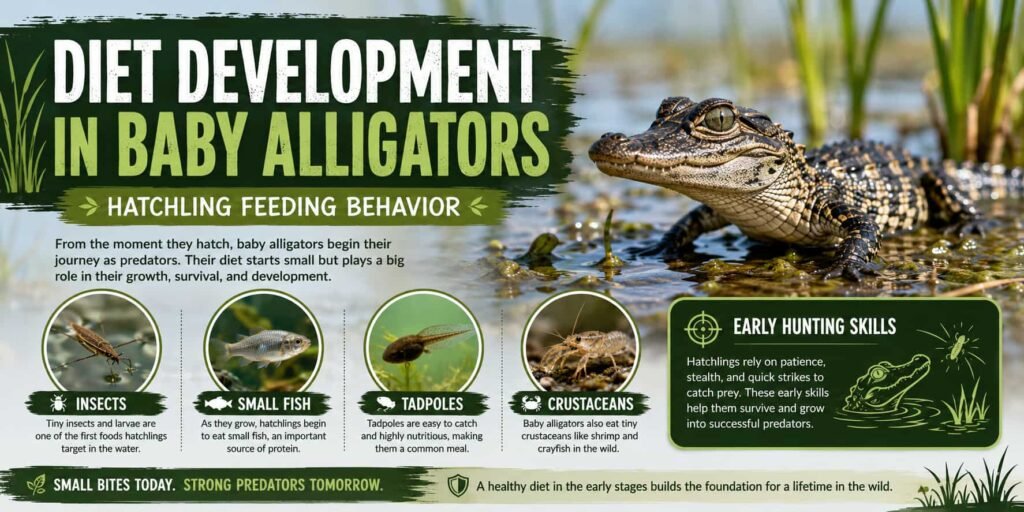
After a mother alligator leads her young to water, she protects them but does not feed them. The hatchlings must survive independently from the start, showing early self-feeding behavior.
In the early stages of life, baby alligators (hatchlings) mainly consume insects, small fish, crustaceans, amphibians, and tadpoles. This small-prey diet supports their early growth and development.
As they mature, their dietary progression expands to include larger prey such as birds and small mammals, matching their increasing size, strength, and nutritional requirements. This shift reflects their changing role in the food chain and ecosystem.
Evolutionary Survival and Long-Term Adaptation
Alligators are considered living examples of ancient reptilian evolution, often referred to as “living dinosaurs” due to their long survival history. They have existed for millions of years, demonstrating strong evolutionary adaptation and environmental resilience.
They are mainly found in the southeastern regions of the United States, including Florida, Georgia, Alabama, and Louisiana, where freshwater wetlands provide ideal living conditions.
Biological Traits and Sensory Abilities
Alligators possess highly advanced sensory perception systems, including sensitive vibration detectors in their skin. These allow them to detect even the smallest movements in water, helping them avoid danger and locate prey effectively. This makes their environmental awareness system highly efficient for survival.
Land Movement and Escape Response in Alligators
In natural wild habitats, the short-burst land speed of alligators plays an important role in their survival behavior. This rapid movement allows them to escape threats on land and quickly return to water, where they are more agile and safer. This reflects a strong escape strategy and adaptive locomotion behavior in their ecosystem.
Eye Structure and Underwater Vision Adaptation
Alligators have a specialized visual adaptation system that includes two layers of eyelids. The outer eyelids function like human eyelids, closing from top to bottom, while the inner transparent eyelids, known as nictitating membranes, close from back to front.
This dual-layer system protects their eyes and maintains clear underwater vision, supporting both predatory accuracy and safe movement in aquatic environments.
Read Also: Leopard Gecko Feeding GuideWaterproof Body System and Submersion Survival
Alligators are highly adapted for underwater life due to a complete watertight biological system. When submerged, they close protective flaps over their nostrils and ears, preventing water entry. A special structure called the palatal valve blocks water from entering the throat, keeping the lungs and digestive system safe.
This advanced respiratory protection mechanism allows them to remain underwater for different durations depending on conditions:
- 10 to 20 minutes during active diving
- Up to 2 hours while resting
- Up to 8 hours in cold water environments
These capabilities demonstrate strong oxygen conservation ability and highly efficient aquatic survival adaptation.
FAQ’s: How Much Do Alligators Eat Daily? [Shocking Truth]
How much does a crocodile eat per day?
A crocodile usually eats about 2 to 5 pounds of meat per day, depending on its body size, age, habitat, and prey availability. On average, its weekly food intake may equal nearly 5% of its body weight. However, if plenty of food is available, a larger crocodile can eat much more in a single day.
What do alligators eat on a daily basis?
Alligators are carnivorous reptiles and their diet pattern depends on age and food availability in their habitat. Young alligators mainly eat insects, amphibians, small fish, and invertebrates because these prey items are easier to catch. Adult alligators shift to larger prey species, including fish, snakes, turtles, small mammals, and birds. Their feeding behavior is opportunistic, meaning they consume whatever readily available prey they can successfully hunt.
Are alligators always hungry?
Alligators are not always hungry. They are cold-blooded (ectothermic reptiles), which means they rely on the environment temperature to control their metabolism. Because of their slow metabolic rate, they do not need to eat frequently. In fact, a large alligator may consume less food intake in a whole year than a medium-sized dog. Their feeding behavior is irregular and depends on energy needs and prey availability, not constant hunger
Taste Profile and Texture?
The taste of crocodile meat is often described as similar to chicken, making it a mild-flavored protein source. It has a slightly firmer texture and a light, mildly sweet flavor. Depending on the cut of meat and the cooking method, some people also compare its flavor profile to fish or rabbit. Overall, it is a lean exotic meat with a unique but subtle taste experience.
Do alligators eat people often?
Alligators are large carnivorous predators, but they do not normally target humans as part of their natural prey behavior. Human attacks are rare events and usually happen by mistake when an alligator confuses a person for other animals or feels threatened. In general, alligators follow an opportunistic feeding pattern, not human hunting. Because of this, humans are not part of their regular diet composition, but safety and distance are always important in their wild animal behavior and interaction risk management.