
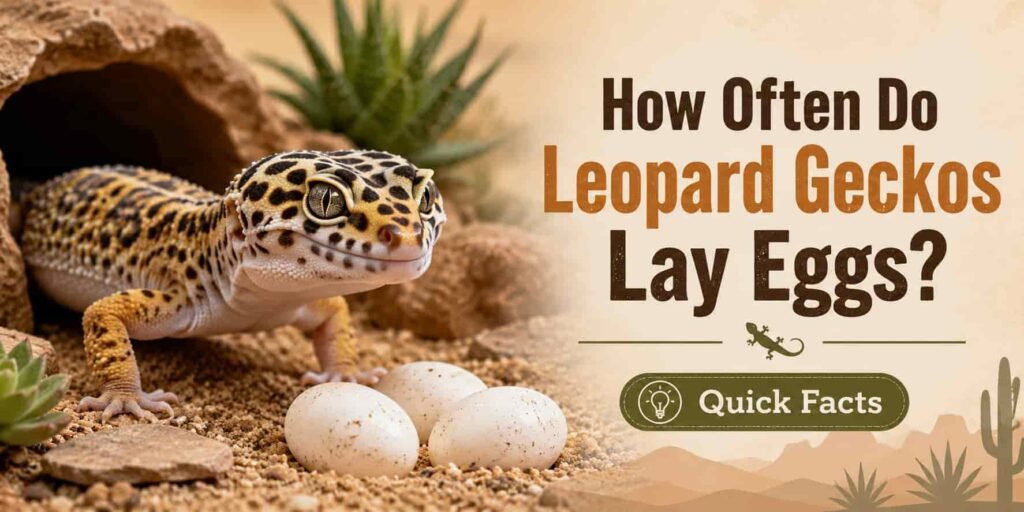
How Many Eggs Do Leopard Geckos Lay?
Leopard geckos are popular pet reptiles because they have calm personalities, gentle behavior, and simple care needs compared with many other exotic pets. Their cute faces and easy-going nature make them a good choice for beginners who want a low-maintenance reptile companion instead of a traditional furry pet.
Many owners also become curious about leopard gecko breeding, especially when they want to understand the egg-laying process, reproductive cycle, and hatchling care. One common question is: How many eggs do leopard geckos lay?
On average, a healthy female leopard gecko can lay around 8 to 10 eggs in one breeding season. She usually lays eggs in pairs, and the total number depends on her age, health, diet, calcium intake, breeding condition, and overall habitat setup.
Understanding leopard gecko reproduction helps owners provide better care before, during, and after egg-laying. It also helps prevent common problems such as infertile eggs, poor incubation, stress, and weak hatchlings.
Breeding leopard geckos can be interesting, but it also requires responsibility. Owners must prepare the right enclosure, lay box, temperature, humidity, incubator, and nutritional support before allowing their geckos to breed.
When Do Leopard Geckos Breed?
In the wild, the leopard gecko breeding season usually starts around January and can continue until September. During this time, the weather and natural light conditions make these reptiles more ready to mate and produce eggs.
In captivity, leopard geckos may breed at different times of the year because their environment is controlled. Breeders can manage the temperature, lighting, humidity, and feeding schedule to support healthy breeding behavior. However, breeding should always be done carefully because the female’s health must come first.
Female leopard geckos usually lay eggs in small groups called clutches. A normal clutch often contains one or two eggs. With proper care, a female may lay several clutches during one breeding cycle.
How to Help Leopard Geckos Breed Safely
To encourage leopard geckos to breed, owners usually keep one male with two or more females. This helps reduce stress on one female and creates a safer breeding setup.
The day and night cycle can also affect breeding. A slight reduction in daylight may help signal the start of the mating season. This should be done slowly and carefully so the geckos do not become stressed.
Temperature is also very important. A comfortable enclosure temperature of around 70–75°F can support healthy reproductive activity. The tank should also include a safe egg-laying area where the female can lay her eggs in peace.
A moist hide with a soft, damp substrate is ideal for egg-laying. It allows the female to bury her eggs naturally, just as she would in the wild. This type of setup supports healthy oviposition, which means the process of laying eggs.
Leopard Gecko Gestation Period
The gestation period of a leopard gecko usually lasts around 18 to 22 days. During this time, the eggs develop inside the female’s body. After this period, she normally lays one to two eggs.
A healthy female can lay up to five clutches in one regular breeding season. Over her lifetime, if bred properly and not too often, she may produce many eggs. However, frequent breeding can weaken the female, so responsible care is very important.
It is normal to see eggs under the skin of a gravid leopard gecko, which means a female carrying eggs. During this stage, she needs a strong calcium-rich diet because egg production uses a lot of calcium from her body.
Freshly laid leopard gecko eggs are usually soft and slightly sticky. After a few days, healthy eggs become firmer and develop a leathery white shell. This is a good sign of normal egg development. Infertile eggs may look different and usually do not continue developing.
Where Do Leopard Geckos Lay Eggs?
In the wild, female leopard geckos search for safe places such as burrows, hides, or protected spaces to lay their eggs. These areas help protect the eggs from danger and keep the temperature stable.
After laying her eggs, the female usually leaves them. Like many reptiles, leopard geckos do not care for their eggs after laying them. The eggs develop on their own if the conditions are suitable.
In captivity, female leopard geckos still have the same natural instinct. They look for a quiet, hidden, and secure place to lay eggs. That is why a proper lay box or moist hide is very important.
The lay box should contain a soft, damp substrate such as reptile-safe moss or suitable bedding. This helps keep the eggs safe and supports proper incubation conditions.
Why Are Leopard Gecko Eggs Infertile?
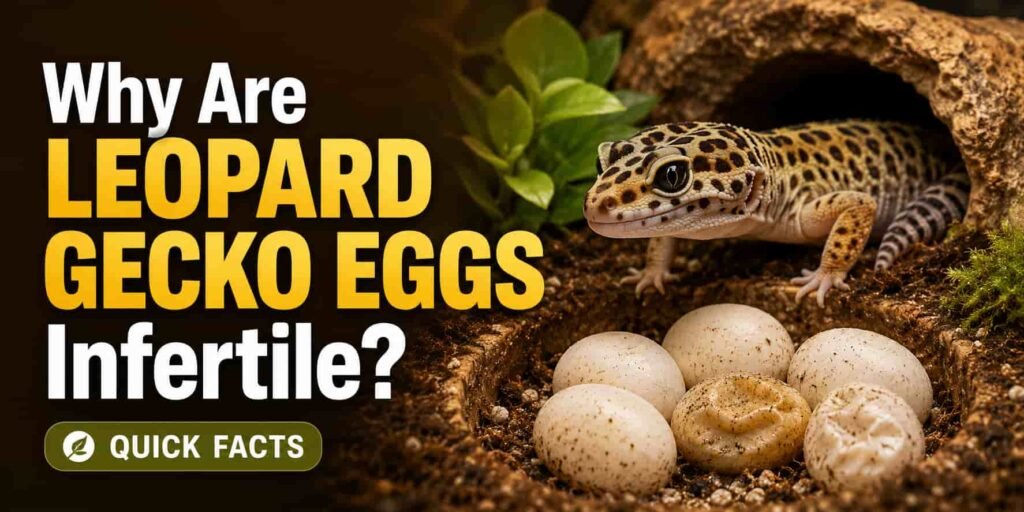
Finding infertile eggs in a gecko’s enclosure can be disappointing, but it is not uncommon. Infertile eggs can happen for several reasons, including poor nutrition, stress, young age, weak health, or fertility problems in the male or female.
A poor diet is one of the most common causes of weak or infertile eggs. Female leopard geckos need a balanced diet with enough calcium, vitamins, and healthy feeder insects. Without proper nutrition, their reproductive health can suffer.
Sometimes, eggs may also be infertile if mating was unsuccessful or if one of the geckos has a fertility issue. Improving the gecko’s diet, habitat, and overall care can often help support better egg production in the future.
How to Incubate Leopard Gecko Eggs
Leopard gecko egg incubation is one of the most important steps in successful breeding. Eggs should be removed from the parents and placed in a separate incubation container because adult geckos do not care for their eggs or babies and may harm them.
Many breeders use small plastic deli cups, shoebox containers, or similar secure boxes for incubation. These containers are usually filled with vermiculite or perlite, which help control moisture and support healthy egg development.
The incubation medium should be mixed carefully with water. A common method is to use one part water by weight, not by volume. This helps keep the correct humidity level inside the container.
Place the leopard gecko eggs gently into the substrate and partly bury them. Keep each egg about half an inch apart. After that, cover the container with a tight lid and make a few small air holes in the top so the developing baby geckos can breathe.
If the eggs begin to dent, they may be too dry. In that case, lightly spray the inside walls of the container, but do not spray water directly on the eggs. Too much moisture can damage the eggs, while too little moisture can cause them to shrink.
Best Temperature for Leopard Gecko Eggs
Incubation temperature plays a major role in the development of leopard gecko hatchlings. It can also affect the likely sex ratio of the babies.
Eggs incubated around 85–87°F may produce a more balanced number of males and females. Temperatures around 88–90°F are more likely to produce males, while temperatures around 80–84°F are more likely to produce females.
Very low temperatures can be dangerous. If the temperature falls below 74°F, the eggs may fail to hatch. For this reason, many breeders use a proper reptile incubator with stable temperature control.
The incubation period usually lasts between 35 and 89 days, depending on the temperature, humidity, and overall incubation conditions. Stable heat, proper substrate, and careful moisture control are essential for healthy egg development.
Caring for Leopard Gecko Hatchlings
Leopard gecko hatchling care requires patience, safety, and a clean setup. Baby geckos are often raised separately because larger or stronger hatchlings may bully smaller ones or take more food.
Newly hatched geckos do not usually eat right away. At first, they survive on the nutrients from the egg yolk. Most hatchlings shed their skin for the first time within a few days after hatching. After this first shed, they usually begin eating.
A simple hatchling enclosure can be made using a small shoebox-sized setup. A suitable size is about 12 inches long, 6 inches wide, and 4 inches tall. The enclosure should include a small hide box, a warm side, and a cooler side.
The warm end should stay close to 90°F, while the cooler end can be around 73°F, similar to adult leopard gecko care. This temperature difference helps the baby gecko control its body temperature.
For flooring, paper towels are a safe and easy option for young geckos. They are simple to clean and reduce the risk of the hatchling swallowing loose substrate.
Baby leopard geckos usually start eating within a few days after their first shed. Small mealworms can be offered in a shallow dish or jar lid. Around five to ten small mealworms every other day can be suitable, depending on the hatchling’s size and appetite.
Beginner Guide to Leopard Gecko Breeding
Breeding leopard geckos may seem simple, but it still requires proper planning and responsible care. These reptiles are known as one of the easier species to breed, but mistakes can affect the health of the female, eggs, and hatchlings.
Leopard geckos are often considered easier to breed because their breeding season can last for several months, they do not always need very complex breeding conditions, and their hatchlings do not require special food beyond properly sized insects.
However, breeding can become risky if the female is weak, underfed, or lacking calcium. A female leopard gecko must be healthy, well-fed, and in good body condition before breeding. Poor nutrition can lead to weak eggs, egg-laying problems, and serious health issues.
Successful breeding also depends on proper egg incubation, stable temperature, correct humidity, and enough food for both the adults and the baby geckos. If the breeder cannot provide enough space, food, and care, breeding should be avoided.
Proper Leopard Gecko Habitat
A healthy leopard gecko habitat is important for comfort, growth, and successful breeding. These pet reptiles need a safe, clean, and well-controlled enclosure from hatchling age to adulthood.
A 10-gallon or 20-gallon tank can work for one or two leopard geckos, but the enclosure must be secure. A screen lid is important because it prevents escapes and protects the gecko from other pets, such as cats. The cage should also be tall enough to allow safe movement and proper setup.
The choice of substrate is very important. Fine sand should be avoided, especially for young or weak geckos, because it may cause intestinal impaction if swallowed. Safer options include paper towels, newspaper, artificial turf, flat stones, or no loose flooring at all.
Simple decorations, such as artificial plants, hides, and flat rocks, can make the enclosure look natural and give the gecko places to feel safe. A hide box is essential because leopard geckos need privacy for resting, shedding, and egg-laying.
A moist hide filled with safe damp material, such as moist moss, vermiculite, or a suitable reptile substrate, helps with shedding and supports female geckos during egg-laying. The warm side of the enclosure should be around 86–90°F, while the cooler side can stay close to 73°F.
For heating, an under-tank heating pad or heat tape is safer than a heat rock. Heat rocks can become too hot and may burn the gecko. Lighting can help create a normal day and night routine, but the enclosure should not become too hot.
Feeding Leopard Geckos for Breeding
A strong diet is one of the most important parts of successful leopard gecko breeding. These reptiles mainly eat live insects such as crickets and mealworms. Food should be offered regularly, and the insects must be the right size.
A good rule is to feed insects that are no longer than the gecko’s head and not thicker than half the width of its head. This helps prevent choking and digestive problems.
Mealworms can be placed in a shallow dish to keep the enclosure cleaner. Feeder insects should also be gut-loaded before feeding. This means the insects are given nutritious food for 24 to 48 hours before being offered to the gecko. Gut-loading improves the nutritional value of the insects.
Female leopard geckos need extra calcium and vitamin D3, especially during the breeding season. These supplements support egg production, strong bones, and overall reproductive health. Insects can be lightly dusted with supplement powder before feeding.
Fresh water should always be available in a strong, shallow water dish. Clean water, proper feeding, and good supplements help keep breeding geckos healthy and active.
Leopard Gecko Breeding Basics
Before breeding, it is important to understand the leopard gecko life cycle. Female leopard geckos usually become sexually mature at around 9 to 10 months old, but they should also be healthy and weigh at least 45 grams before breeding.
In many cases, the breeding season runs from January to September, especially for geckos kept in areas north of the equator. Geckos hatched late in the year may begin laying eggs in the next breeding season.
Some breeders use a short cool-down period before breeding. During this time, the temperature is slightly lowered, and feeding may be reduced under careful supervision. Water must always be available. This process should only be done by owners who understand proper reptile care.
During mating, the male may vibrate his tail quickly. If the female is ready, she may stay still while the male holds the skin near her neck. This is a normal part of leopard gecko mating behavior. After mating, it is often better to separate the female to reduce stress and prevent injury.
Leopard Gecko Egg-Laying
Female leopard geckos usually lay eggs about 16 to 22 days after mating. During the breeding season, they may lay a clutch every 15 to 22 days for several months.
Each clutch normally contains one or two eggs. A healthy female may lay around 8 to 10 eggs in her first breeding year. Over her lifetime, she may produce many more eggs, but breeding too often can weaken her body.
The lay box should not be too wet. Too much moisture can harm the eggs, while too little moisture can cause them to dry out. Poor nutrition, weak health, male infertility, or unsuccessful mating can also lead to infertile eggs.
Should You Breed Leopard Geckos?
Breeding leopard geckos may sound easy, but it should never be done without planning. A responsible owner must think about the female’s health, the cost of care, the space needed for babies, and the time required to raise them properly.
Female geckos use a lot of energy when producing and laying eggs. If they are not healthy, well-fed, and rich in calcium, they may become weak or suffer from serious problems such as egg binding.
Breeding females may also have shorter lifespans than non-breeding females because egg production places stress on the body. For this reason, breeding should only be done when the female is in excellent condition.
It can also be difficult to find safe homes for baby leopard geckos. Hatchlings need separate housing, regular feeding, proper heating, and careful monitoring. Breeding also increases food costs, enclosure needs, and daily care responsibilities.
Breeding leopard geckos to make quick money is not a good idea. It requires knowledge, time, equipment, and proper care. For most owners, small-scale and responsible breeding is the safest choice.
Important Responsibility Before Breeding Leopard Geckos
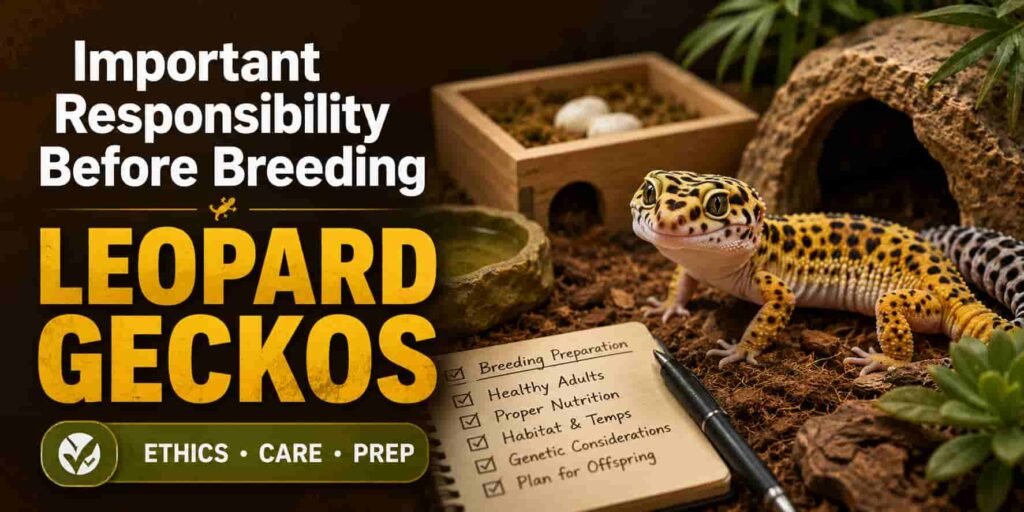
Leopard gecko breeding should never be done without proper planning. If breeding is not managed correctly, it can create stress for both the owner and the reptiles. In serious cases, poor care may lead to health problems, egg-laying complications, or even the death of a leopard gecko.
However, breeding can also be a rewarding experience when done responsibly. It allows owners to understand reptile biology, egg development, mating behavior, and the natural reproductive cycle of leopard geckos more closely.
Before breeding, owners must be ready to provide enough time, space, food, heating equipment, incubation setup, and separate housing for the hatchlings. Breeding is not just a casual hobby. It requires knowledge, patience, money, and long-term commitment.
Read Also: Do Leopard Geckos Need Baths? Safe Soaking GuideUnderstanding Leopard Gecko Reproduction
Leopard gecko reproduction is an interesting process, and understanding it is important for anyone who wants to breed or properly care for these reptiles. A female that is carrying eggs is called a gravid leopard gecko. When she is ready to lay eggs, her body may look fuller, and eggs may sometimes be visible under the skin.
Male and female leopard geckos have different physical features. This is called sexual dimorphism. Males are often identified by their larger body shape, visible hemipenal bulges, and pores near the base of the tail. These signs help owners tell the difference between male and female geckos before breeding.
During mating, the male may show courtship behavior such as approaching the female, nudging her, vibrating his tail, or gently biting near her neck or tail base. Although this may look rough, it is part of normal leopard gecko breeding behavior. Still, owners should watch carefully to make sure the female is not being harmed or overly stressed.
After successful mating, a female leopard gecko can store sperm inside her body for several months. This allows her to lay multiple clutches of eggs without mating again each time. Because of this, one successful pairing can result in several rounds of egg-laying during the breeding season.
Breeding leopard geckos is not only about producing eggs. It also involves understanding their courtship behavior, fertility, egg-laying cycle, incubation needs, and hatchling care. Responsible breeding helps protect the health of both adult geckos and their babies.
Summary
Leopard gecko breeding can be educational and rewarding, but it requires serious responsibility. Owners must understand reproductive health, mating behavior, egg-laying, sperm storage, incubation, and hatchling care before starting. With proper planning and ethical care, breeding can be safer for the geckos and more successful for the owner.
FAQ’s: How Often Do Leopard Geckos Lay Eggs? [Quick Facts]
How often do leopard geckos lay eggs?
Female leopard geckos usually lay a clutch of 1 to 2 eggs every 2 to 3 weeks during the breeding season. This season often lasts around 4 to 5 months. In total, a healthy female leopard gecko may produce about 8 to 16 eggs per year, depending on her age, health, diet, and breeding conditions.
How old is a 7-inch leopard gecko?
A 7-inch leopard gecko is usually a sub-adult or young adult. Most leopard geckos reach 6 to 7 inches between 7 and 18 months old. If the gecko is already 7 to 8 inches and has a healthy adult weight, it may be around 12 months or older. However, exact age can vary depending on its diet, genetics, growth rate, and care conditions.
How can you tell when a leopard gecko is about to lay eggs?
A female leopard gecko may be close to laying eggs when she becomes gravid and starts showing clear behavioral changes. Common signs include digging, restlessness, searching for a nesting site, spending more time in the lay box, eating less, and looking slightly lethargic. You may also notice a fuller abdomen if eggs are developing inside her body. A reptile veterinarian can confirm this safely through gentle palpation or an examination, but owners should avoid pressing the gecko’s belly themselves because it may harm the eggs or the gecko.
Do leopard geckos lay eggs without mating?
Yes, female leopard geckos can lay eggs without mating. These eggs are usually unfertilized, so they will not hatch. Infertile eggs are often called slugs or duds. This can happen during the female’s natural ovulation cycle, even if she has not been with a male leopard gecko. However, she should still have a safe lay box, proper calcium, good nutrition, and a stress-free enclosure to support her health.
Do geckos lay eggs or give birth?
Most geckos lay eggs. Female geckos usually produce a small clutch of 1 to 2 eggs and place them in safe, hidden areas such as soil, bark, leaves, or small cracks. These eggs may be soft or slightly sticky, depending on the gecko species. However, a few rare gecko species can give birth to live young instead of laying eggs. So, in simple words, most geckos are egg-laying reptiles, but a small number are live-bearing geckos.